
A new open-source project bypasses Apple's private APIs to access the MEMS accelerometer in M-series chips, enabling experimental applications like heartbeat detection through laptop vibrations.
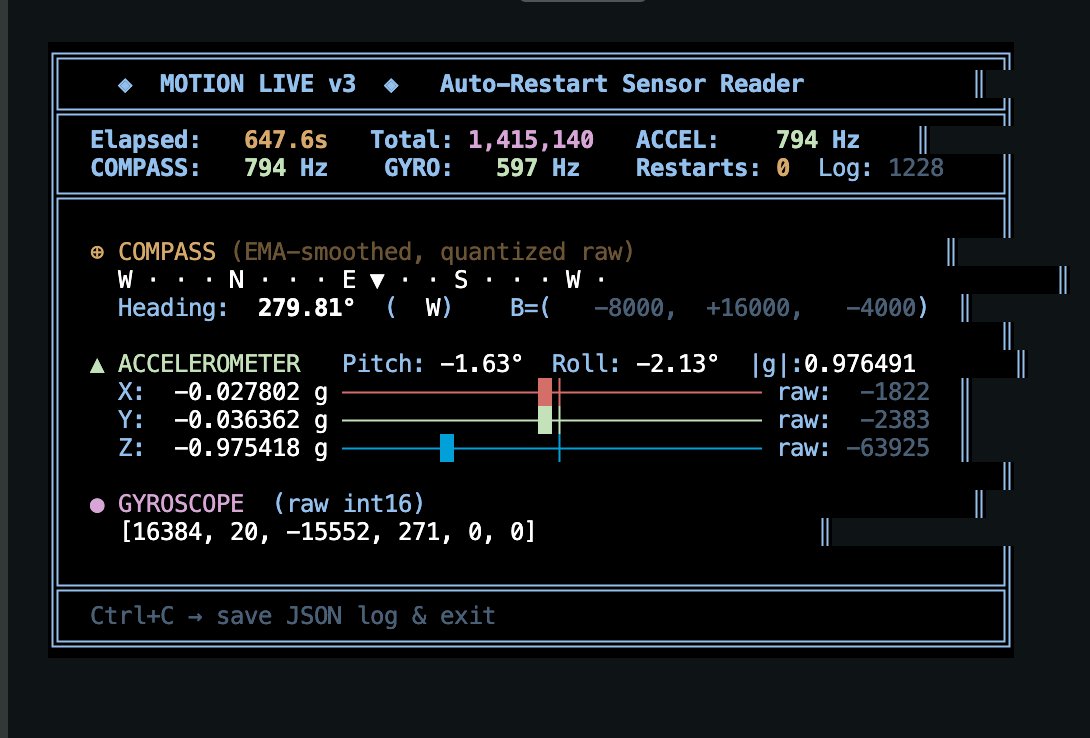
Buried within Apple Silicon's Sensor Processing Unit (SPU), an undocumented hardware component has remained inaccessible to developers – until now. GitHub user olvvier's apple-silicon-accelerometer project reverse-engineers communication with the MEMS accelerometer present in M1 through M4 chips, revealing capabilities Apple never officially exposed. This discovery highlights both the hidden potential of modern hardware and the risks of relying on undocumented interfaces.
At its core, the project exploits Apple's Human Interface Device (HID) framework through IOKit – macOS's device communication layer. The accelerometer registers under AppleSPUHIDDevice at vendor-specific coordinates (usage page 0xFF00, usage 3). By creating a virtual HID device via IOHIDDeviceCreate and registering an asynchronous callback with IOHIDDeviceRegisterInputReportCallback, the tool captures raw 22-byte data packets at approximately 800Hz. Acceleration data emerges as little-endian 32-bit integers at specific byte offsets (X:6, Y:10, Z:14), convertible to g-force values by division by 65,536.
The implementation requires root privileges due to Apple's hardware access restrictions, raising immediate security considerations. As noted in the project's documentation: "Experimental/undocumented... may break on future macOS updates... not for medical use." This caveat underscores the fragility of reverse-engineered solutions – Apple could alter or remove this access pathway in any update without warning.
What makes this exploration compelling is the potential it unlocks. The included motion_live.py demonstration showcases ballistocardiography (BCG), detecting heartbeat-induced vibrations when users rest their wrists on the laptop chassis. By applying a 0.8-3Hz bandpass filter and autocorrelation analysis, the software estimates heart rate from minute accelerometer readings. While explicitly non-medical and temperamental (requiring 10-20 seconds of stabilization), this experiment demonstrates how latent hardware capabilities could enable novel interaction methods if officially supported.
Critics argue such hacking embodies unnecessary risk – why exploit undocumented hardware when external accelerometers exist? Proponents counter that internal sensors offer superior sensitivity without external hardware. More fundamentally, this project exemplifies a growing tension between hardware capabilities and software accessibility: modern devices contain sophisticated sensors (like the SPU-managed accelerometer) that remain walled off from developers. Whether Apple should document these interfaces involves weighing security against innovation potential.
The MIT-licensed code isolates core functionality in spu_sensor.py for reuse, though compatibility remains uncertain beyond tested M3 Pro MacBook Pro configurations. For developers, verifying the hardware presence is simple: ioreg -l -w0 | grep -A5 AppleSPUHIDDevice confirms device existence. As manufacturers increasingly integrate specialized co-processors like Apple's SPU, olvvier's work serves as both a technical achievement and a case study in the hidden layers beneath our devices' polished surfaces.
Comments
Please log in or register to join the discussion