
International law enforcement action identifies 75,000 DDoS users, takes down 53 domains, and launches prevention campaigns targeting booter services.
In a sweeping international crackdown on cybercrime infrastructure, Operation PowerOFF has identified over 75,000 individuals using distributed denial-of-service (DDoS) platforms for disruptive attacks, marking one of the largest coordinated actions against the DDoS-for-hire ecosystem to date.

Massive Scale of Enforcement Action
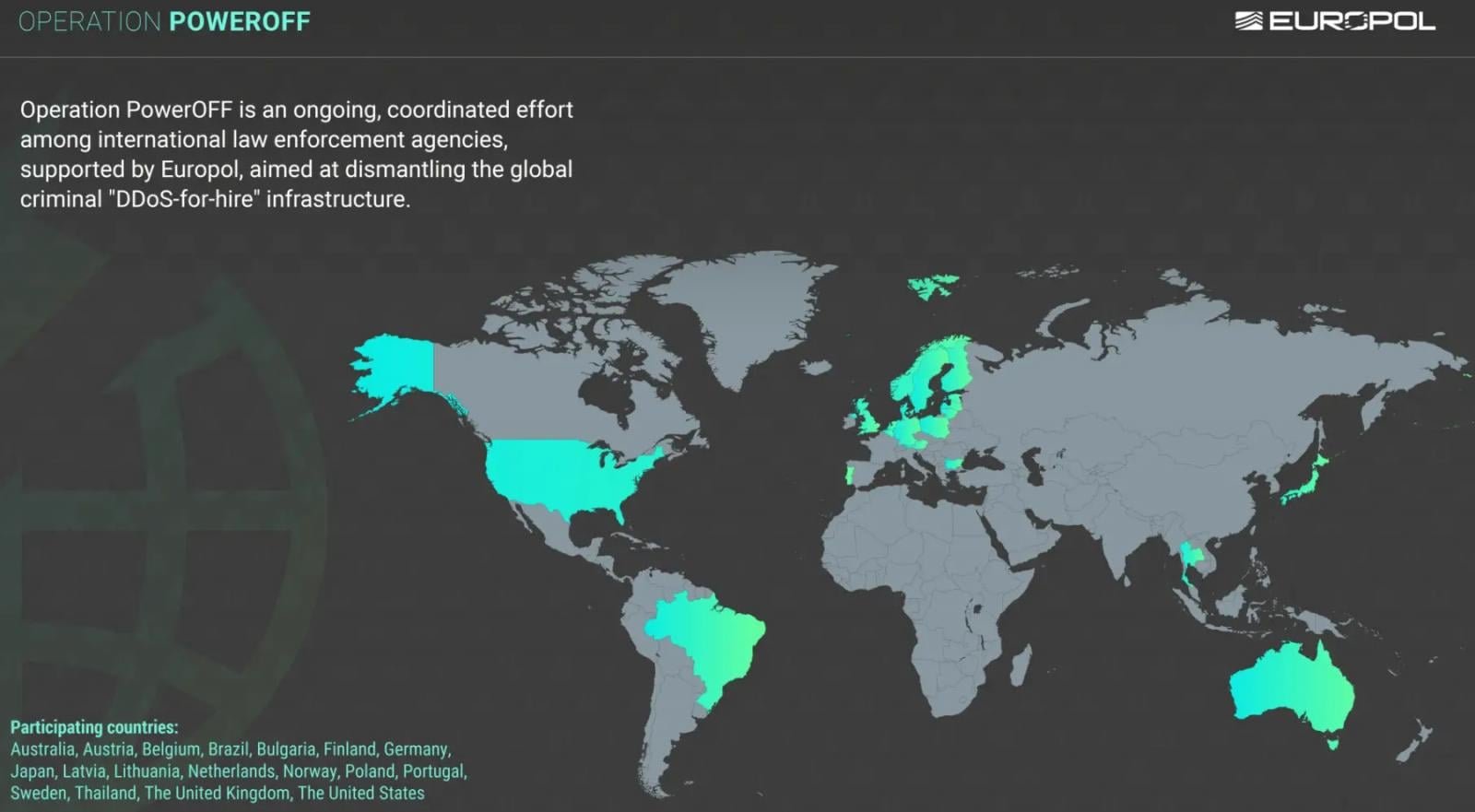
The latest phase of Operation PowerOFF, supported by Europol and involving authorities from 21 countries, represents a significant escalation in the fight against cybercrime infrastructure. The coordinated efforts led to the arrest of four individuals, the takedown of 53 domains, and the issuance of 25 search warrants across multiple jurisdictions.
"Leading up to the action week, a series of operational sprints took place, gathering experts from national authorities across the globe to carry out actions against high-value target users of DDoS-for-hire platforms and raise awareness about the illegality of these activities," Europol stated in their announcement.
During these intensive operational periods, participating countries successfully disrupted illegal booter services, dismantling the technical infrastructure that supports illegal DDoS attacks. The operation's global reach extends across multiple European Union countries as well as Australia, Thailand, the United States, the United Kingdom, Japan, and Brazil.
Understanding Booter Services and Their Impact
"Booter services" are DDoS-for-hire platforms that allow users to pay for renting the firepower of DDoS swarms, typically consisting of compromised routers and IoT devices, and directing it toward their intended targets. These services have become increasingly accessible, with some operators attempting to hide their real goals by claiming they are used for legitimate stress testing.
However, the lack of verification of target ownership makes these platforms de facto tools for illegal attacks. The services typically operate on a subscription or pay-per-attack model, making sophisticated DDoS capabilities available to anyone with a credit card and malicious intent.
The scale of Operation PowerOFF's identification of 75,000 users underscores the widespread nature of this problem. Each of these individuals represents a potential threat actor capable of launching attacks that can take websites offline, disrupt business operations, and cause significant financial damage.
Building on Previous Successes
The latest action builds upon previous phases of Operation PowerOFF that resulted in dismantling key infrastructure and seizing databases containing more than 3 million criminal accounts. This cumulative approach demonstrates the sustained commitment of international law enforcement to combat cybercrime infrastructure at its roots.
The operation's evolution from pure enforcement to include prevention measures reflects a sophisticated understanding of the cybercrime ecosystem. By targeting both the supply side (the booter services) and the demand side (the users), authorities are attempting to disrupt the entire DDoS-for-hire marketplace.
Prevention Phase and Future Strategies
Europol states that Operation PowerOFF is now entering its prevention phase, which includes launching awareness campaigns and disruption measures designed to deter future participation in DDoS attacks. These measures include:
- Placing search engine ads aimed at young people seeking DDoS tools
- Removing from search results more than 100 URLs that promote illegal services
- Adding on-chain warning messages tied to illicit payments
The focus on young people is particularly noteworthy, as booter services often market themselves to students and young adults who may not fully understand the legal consequences of their actions. By intercepting potential users at the point of search, authorities hope to prevent the next generation of cybercriminals from entering the ecosystem.
The use of blockchain-based warning messages represents an innovative approach to combating cybercrime payments. As more criminal activities move to cryptocurrency transactions, law enforcement agencies are developing new techniques to track and deter illicit financial flows.
Broader Context of International Cybercrime Operations
Operation PowerOFF is part of a larger trend of international cooperation against cybercrime infrastructure. Similar operations have targeted various aspects of the cybercrime ecosystem:
- International joint actions have disrupted world's largest DDoS botnets
- Interpol operations have taken down thousands of servers used for cybercrime
- Coordinated efforts have disrupted activity on tens of thousands of IP addresses
- Crackdowns on specific hacking groups have led to dozens of arrests
These operations demonstrate the increasing sophistication and coordination of international law enforcement in addressing cybercrime. The success of Operation PowerOFF suggests that similar approaches could be effective against other forms of cybercrime infrastructure.
Implications for Cybersecurity and Business
The takedown of 53 domains and identification of 75,000 users represents a significant disruption to the DDoS-for-hire market. For businesses and organizations, this could mean a temporary reduction in the availability of DDoS services and potentially fewer attacks in the near term.
However, the cybercrime ecosystem is resilient and adaptive. As booter services are taken down, new ones often emerge to fill the void. The prevention phase of Operation PowerOFF acknowledges this reality by attempting to reduce the demand for these services through education and deterrence.
For organizations concerned about DDoS attacks, this operation serves as a reminder that the threat landscape is constantly evolving. While law enforcement actions can provide temporary relief, organizations must maintain robust DDoS protection measures and stay vigilant against emerging threats.
The success of Operation PowerOFF also highlights the importance of international cooperation in combating cybercrime. As criminal operations increasingly operate across borders, coordinated law enforcement responses become essential for effective action.
As Operation PowerOFF transitions to its prevention phase, the cybersecurity community will be watching to see whether these awareness campaigns and disruption measures can achieve lasting reductions in DDoS-for-hire activity. The identification of 75,000 users provides a substantial database for future enforcement actions and serves as a powerful deterrent to others considering similar activities.
Comments
Please log in or register to join the discussion