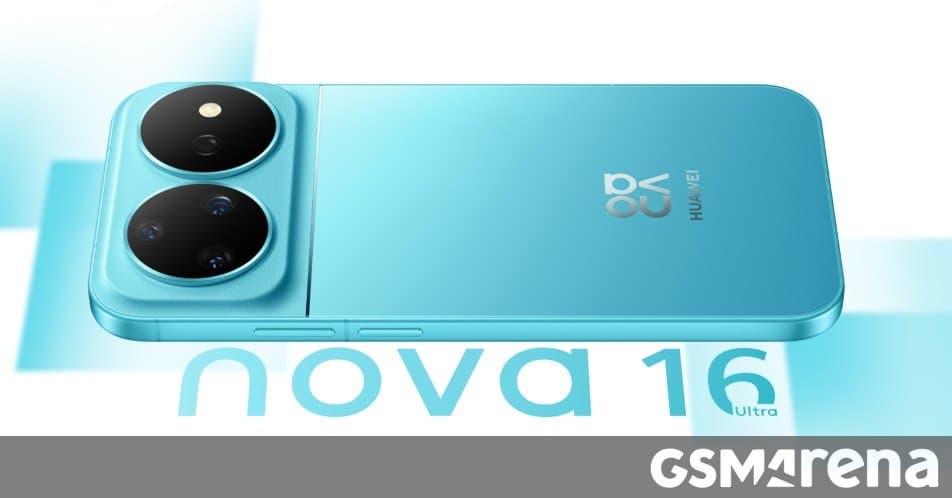
Huawei’s latest flagship, the nova 16 Ultra, debuts in China with a 200 MP RYYB sensor, a 7,000 mAh battery supporting 100 W wired and 50 W wireless charging, and the Kirin 9010S SoC running HarmonyOS 6.1.
 )
)
Huawei has officially launched the nova 16 series in China, and the flagship nova 16 Ultra immediately grabs attention with a combination of extreme resolution, massive battery capacity, and the company’s own Kirin 9010S chipset. The device is positioned as a premium alternative for users who want flagship photography without the price tag of a Mate series flagship.
Key hardware specs
- Display: 6.84‑inch LTPO OLED, FHD+ resolution, adaptive 1‑120 Hz refresh rate, protected by Kunlun Glass and capable of up to 6,000 nits peak brightness.
- Processor: Kirin 9010S, the same 4‑nm‑class SoC that powered the Pura 80. It integrates a 12‑core CPU, Mali‑G710 GPU, and a dedicated NPU for AI tasks.
- Battery: 7,000 mAh cell with 100 W wired fast charging, 50 W wireless charging, and 7.5 W reverse wireless charging. The large capacity is paired with a 4,500 mAh‑equivalent power‑efficiency rating thanks to the 5 nm‑class process.
- Operating system: HarmonyOS 6.1 out of the box, with the latest EMUI skin and a suite of cross‑device features for the Huawei ecosystem.
- Storage & RAM: Starts at 256 GB/8 GB RAM, with a 1 TB/12 GB RAM variant for power users.
- Connectivity: Supports Beidou satellite messaging in China, 5G Sub‑6, Wi‑Fi 7, and Bluetooth 5.4.
Camera system – 200 MP main sensor
The nova 16 Ultra’s camera island is wrapped in a vegan‑leather finish, a nod to sustainability that also feels premium in hand. The three‑camera setup includes:
- 200 MP RYYB main sensor (1/1.28″, f/1.8, OIS). The RYYB colour filter array, first seen on the P50 series, allows more light to reach the sensor, improving low‑light performance despite the high pixel count.
- 50 MP telephoto lens with 88 mm‑equivalent focal length and 3.7× optical zoom. OIS and a f/2.4 aperture keep image quality stable at longer ranges.
- 50 MP ultra‑wide macro lens (f/2.2) that doubles as a macro shooter, letting users capture fine details at just a few centimeters.
A 1.5 MP spectral sensor sits beside the lenses for advanced colour‑grading and AI‑enhanced scene detection. The front‑facing camera is a 50 MP shooter hidden in a pill‑shaped cutout, complemented by a 1.5 MP depth sensor for portrait mode.
Battery and charging strategy
A 7,000 mAh cell is unusual for a device with a 6.84‑inch screen, but Huawei balances the size with a 100 W wired charger that can push the battery from 0 % to 80 % in roughly 30 minutes. The 50 W wireless charger is among the fastest on the market, and reverse wireless charging lets you top up earbuds or a smartwatch on the go.
Ecosystem lock‑in considerations
The nova 16 Ultra ships with HarmonyOS 6.1, which continues Huawei’s push toward a unified ecosystem across phones, tablets, laptops, and IoT devices. Features such as Multi‑Screen Collaboration, SharePlay, and the new Satellite Messaging service are only available within the Huawei family. Users who already own a MatePad, Watch GT, or a HarmonyOS‑enabled laptop will see a smoother cross‑device experience, but the phone’s reliance on Huawei Mobile Services (HMS) means Google Play and many popular Android apps remain unavailable outside of China.
Pricing and availability
- 256 GB / 8 GB RAM: CNY 4,699 (≈ $695 / €596)
- 1 TB / 12 GB RAM: CNY 5,799 (≈ $857 / €735)
Shipments are slated to begin on June 6, 2026 for the Chinese market, with color options in blue, white, and black. No official international rollout has been announced yet.
What this means for consumers
The nova 16 Ultra demonstrates that Huawei can still deliver flagship‑level hardware without relying on Google’s ecosystem. The 200 MP sensor puts it in direct competition with Samsung’s 200 MP Galaxy S 23 Ultra and Xiaomi’s 200 MP Mi 13 Ultra, while the 7,000 mAh battery addresses a common complaint about endurance on high‑refresh‑rate OLED phones.
However, the lack of Google Mobile Services limits its appeal outside China unless users are comfortable with HMS alternatives or are willing to sideload apps. For existing Huawei users, the device offers a compelling upgrade path, especially with the satellite messaging feature that could become a differentiator in regions with spotty cellular coverage.
For more details on the full spec sheet, visit the official Huawei nova 16 Ultra page.
Comments
Please log in or register to join the discussion