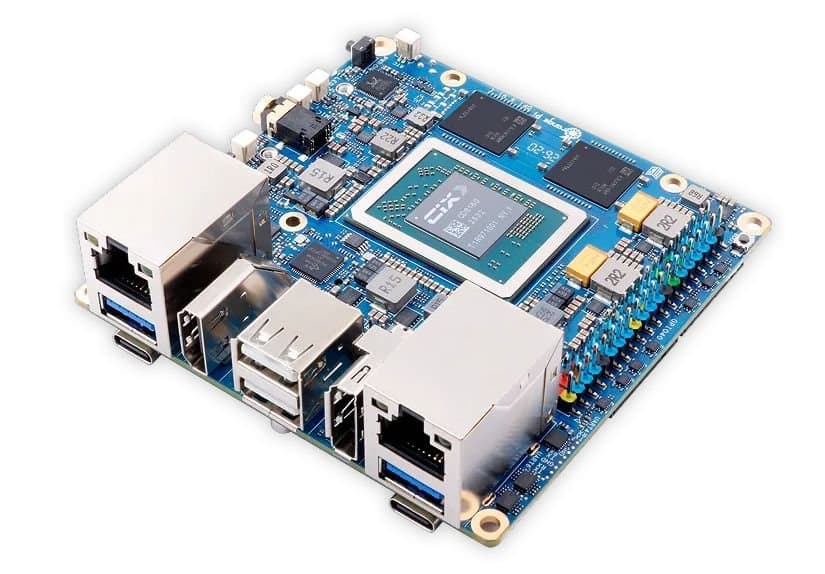
Orange Pi trims the 6 Plus formula into a smaller 90 mm board with strong Arm compute, AI hardware and broad OS targets.
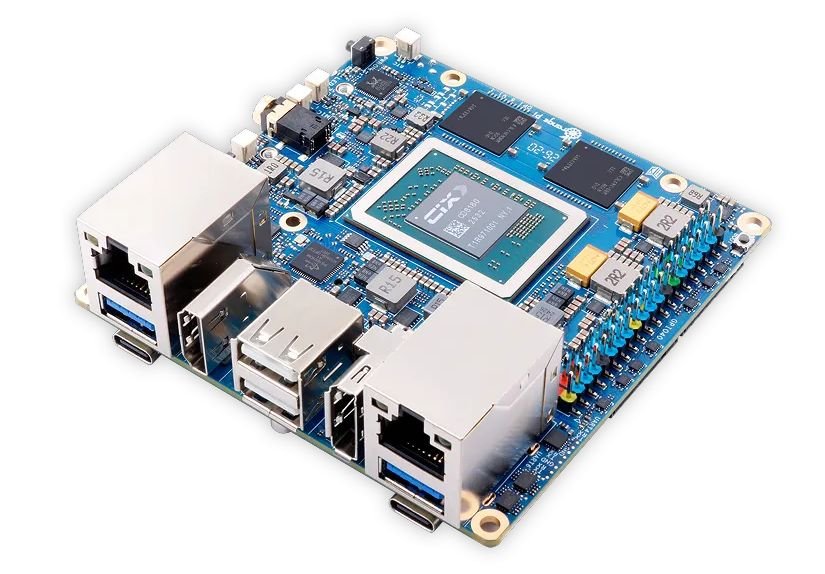
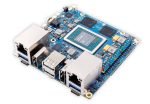
Orange Pi has introduced the Orange Pi 6, a 90 x 90 mm single-board computer built around the CIX P1, also known as the CD8180. The chip combines 12 Arm CPU cores, Immortalis graphics and an NPU that Orange Pi rates at 28.8 TOPS.
Orange Pi claims 45 TOPS when developers use the CPU, GPU and NPU together. That puts the board in a higher class than hobby boards aimed at basic Linux services, media playback or GPIO projects.
The CPU layout gives the board four Cortex-A720 cores at 2.8 GHz, four Cortex-A720 cores at 2.4 GHz and four Cortex-A520 cores at 1.8 GHz. Arm designed that mix for workloads that need both burst performance and lower-power background processing. The Immortalis-G720 MC10 GPU gives the board a modern graphics block for display, media and compute tasks.
Orange Pi has not announced pricing or a launch date. The larger Orange Pi 6 Plus sells from $367, so developers should expect the new board to land below that model if Orange Pi positions it as the smaller option.
Board design and I/O
The Orange Pi 6 sits below the Orange Pi 6 Plus in the lineup. The Plus model uses a larger board, supports 16GB or 32GB of memory and carries dual 5 GbE ports. The Orange Pi 6 ships with 8GB, 16GB or 24GB of LPDDR5 memory and uses two 2.5 GbE LAN ports.
That Ethernet change matters for home lab and edge workloads. Two 2.5 GbE ports give developers enough bandwidth for routers, firewalls, network storage gateways and clustered services without the cost and heat that 5 GbE hardware can bring.
Orange Pi includes two M.2 2280 M-Key slots with PCIe 4.0 x4 support for NVMe storage. That gives the board a clear path into NAS, database and build-server use. A microSD card reader handles boot media or low-cost storage, and an M.2 E-Key socket gives users room for Wi-Fi or Bluetooth through an add-on card.
The port list covers workstation-style use as well as embedded development. The board includes two USB 3.0 Type-C ports for power, data and video, two USB 3.0 Type-A ports, two USB 2.0 Type-A ports, DisplayPort 1.4, HDMI 2.0, eDP, a 3.5 mm audio jack, two 4-lane MIPI-CSI connectors and a 40-pin GPIO header.
Orange Pi includes a PWM fan header, RTC header and UART debug serial port. The board supports 65W or 100W USB-C power adapters, which gives the CIX P1 and dual NVMe slots more headroom than small 5V boards.
Developer impact
Developers who maintain Linux, Android and embedded builds should read the Orange Pi 6 as a compute board first and a microcontroller companion second. The 40-pin GPIO header keeps maker and automation projects in reach, but the CPU, PCIe 4.0 storage and network ports point toward edge servers and AI appliances.
A local AI workload can use the NPU for inference, the GPU for parallel work and the CPU cores for orchestration. Orange Pi’s 45 TOPS figure combines those engines, so developers should check framework support before they plan capacity. A model that can use the NPU will behave much better than one that falls back to CPU execution.
The board’s memory ceiling may affect that choice. The Orange Pi 6 Plus can reach higher RAM capacities. The Orange Pi 6 tops out at 24GB, which should handle many vision, gateway and automation tasks but will constrain larger local language models and memory-heavy databases.
The display setup gives the board unusual range for a single-board computer. HDMI 2.0 and DisplayPort 1.4 cover monitors, eDP supports panel integration, and the USB-C ports can carry video. Developers building kiosks, industrial control panels or compact desktop systems can choose the connector that fits the enclosure instead of redesigning around one display path.
The camera connectors open another path. Two 4-lane MIPI-CSI inputs suit stereo vision, machine inspection and robotics. The CIX P1’s AI hardware gives those projects a local processing target, which can cut latency and reduce cloud dependence.
Platform support
Orange Pi says the board supports Debian, Ubuntu, Android and OpenHarmony. That list gives developers options across server, desktop, mobile-adjacent and embedded environments.
Linux will attract the broadest audience. Debian and Ubuntu make sense for network services, container hosts, build boxes and AI experiments. Developers should watch for kernel version, device tree support and binary blobs for the NPU and GPU. SBC vendors often ship usable images before they publish a smooth upstream story.
Android support gives app teams a route to signage, kiosk and media devices. The board’s ports suit that use: HDMI, DisplayPort, eDP, USB-C video and camera input cover many product shapes. Teams shipping Android devices should check Google service needs, hardware acceleration, camera HAL behavior and update tooling before they commit to production hardware.
OpenHarmony support will interest teams that build China-market embedded products or want an alternative application stack. The hardware makes sense for appliance-style systems with networking, video and local inference.
Orange Pi’s spec sheet mentions Windows. Developers should treat that as an area that needs proof on real hardware. Microsoft supports Windows on Arm, but Qualcomm has received the strongest vendor support. CIX-based systems may run Windows in some form, but driver support, firmware polish and long-term updates will decide whether the board can serve as a credible Windows development target.
Migration notes
Teams comparing the Orange Pi 6 with the Orange Pi 6 Plus should start with bandwidth, memory and board size. The Plus model gives you 5 GbE and more memory headroom. The Orange Pi 6 gives you a smaller board, dual 2.5 GbE and the same CIX P1 compute base.
For a Linux network appliance, the Orange Pi 6 may fit better if 2.5 GbE covers the uplink and LAN needs. For a heavier storage or virtualization box, the Plus model’s memory options may matter more.
For Android and OpenHarmony products, developers should prototype around display, camera and suspend behavior before they design enclosures. SBC spec sheets list connectors. Product teams ship devices after they verify thermals, drivers and update paths.
Orange Pi has built a board with enough CPU, network and storage bandwidth to sit above typical maker hardware. The launch details will decide how attractive it becomes. Price, image quality and mainline Linux progress will matter as much as the 12-core processor.
Comments
Please log in or register to join the discussion