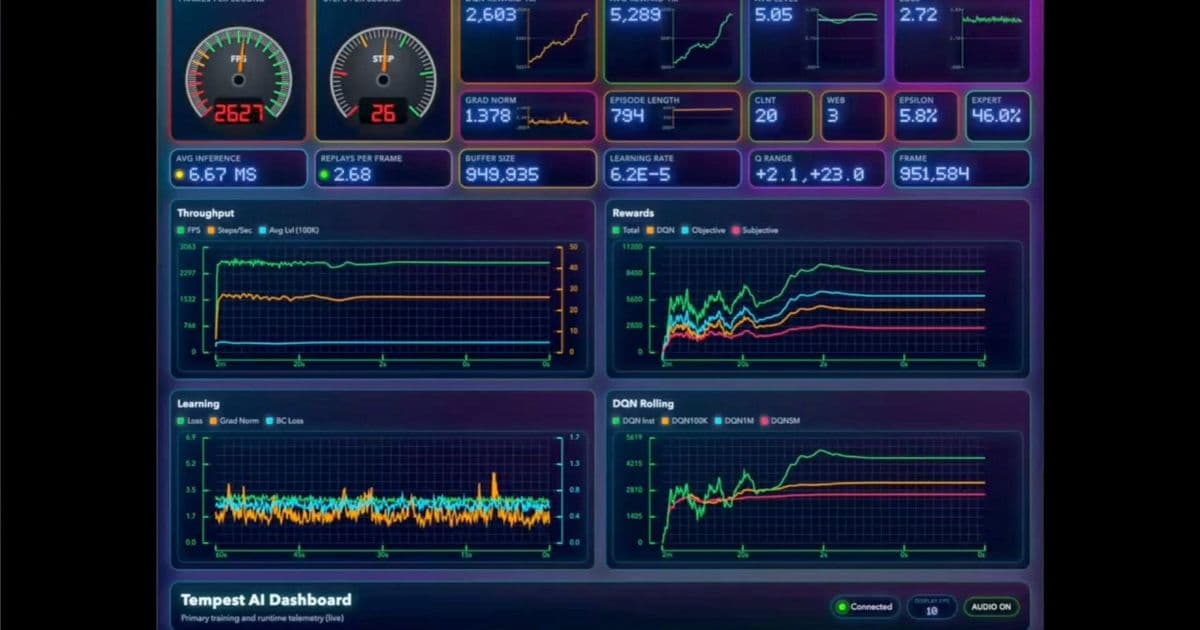
Dave Plummer, architect of Windows Task Manager, shares GPU-intensive Tempest AI dashboard code on GitHub, offering a speculative vision for modern system monitoring tools.
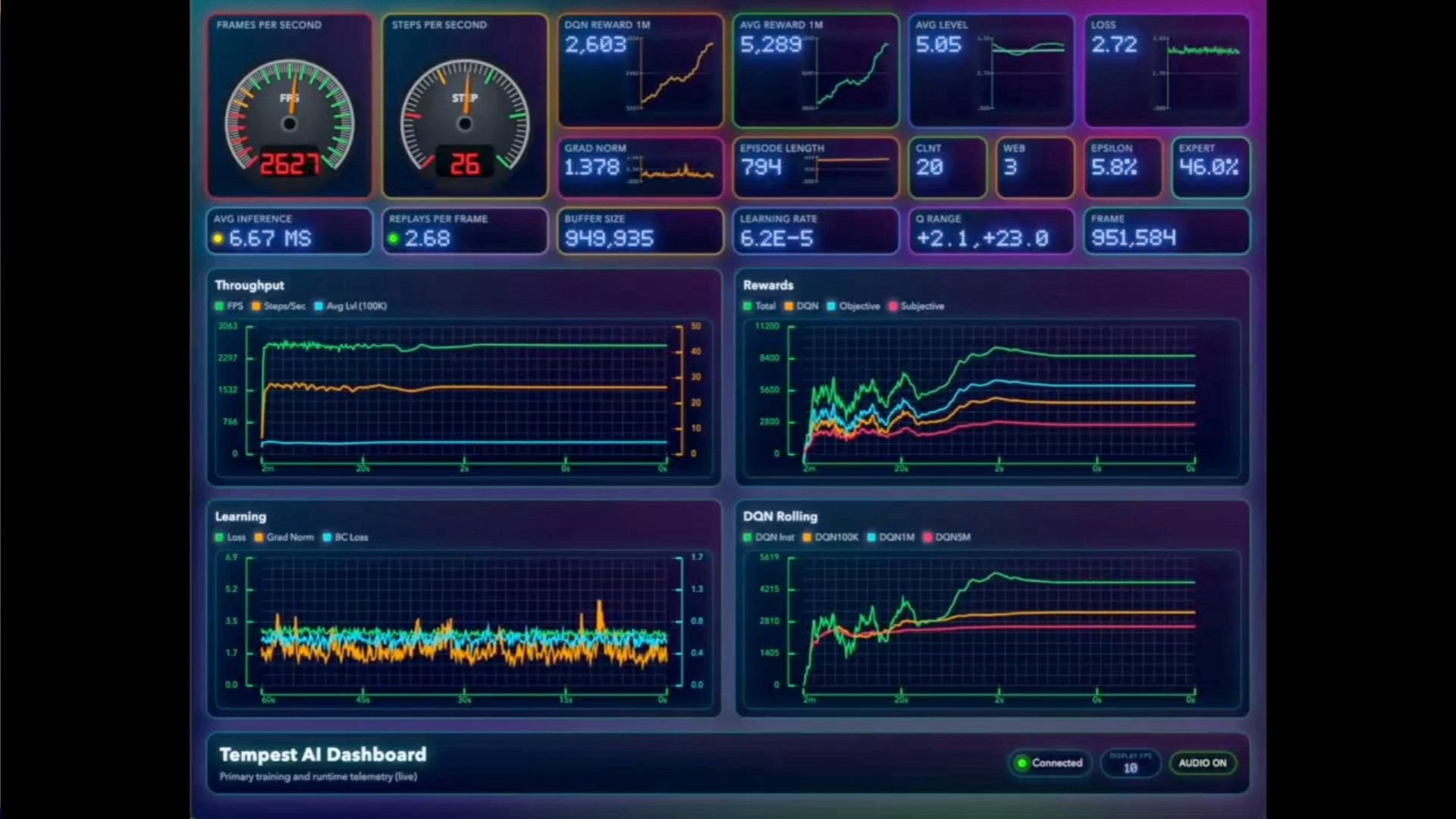
Dave Plummer, the software engineer who created Windows Task Manager during the late 1990s, has publicly released code for a retro-futuristic system monitoring dashboard designed for his Tempest AI project. The visualization tool, hosted on Plummer's GitHub repository, presents an alternate reality where Plummer's design philosophy continued to influence Microsoft's system utilities. This release coincides with ongoing discussions about efficiency in modern system monitoring tools.
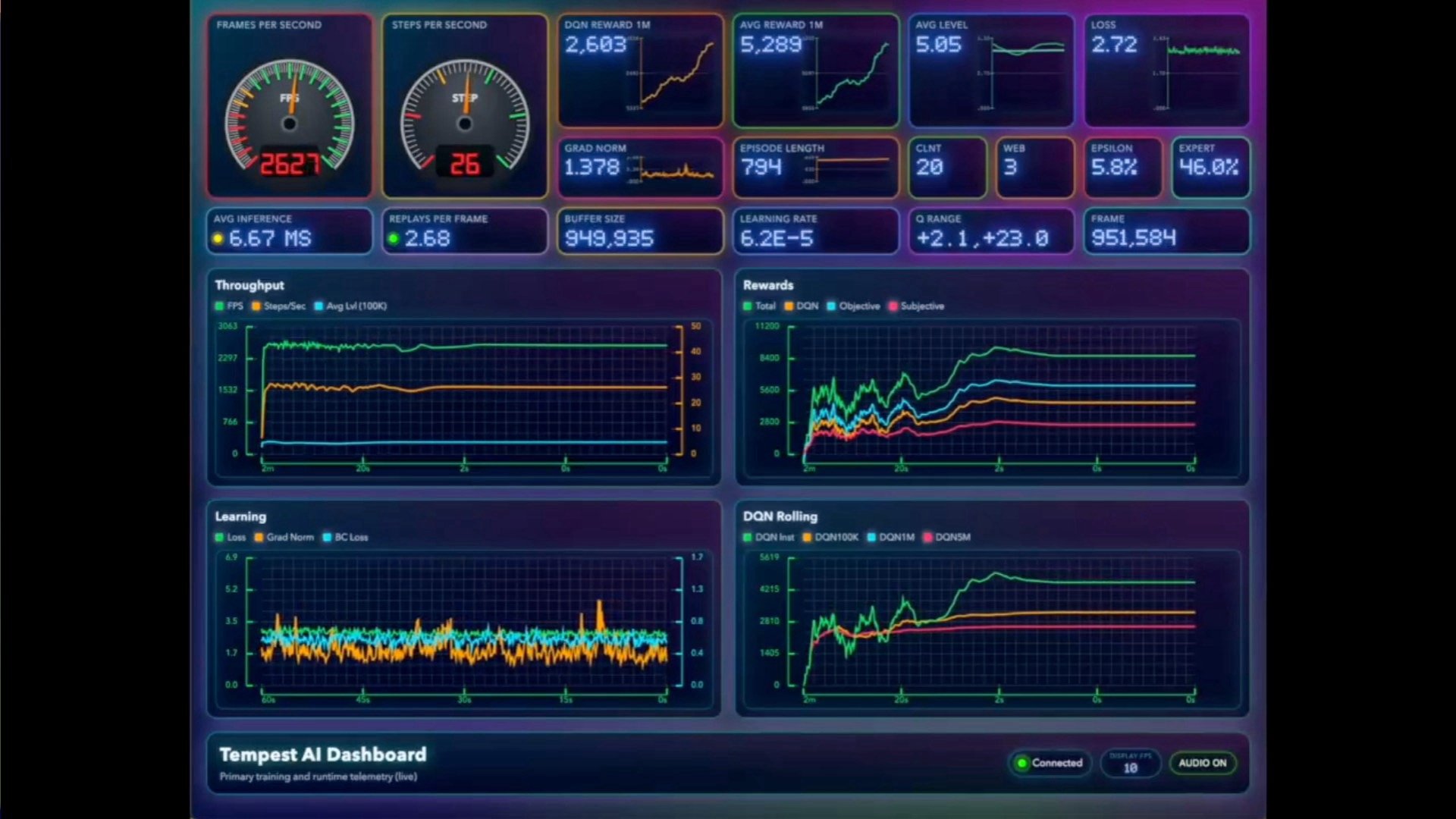
The dashboard exhibits a distinctive aesthetic combining CRT monitor-inspired elements with contemporary RGB lighting. Two prominent circular gauges track GPU and CPU utilization in real-time, resembling automotive speedometers calibrated for silicon performance metrics. Unlike conventional system monitors, Plummer's creation includes an integrated soundtrack that dynamically responds to system activity. This design intentionally contrasts with Windows 11's minimalist Task Manager interface, prioritizing sensory engagement over information density.
Technical specifications reveal significant hardware demands. During operation on Apple's M2 Pro chipset, the dashboard consumes approximately 75% of GPU resources while maintaining 30 frames-per-second rendering. This translates to roughly 15 watts of sustained GPU power draw during active monitoring – equivalent to running three simultaneous 4K video streams. The computational intensity stems from real-time ray tracing effects applied to interface elements and physics-based animation systems.
Plummer originally developed Windows Task Manager as a personal project before Microsoft integrated it into Windows NT 4.0. Its evolution highlights shifting industry priorities: while Microsoft's recent Task Manager updates focused on accessibility (like switching RAM measurement from MHz to MT/s) and Fluent Design integration, Plummer's concept prioritizes visceral performance representation. This divergence underscores fundamental tensions in system tool design – balancing diagnostic clarity against user engagement.
Market implications emerge in three key areas:
- GPU Utilization Standards: As monitoring tools grow visually complex, baseline GPU requirements for system utilities may increase
- Open-Source Alternatives: GitHub-hosted projects like Tempest AI demonstrate growing community interest in customizable system diagnostics
- Design Philosophy: Enterprise tools increasingly favor information density over aesthetics, creating opportunities for niche visualization tools
The Tempest AI dashboard serves as both technical showcase and philosophical statement. While impractical for production environments due to its resource footprint, it provides concrete evidence of how GPU acceleration enables novel interface paradigms. System monitoring historically relied on lightweight text displays; Plummer's work demonstrates how modern graphics processors can transform raw telemetry into kinetic experiences.

Jowi Morales is a hardware analyst specializing in processor architectures and system interface design.
Comments
Please log in or register to join the discussion