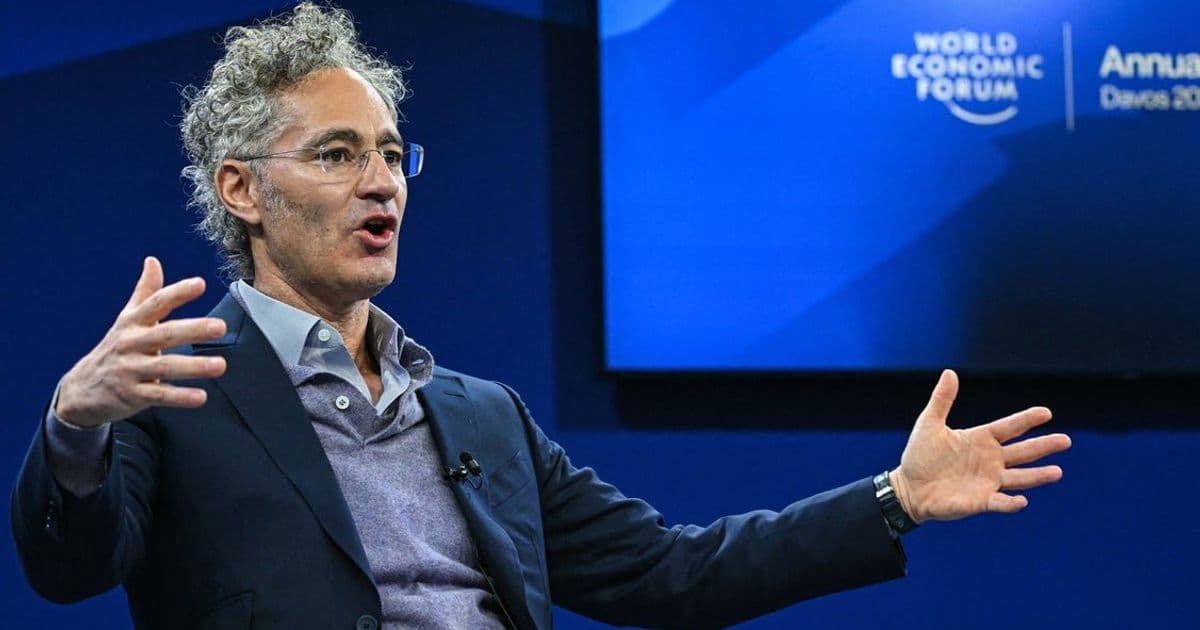
In a controversial new interview, Palantir CEO Alex Karp argues that artificial intelligence will disrupt the economic power of 'humanities-trained, largely Democratic voters' while strengthening that of 'working-class, often male voters.'
Palantir CEO Alex Karp has sparked debate with his latest prediction about artificial intelligence's political and economic impact, arguing in a new interview that AI will fundamentally reshape voting patterns by disrupting the economic power of certain demographics while strengthening others.
The controversial comments came during a discussion about AI's broader societal implications, where Karp suggested that the technology would disproportionately affect different groups based on their educational backgrounds and political affiliations.
The Core Argument
Karp's central thesis centers on the idea that AI will primarily disrupt those with humanities-focused educations - a group he characterizes as "largely Democratic voters." He contends that as AI systems become more capable of handling tasks traditionally performed by these workers, their economic influence will wane.
Conversely, Karp argues that "working-class, often male voters" will see their economic power strengthened by AI adoption. This claim appears to contradict conventional wisdom about automation's impact on blue-collar jobs, suggesting instead that AI will create new opportunities for these workers.
The Political Dimension
The timing of Karp's comments is particularly noteworthy given the current political climate. His framing of the issue along educational and gender lines has drawn criticism from those who see it as an oversimplification of AI's complex societal impacts.
Critics point out that AI's effects on different demographic groups are likely to be far more nuanced than Karp suggests. The technology's impact will depend on numerous factors including industry, geography, and individual adaptability rather than simple educational or gender categories.
Industry Context
Karp's comments come at a time when the tech industry is grappling with AI's rapid advancement and its implications for the workforce. His perspective as the head of a major data analytics company gives his views particular weight, though they remain controversial.
Broader Implications
The debate Karp has sparked touches on fundamental questions about technology's role in society. While some see his comments as prescient, others view them as an attempt to frame AI's impact in politically charged terms that may not reflect reality.
Counter-Arguments
Many experts argue that AI's impact will be more complex and less predictable than Karp suggests. They point to historical examples where technological disruption has affected workers across the educational and political spectrum.
Additionally, some question whether Karp's characterization of "humanities-trained" workers as primarily Democratic voters is accurate or helpful in understanding AI's true impact on the workforce.
The Data Question
Karp's background at Palantir, a company specializing in data analytics, adds an interesting dimension to his predictions. However, critics note that his analysis appears to rely more on political intuition than on empirical data about AI's actual workforce impacts.
Looking Forward
As AI continues to evolve and integrate into various industries, the debate over its societal impacts will likely intensify. Karp's comments have added fuel to this discussion, though whether his specific predictions prove accurate remains to be seen.
The Bigger Picture
Beyond the immediate controversy, Karp's comments highlight the growing intersection between technology, economics, and politics. As AI becomes more prevalent, understanding its multifaceted impacts on different demographic groups will be crucial for policymakers and business leaders alike.
Conclusion
While Karp's predictions about AI's political and economic impacts are provocative, they should be viewed as one perspective in a complex and evolving debate. The true impact of AI on different demographic groups will likely be more nuanced and varied than any single prediction can capture.
The controversy surrounding Karp's comments underscores the need for careful, data-driven analysis of AI's societal impacts rather than broad generalizations based on educational background or political affiliation.
Comments
Please log in or register to join the discussion