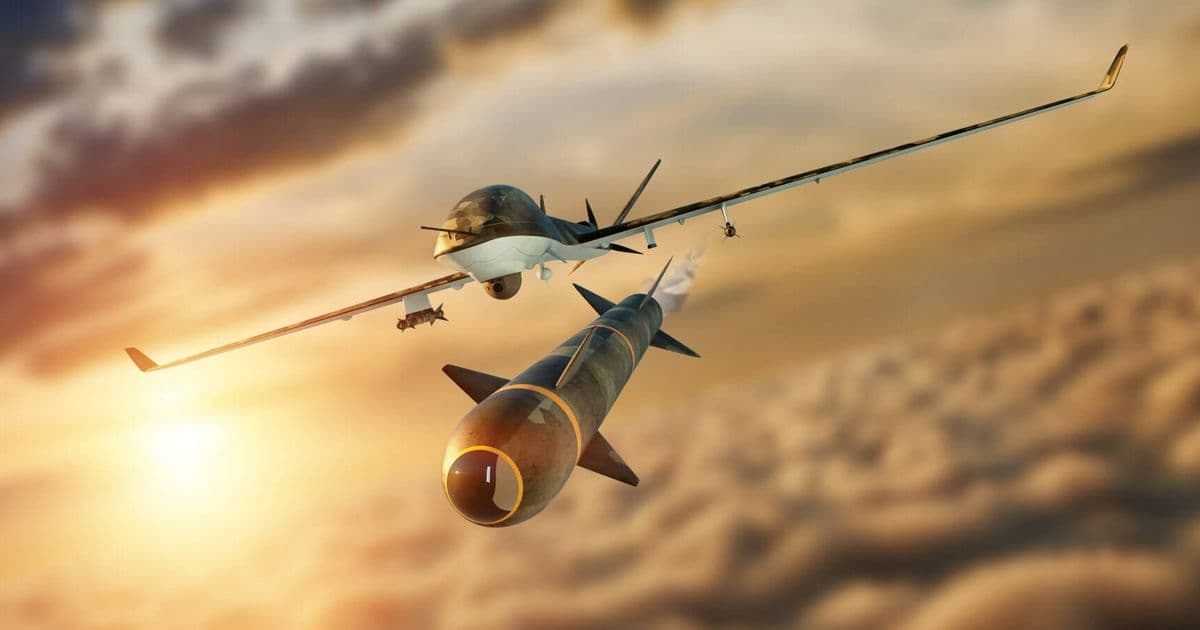
Pentagon AI chief credits Palantir's Maven Smart System with reducing battlefield decision-making from eight systems to one, dramatically speeding up strike operations during Operation Epic Fury.
The US military's targeting operations in Iran have been transformed by Palantir's Maven Smart System, according to Cameron Stanley, the Department of Defense's chief digital and artificial intelligence officer. Speaking at Palantir's AIPCON event, Stanley revealed that the software has consolidated what previously required eight or nine separate systems into a single visualization tool, dramatically accelerating the military's ability to identify, analyze, and strike targets.
From Eight Systems to One: The Maven Revolution
The transformation represents a fundamental shift in military decision-making speed. "We've gone from identifying the target to now coming up with a course of action, to now actioning that target, all from one system," Stanley explained. "This is revolutionary."
The consolidation means that what once required dozens of intelligence officers manually moving data between systems can now be accomplished by a fraction of that number. "I saw stats where normally we would have 2,000 intelligence officers actually trying to do targeting and look at stuff. Now that's 20 and they're doing it in rapid succession as well," said Palantir architect Chad Wahlquist.
The Third Offset Strategy
Maven's development stems from the military's "third offset" strategy, which seeks to maintain US military superiority through technological advantages. While the first offset was nuclear weapons and the second was stealth and precision-guided arms, the third offset focuses on the speed and accuracy of command decisions.
Stanley, who previously led the Algorithmic Warfare Cross Functional Team (Project Maven) from 2021 to 2022, noted that the project began in 2016 when commanders recognized the need for faster battlefield decision-making. Google was originally involved but withdrew in 2018 following employee protests against the company's participation in military AI projects.
How Maven Smart System Works
The system orchestrates data, logic, and action through a unified platform. Operators can select battlefield data and move it into workflows where commanders determine how best to prosecute targets. Patrick Dods, a former submariner and current Maven engineer, described the system as "collapsing the kill chain" - reducing the time between target identification and engagement.
Dods compared the process to reducing the hay in a haystack when hunting for a needle. "This is enabling them to identify the points of interest of the objects of interest that they care about and rapidly build a plan of action, not only around tactical action, but around operational and theater level missions that they might need to execute."
Operational Impact During Epic Fury
During the presentation, Stanley displayed a Maven map showing dozens of cartographic icons in Iran marked in red, including several designated "HQ." The system has been actively supporting Operation Epic Fury, the current US military campaign against Iranian targets. While specific strike locations weren't detailed, the map showed apparent overlaps with Iranian strike maps the Department of Defense presented to reporters earlier in the week.
Palantir's chief commercial officer Ted Mabrey confirmed the company's direct involvement: "Because of the pacing and the way in which it can operate, technology is in the fight for these customers. Whether that is literally in the fight supporting something like Epic Fury..."
Palantir's Position on Military Support
Palantir CEO Alex Karp made the company's stance clear during his opening remarks at AIPCON. "If you're expecting us not to support warfighters once they're in battle you got the wrong company," Karp stated. "Once the war starts, we're not interested in debating how we're supporting them. We are very, very proud to have our role in making sure that American men and women come home safe and happy and proud of what they're doing."
Karp acknowledged the human cost on all sides: "And that sometimes means that people on the other side don't go home. And we are very proud of that."
The Maven Smart System represents a significant advancement in military AI applications, demonstrating how commercial technology companies are increasingly integrated into modern warfare operations. The system's ability to reduce decision-making time from hours to minutes could prove decisive in future conflicts, though it also raises questions about the accelerating pace of automated military decision-making.
Comments
Please log in or register to join the discussion