
A practical guide for developers facing backend performance issues, covering systematic bottleneck identification across services, databases, and infrastructure with actionable solutions.

Ever fetched your order history on Amazon? That seemingly simple action initiates a complex backend sequence where a 5ms operation can easily balloon to over a second under load. When assigned to diagnose such bottlenecks, developers often face pressure without clear starting points. This guide provides a structured approach to identifying and resolving backend performance issues across three critical domains.
Emergency Response: Vertical Scaling
When facing immediate production pressure, temporarily increase CPU/RAM resources to stabilize the system. This creates breathing room for root cause analysis. Treat this strictly as a short-term measure - once stabilized, scale resources back to efficient levels to avoid unnecessary costs.
Bottleneck Categories
Performance issues typically fall into three categories:
- Backend service inefficiencies
- Database performance limitations
- Infrastructure constraints
To quickly identify the dominant bottleneck:
- If load tests show low throughput with high CPU in both backend and database → Focus on database optimization
- High backend CPU alone → Prioritize service code
- High memory utilization → Check for memory leaks
- External API dependencies → Verify response times via browser dev tools
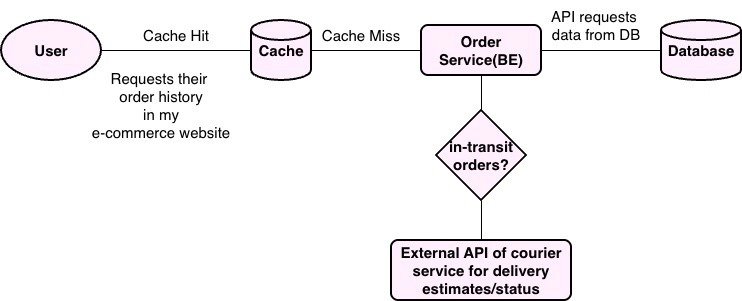
Backend Service Optimization
Before implementing caching or pagination (which often mask underlying issues), address these fundamentals:
1. Asynchronous Execution Avoid synchronous blocking during I/O operations. Use async/await properly to enable concurrency without logic changes. Critical mistake: Calling async APIs then blocking synchronously, which destroys throughput.
2. Algorithmic Efficiency Nested loops containing database operations are primary culprits. Replace with:
- Flat iteration patterns
- Map/Set lookups (O(1) complexity)
- Batched operations Example: Transforming O(n²) nested loops to O(n) using pre-fetched data maps.
3. Payload Optimization Excessive data transfer between frontend and backend creates serialization overhead and security risks. Implement:
- Delta updates (send only changed fields)
- Draft mechanisms with database flags
- Partial response patterns
4. Intentional Batching For bulk operations:
- Batch writes to minimize database roundtrips
- Size batches to balance network efficiency and memory pressure
- Implement failure handling with transactions and cleanup
Database Optimization
1. Connection Pool Tuning Symptoms: High latency despite low CPU/IO. Solutions:
- Increase pool size
- Use connection poolers like PgBouncer for PostgreSQL
2. Query Analysis Use EXPLAIN ANALYZE (PostgreSQL) or equivalent:
- Eliminate N+1 queries
- Reduce expensive joins
- Move computations to application layer when practical
3. Strategic Indexing Create indexes for:
- WHERE, GROUP BY, ORDER BY, JOIN clauses
- Frequently paired columns (composite indexes) Balance with storage overhead and write performance.
4. Normalization Tradeoffs For read-heavy patterns requiring multiple joins:
- Denormalize hot data paths wrongUse materialized views for complex queries
- Maintain normalization only for strong consistency requirements
Infrastructure Tuning
Apply this three-phase approach:
Phase 1: Measure Peak Usage Load test while monitoring CPU/RAM. Threshold: Sustained >80% utilization indicates resource constraints.
Phase 2: Resource Allocation
Start with: Allocation = Peak Usage × 1.5-2.0
Adjust based on:
- Traffic patterns
- Failure tolerance
- Cost constraints
Phase 3: Validation Benchmark new configuration under load. If issues persist:
- Implement horizontal scaling
- For managed instance groups: Configure min-instances to prevent cold starts
Final Considerations
Performance tuning requires methodical measurement before optimization. Key principles:
- Profile before optimizing
- Address root causes, not symptoms
- Validate each change under realistic load
- Monitor for regression
By systematically addressing these layers, teams can transform backend performance from bottleneck to competitive advantage.
Comments
Please log in or register to join the discussion