Anders Toxboe examines how persuasive design has evolved over the past decade, moving beyond superficial gamification to become a more sophisticated behavioral design approach that respects user autonomy while supporting business goals.
Ten years ago, persuasive design represented a new frontier in UX, promising to help teams guide users toward desired outcomes by leveraging psychological principles. Today, that promise has proven true—but not in the way many practitioners initially expected. Most product teams still face familiar challenges: high bounce rates, weak activation, and users dropping off before experiencing core value. While usability improvements help, they don't always address the behavioral gap beneath these patterns.
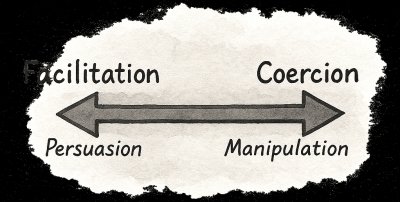
Persuasive design hasn't disappeared—it has matured into what's now more accurately called behavioral design: an approach that aligns product experiences with the real drivers of human behavior, executed with an ethical mindset. When done well, it can improve conversion, onboarding completion, engagement, and long-term use without slipping into manipulation.
What Has Held Up Over the Past Decade
The most enduring insight from the last decade of persuasive design is that behavioral design creates the most value when it moves beyond isolated fixes and becomes a deliberate strategy. Many product teams start with narrow goals: improve a sign-up rate, reduce drop-off, or boost early retention. When standard UX optimizations plateau, they turn to psychology for a quick lift, often with success.
The biggest opportunity isn't another uplift on a stubborn metric, but having a systematic way to understand and shape behavior across the product. Behavioral design isn't about hacks. It's about helping people succeed.
Common signals are easy to recognize: people sign up but never finish onboarding; they click around once and never return; key features sit unused. A behavioral strategy doesn't just ask "What can we change on this screen?" It asks what is happening in the user's mind and context at those moments. That might lead you to design an onboarding experience that uses curiosity and the goal-gradient effect to guide people to a clear first win, instead of hoping they read a help doc.
What Didn't Hold Up: The Limits of Pattern-First Gamification
Game mechanics alone are no longer a credible behavioral strategy. Ten years ago, adding points, badges, and leaderboards was almost shorthand for "we're doing psychology." Today, most teams have learned the hard way that this is decoration unless it serves a real need.
A behavioral approach starts with a blunt question: What is the game layer in service of, and for whom? Does it help people make progress that matters to them, or does it just keep a dashboard happy? If it ignores intrinsic motivation, it will look clever in a slide deck and brittle in production.
In practice, that means points and streaks are not treated as automatic upgrades anymore. Teams ask whether a mechanic helps users feel more competent, more in control, or more connected to others. A streak only makes sense if it reflects real progress in a skill the user cares about. A leaderboard only adds value if people actually want to compare themselves and if the ranking helps them decide what to do next.
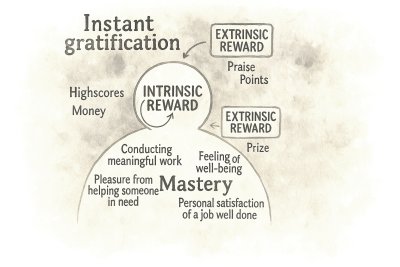
If it does not pass those tests, it is clutter, not a motivational engine. Streaks and badges only work when they support something users truly value.
From Cause and Effect to Holistic Systems Thinking
Early persuasive design often assumed a simple logic: find the broken step, add the right lever, and users move forward. Nice on a slide, rarely true in reality. People don't act for a single reason. They have context, history, competing goals, mood, time pressure, trust issues, and different definitions of success.
Two users can take the same step for completely different reasons. The same user can behave differently on a different day.
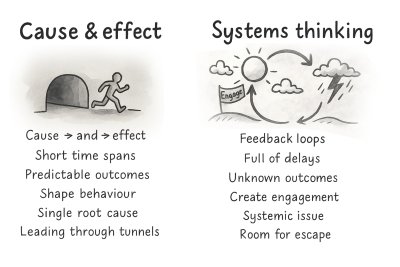
That's why systems thinking matters. Behavior is shaped by feedback loops and delays, not just one trigger. Outcomes we care about—trust, competence, and habit—are built over time. A change that boosts this week's conversion can still weaken next month's retention. If you have ever shipped a "conversion win" and then watched support tickets, refunds, or churn go up, you have felt this. The local metric improved. The system got worse.
Your design structures either enable people or box them in. Defaults, navigation, feedback, pacing, rewards—each of these decisions reshapes the system and therefore the journeys people take through it. So the job is not to perfect a single funnel. It is to build an environment where multiple valid paths can succeed, and where the system supports long-term goals, not just short-term clicks.
From Triggers to Context: The Evolution of Behavioral Frameworks
The same shift has happened in the frameworks we use. A decade ago, the Fogg Behavior Model (FBM) was everywhere. It gave teams a simple trio: motivation, ability, trigger—and a clear message: shouting louder with prompts does not fix low motivation or poor ability.
That alone was a useful upgrade. But teams eventually ran into the same wall: prompts do not fix low capability or missing opportunity. You cannot nag people into skills they do not have or into contexts that do not exist.
That is where many teams that work deeply with behavior change have gravitated toward COM-B as a more complete foundation. COM-B breaks behavior into capability, opportunity, and motivation. It starts with a blunt check: can people actually do this, and does their environment let them?
That maps well to modern products, where behavior happens across devices, channels, and moments, not on a single screen. It also plugs into broader behavior change work in health and public policy, so we do not have to reinvent everything inside UX.
Thinking this way nudges teams away from simple cause-and-effect stories. A drop in completion rate is no longer "the button is bad" or "we need more reminders," but a question about how skills, context, and motivation interact.
Psychology in Discovery and Ideation
COM-B is often used as a bridge between discovery and ideation. On the discovery side, it gives structure to research. You can use it to design interview guides, read analytics, and make sense of observational studies.
Good discovery doesn't just ask what users say, but examines what their behavior reveals. Instead of asking "Why did you stop using the product?" and writing down the first answer, you deliberately walk through capability, opportunity, and motivation.
The bridge from discovery to ideation can be a single sentence template: "From current behavior to target behavior, by doing X, because of barrier Y." This "from–to–by–why" framing forces teams to say what they actually believe. You are not just saying "add a checklist." You are saying: "We believe a checklist will help new users feel more capable, which will increase the chance they complete setup in their first session."
Now it is a behavioral hypothesis you can test with experiments, not just a design idea you hope for.
A Practical Workshop Framework for Teams
If the first decade of persuasive design taught us anything, it is that behavioral insight is cheap until a team can act on it together. Methods matter. Over time, a small set of workshop formats has consistently helped product teams uncover behavioral barriers, align on opportunities, and generate solutions grounded in real psychology instead of surface patterns.
One effective way to make this concrete is through a workshop format. The aim is to help teams:
- Interpret research through a behavioral lens
- Surface capability, opportunity, and motivation gaps
- Prioritize high-potential opportunities
- Generate ideas that are both psychologically sound and ethically considered
Exercise 1: Behavioral Empathy Mapping
The first step is building a shared, psychologically informed understanding of users. Behavioral Empathy Mapping extends traditional empathy mapping by paying attention to what users attempt, avoid, postpone, misunderstand, or feel uncertain about. These subtle behavioral signals often reveal more than stated needs or pain points.
Exercise 2: Behavioral Journey Mapping
Once you understand the user's mindset and context, the next step is to map how those forces play out across time. Behavioral Journey Mapping overlays the user's goals, actions, emotions, and environment onto the product journey, highlighting the specific moments where behavior tends to stall or shift.
Unlike traditional journey maps, the behavioral version focuses on where capability breaks down, where the environment works against the user, and where motivation fades or conflicts arise. These become early signals of where change is both needed and possible.
Exercise 3: Behavior Scoring
With a clearer picture of the user journey and what moments could benefit from a behaviorally helpful hand, you are now ready to identify the behavior it makes most sense to focus on trying to influence.
Exercise 4: Ideas First, Patterns Later
Once the team has agreed on which behavior matters most, the next risk is jumping too quickly to familiar psychological tricks. One of the clearest lessons has been that starting with "the pattern" often leads to generic solutions that feel clever but fail in context.
This exercise deliberately separates idea generation from psychological framing. Start by restating the prioritized target behavior and the key barrier identified during journey mapping. Then give the team a short, focused ideation window. The rule here is simple: no references to behavioral models, cognitive biases, or persuasive patterns yet. Ideas should come directly from the user context, constraints, and moments uncovered earlier.
Only after generating context-based ideas do you introduce a library of psychological principles and techniques to refine and strengthen them.
Exercise 5: Dark Reality
Before ideas turn into experiments or shipped features, they need one final test—not for feasibility or metrics, but for ethics.
Take one or two of the strongest ideas from the previous exercise. Imagine worst-case scenarios by asking the team to deliberately shift perspective: What if a competitor used this against us? What if this nudges users when they're stressed, tired, or vulnerable? What happens if this works repeatedly over months, not once? Could this create pressure, guilt, or dependence?
For each risk, explore ways to soften or counterbalance the effect: clearer intent or transparency, lower frequency or gentler timing, explicit opt-outs, alternative paths forward. Some ideas are reshaped. Some are paused. Some survive intact, but now with greater confidence.
Building a Shared Vocabulary for Product Psychology
The teams that get the most out of behavioral design rarely have a single "psychology expert." Instead, their team shares a vocabulary around product psychology and knows how to communicate around customer problems behaviorally.
A shared vocabulary turns psychology into cross-functional work. When patterns and principles are shared:
- Product, design, engineering, and marketing can talk about behavior without talking past each other
- Discovery insights are easier to interpret because common barriers and drivers have names
- Ideas can be framed as behavioral hypotheses ("we believe this will increase early competence…") instead of vague guesses
The Persuasive Patterns collection grew from this need: giving teams a common language and a concrete set of examples to point at. Whether used as a printed deck in a workshop or as long-form references during everyday work, the goal is the same: make product psychology something the whole team can see and discuss.
The Next Decade of Persuasive Design
Persuasive design was often framed as a bag of tricks. Today, the work looks different:
- Game mechanics are used to support intrinsic motivation, not drive vanity engagement
- Frameworks like COM-B and systems thinking help teams see behavior in context, not as a single trigger
- Behavioral insight is used to shape discovery and ideation, not just last-minute copy changes
- Ethics is part of the design brief, not an afterthought
The next step is not more sophisticated nudges. It is a more systematic practice: simple methods, shared language, and a habit of asking "What is really going on in our users' lives here?" If you start by focusing on one behavioral problem, use a couple of the exercises in this article, and give your team a shared set of patterns to reference, you are already practicing persuasive design in the way it has evolved over the last ten years: grounded in evidence, respectful of users, and aimed at outcomes that matter on both sides of the screen.
Comments
Please log in or register to join the discussion