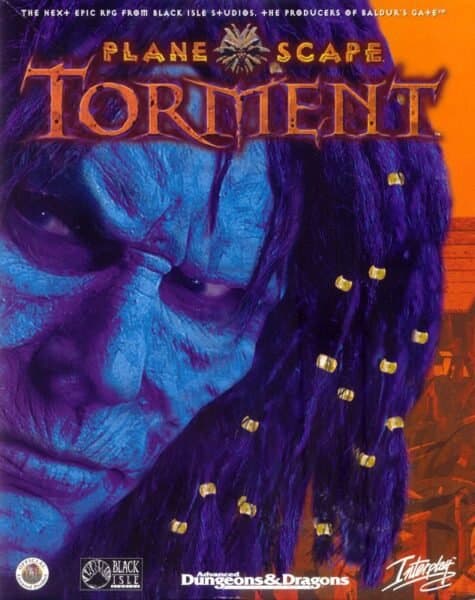
An in‑depth look at how the wild multiverse of TSR’s Planescape setting leapt from a niche tabletop product into the cult‑classic CRPG Planescape: Torment, tracing the key figures, the turbulent business backdrop, and why the game’s tragic storytelling still matters today.
Historical context
In the early 1990s Dungeons & Dragons was at a crossroads. TSR, the company behind the game, was hemorrhaging cash, its product line bloated with countless campaign settings, and a new competitor—White Wolf’s Vampire: The Masquerade—was pulling a younger, edgier crowd into the hobby. Amidst this turmoil, veteran designer David “Zeb” Cook was tasked with giving the franchise a fresh, unifying vision. The answer was Planescape, a boxed set that re‑imagined the D&D multiverse as a sprawling network of philosophical factions, bizarre locales, and the infamous city of doors, Sigil.
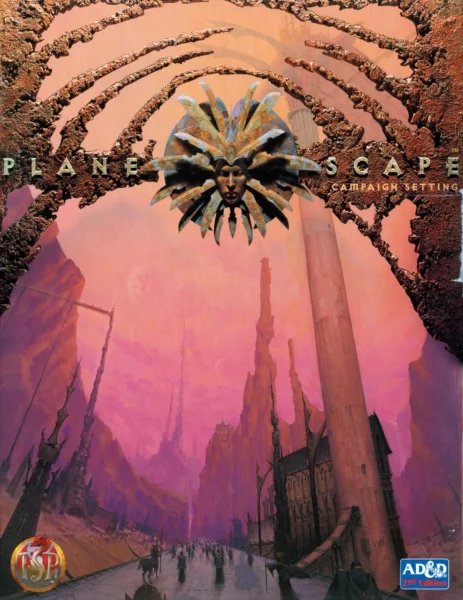
The boxed set arrived in April 1994, a luxurious package printed on thick Suede paper, complete with a massive Dungeon Master’s screen. It sold for a modest $30, yet its ambition was anything but modest. While the core rules still lived on the Prime Material Plane, Planescape opened the doors—literally—to the Inner and Outer Planes, each embodying elemental forces or moral alignments. This cosmology traced its roots back to Gary Gygax’s early appendices in the 1979 Player’s Handbook and Dungeon Master’s Guide, where planes were little more than a speculative footnote.
What happened
From tabletop to screen
The Planescape setting never became a bestseller—about 60 000 copies sold in its first five years—but it left a deep imprint on the creative staff at TSR’s Wisconsin headquarters. When Interplay’s Brian Fargo began looking for a new D&D‑based CRPG in the mid‑90s, the studio already owned the Infinity Engine (later used for Baldur’s Gate). Chris Avellone, a freelance writer who had struggled to break into the industry, pitched a game that would start "after the death screen"—a story about a nameless amnesiac who asks, "What happens after I die?".
Avellone’s concept was green‑lit in 1997 after a meeting with Fargo, who was willing to gamble on something “as high‑concept as you can get.” The project assembled a lean team: Avellone (lead designer), Daniel Spitzley (lead programmer), artists Tim Donley and Aaron Meyers, and producer Guido Henkel. Development was rocky; the team was repeatedly pulled onto other Interplay projects (notably Fallout 2) and the game languished through 1998 while Baldur’s Gate revived D&D on PC.
When the dust settled, Planescape: Torment shipped for the 1999 holiday season. Critics lauded its unprecedented narrative depth—over 800 000 words of dialogue—while noting its clunky interface and combat that felt secondary to the story. Sales paled beside Baldur’s Gate and the ill‑fated Ultima IX, but the game earned a reputation as a cult classic.
Key figures & artifacts
- Gary Gygax – laid the groundwork of the planar multiverse in the late 1970s.
- David “Zeb” Cook – designed the Planescape setting, inventing Sigil and its faction politics.
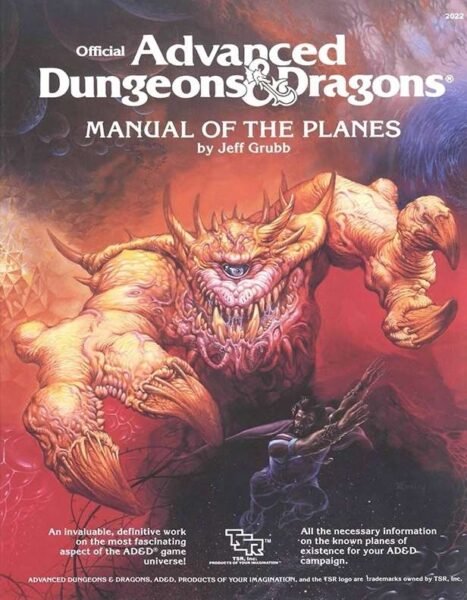
- Jeff Grubb – authored the 1987 Manual of the Planes, the first serious attempt to flesh out the planes for tabletop play.
- Chris Avellone – transformed tabletop lore into a digital tragedy, emphasizing philosophy over combat.
- Brian Fargo – Interplay founder who gave the project a chance despite its commercial risk.
Why it still matters
Interactive tragedy – Planescape: Torment is one of the few games that treats its narrative as a tragic arc, echoing Aeschylus and Shakespeare. The protagonist’s quest for identity forces players to confront existential questions, a rarity in a genre dominated by power‑fantasy progression.
Design legacy – The game proved that a CRPG could thrive on dialogue and moral ambiguity. Its influence can be seen in later Bioware titles such as Knights of the Old Republic and Mass Effect, where player belief systems shape the world.
Preservation – An “Enhanced Edition” on GOG.com (released 2022) bundles the original with modern compatibility fixes, ensuring new generations can explore Sigil’s alleyways and the philosophical factions that still feel fresh.
Academic interest – Scholars of game studies cite Planescape when discussing ludic philosophy and the capacity of interactive media to model complex ethical frameworks. The game’s design documents, now part of the Brian Fargo Collection at the Strong Museum of Play, are primary sources for research on narrative‑driven game development.
In short, while the original Planescape boxed set faded into obscurity, its digital offspring survived as a touchstone for anyone who believes games can ask the big questions. The next installment of this series will dive into the game’s mechanics, its reception, and the modern revival of interest in the Infinity Engine era.
Sources: Ben Riggs, Slaying the Dragon; David L. Craddock, Beneath a Starless Sky; Shannon Appelcline, Designers & Dragons vols. 1 & 3; Dragon Magazine (1994); Computer Gaming World (2000); GOG.com Enhanced Edition page; Strong Museum of Play archives; interviews with Chris Avellone (Designer’s Notes, Last Game Standing) and Sean Gandert (Exposition Break).
Comments
Please log in or register to join the discussion