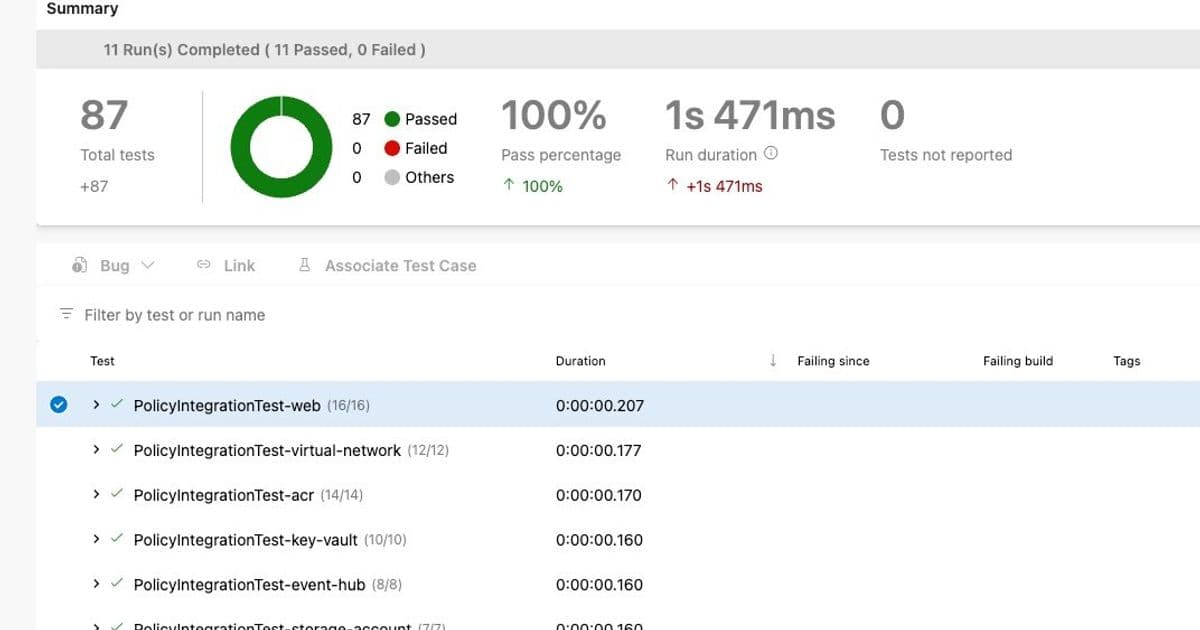
Tao Yang unveils a comprehensive automated testing framework for Azure Policy that addresses the critical challenge of ensuring policy effectiveness in complex environments, now integrated into the AzPolicyFactory solution.
Managing Azure Policy at scale presents a significant challenge for organizations: ensuring policies function as intended without causing unexpected disruptions in complex environments. A single misconfiguration can have far-reaching consequences, yet many organizations still rely on manual, ad-hoc testing methods that fail to keep pace with constantly evolving policy resources.
The Challenge of Policy Validation
In large enterprises with intricate Azure environments, policy resources are in constant flux. New policies are created, existing ones are updated, and the interconnected nature of cloud resources means changes can have cascading effects. Traditional manual testing approaches simply cannot scale to meet these demands. Organizations need a systematic, automated way to validate policies continuously throughout their lifecycle.
Introducing the Policy Integration Test Framework
The Policy Integration Test framework represents over eight months of development effort to address this exact challenge. Built as a core component of the AzPolicyFactory solution, this framework provides automated testing of policy resources in real environments with programmatic evidence capture using the Pester testing framework.
The framework operates on two critical principles:
- Continuous validation - New or updated policies are tested automatically to ensure they work as expected
- Ongoing effectiveness monitoring - Existing policies are re-validated after any changes to confirm they remain effective
Automated Testing in CI/CD Pipelines
One of the framework's most powerful features is its integration into the development workflow. Test cases can be automatically triggered when a pull request is raised in your Policy Infrastructure-as-Code repository, ensuring that every proposed change undergoes rigorous validation before deployment.
This automated approach transforms policy management from a reactive, manual process into a proactive, automated one. Developers and policy administrators can have confidence that their changes won't introduce unexpected issues into production environments.
Comprehensive Tooling Support
The Policy Integration Test framework demonstrates impressive versatility in its tooling support:
- CI/CD Platforms: Both Azure DevOps pipelines and GitHub Actions workflows are supported
- Infrastructure as Code: Test cases work with both Azure Bicep and Terraform
- Testing Framework: Built on Pester for standardized test execution and reporting
This broad compatibility ensures the framework can integrate seamlessly into existing DevOps practices regardless of the specific tools an organization uses.
Real-World Implementation
The framework's effectiveness is demonstrated through its implementation in actual CI/CD pipelines. Whether using Azure DevOps or GitHub Actions, the testing framework provides clear, actionable feedback on policy validation results.
By capturing evidence programmatically, the framework eliminates the ambiguity and inconsistency that often plague manual testing approaches. Every test result is documented, traceable, and reproducible.
Documentation and Community Support
Understanding that adoption of new tools requires comprehensive guidance, the AzPolicyFactory repository includes detailed documentation to help organizations get started with the Policy Integration Test framework. This documentation covers everything from initial setup to advanced configuration options.
The framework is available through the official Azure GitHub organization at aka.ms/AzPolicyFactory, making it easily accessible to the broader Azure community.
Focus on Testing and Validation
What sets AzPolicyFactory apart from other policy management solutions is its laser focus on testing and validation. As Tao Yang emphasizes, deploying Azure Policy resources is relatively straightforward—there are many ways to accomplish this task. The real challenge lies in ensuring those policies work correctly and continue to work over time.
This focus on quality assurance represents the core value proposition of the solution. While deployment might consume only a small fraction of development time, testing and validation require significant ongoing effort that this framework automates.
Looking Ahead
The release of the Policy Integration Test framework marks a significant milestone in Azure Policy management. By providing automated, continuous validation capabilities, it addresses one of the most critical pain points in cloud governance.
Organizations implementing this framework can expect to see reduced risk of policy-related incidents, faster deployment cycles for policy changes, and greater confidence in their cloud governance posture. As cloud environments continue to grow in complexity, tools like the Policy Integration Test framework will become increasingly essential for maintaining effective control and compliance.
The framework's integration into the broader AzPolicyFactory solution positions it as a comprehensive tool for organizations looking to scale their Azure Policy management practices while maintaining high standards of quality and reliability.
Comments
Please log in or register to join the discussion