Using GitHub Copilot's Squad system to build a sprint review dashboard with AI agents named after Ocean's Eleven characters, completing a complex project in just 30 minutes through collaborative AI development.
When you're part of an agile team, sometimes it feels like you're orchestrating a heist. You've got a tight deadline, a complex target, and a crew of specialists, each with their own quirks and talents. That's exactly how it felt when I set out to build a live .NET 10 Blazor Server sprint review dashboard for the team I work in at Intercept. But this time, my crew wasn't just my colleague; it was a team of AI agents assembled using GitHub Copilot's Squad system, and each one had a name straight out of Ocean's Eleven.
Let me set the scene: Squad is a GitHub project that lets you assemble a named team of AI agents, each with a persistent identity. For this job, I picked Ocean's Eleven as my universe. The coordinator, Squad itself, was my Rusty Ryan, keeping everyone in sync. My main developer agent? Livingston, named after Livingston Dell, the tech wizard who hacks into the casino's systems. The parallel was intentional and, honestly, delightful. Just like Danny Ocean briefs his crew for a big job, I was Danny, briefing Livingston and the rest of the Squad for our sprint review dashboard caper.
The Target and The Plan
The target: Project #134 for Team 503. The plan? Pull real data from the GitHub Projects API across three sprints—previous (2026-4), current (2026-5), and next (2026-6). We needed an Issues page with a sortable, searchable table, complete with GitHub issue links that open in a new tab. The Risks page would serve as our risk register, with linked issue-number badges. The Team Workload page would show who's carrying what, and the Members page would break down stats for each of our team members. The Sprint Health page would flag serial carry-overs (red), no-update carry-overs (yellow), and mid-sprint additions (teal) so we could spot problems before they snowballed.
Features Built in the Heist
Here's what we delivered:
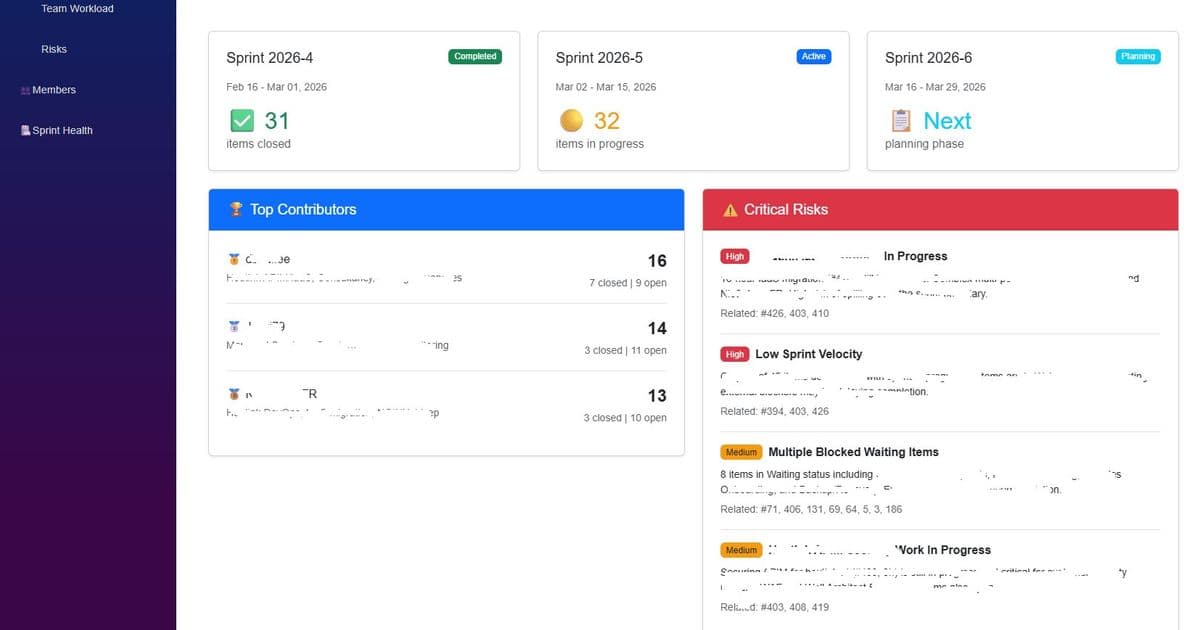
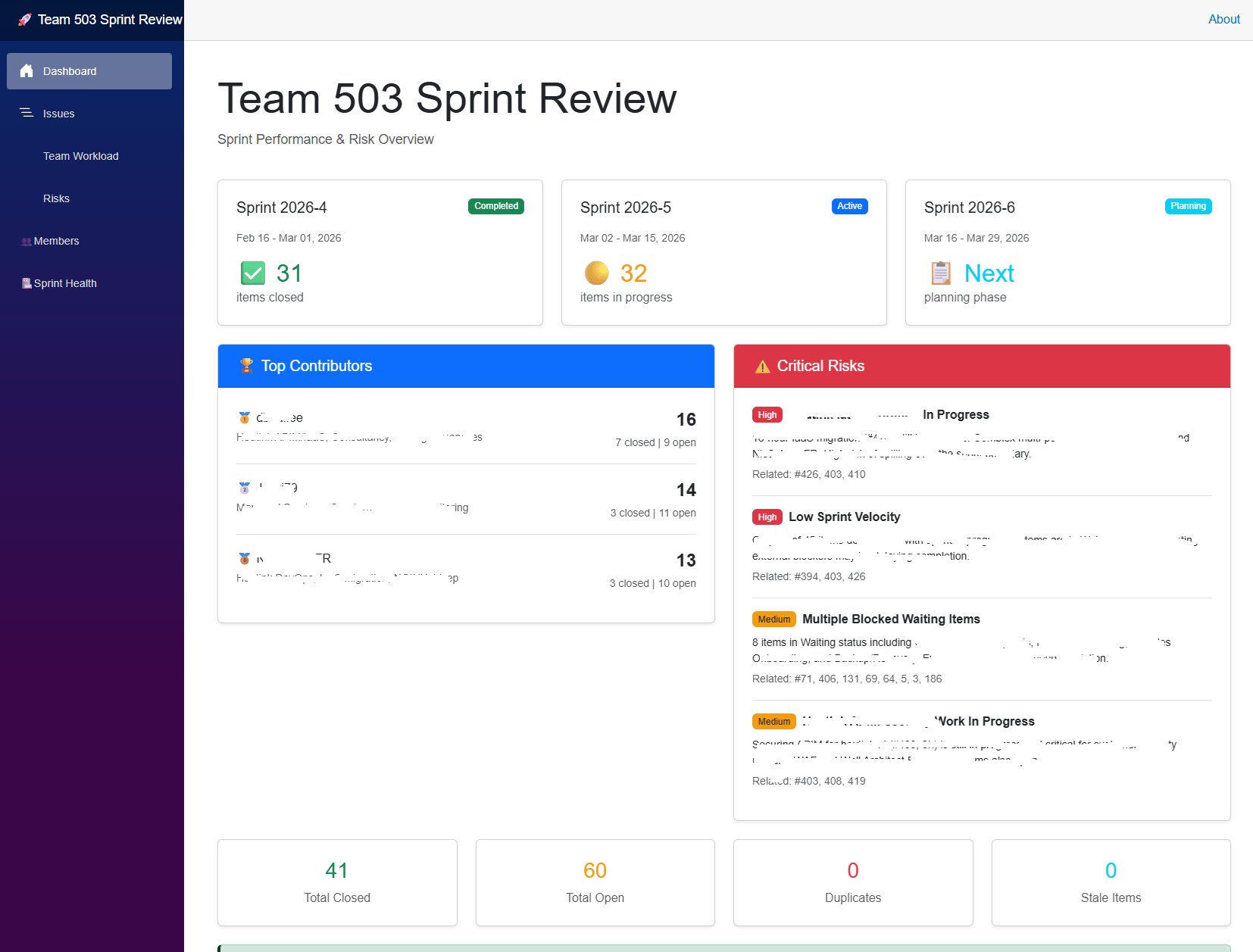
Main Dashboard - The central hub showing all sprint metrics at a glance
Issues - A comprehensive list of issues, sortable, filterable, and searchable across previous, current, and next sprints
Team Workload - Visualizes how much work each team member has, showing percentages of open and closed tasks
Risks - Highlights potential risks with current workload and issue status
Members - Detailed view of each team member's issues across all sprints
Sprint Health - Flags serial carry-overs, issues with no updates, and mid-sprint additions using color-coded indicators
The Magic of AI Collaboration
Here's where the magic happened. Instead of slogging through days of solo development, I described the "job" to Livingston. Features that would normally take hours, sometimes days, were done in minutes. Livingston even caught a subtle Blazor gotcha with @rendermode InteractiveServer, making sure all filtering and searching was truly interactive.
The Squad coordinator orchestrated the operation, keeping everything on track. But the real joy was in the pair programming experience. Instead of talking to a generic "AI assistant," I was briefing my crew. Livingston wasn't just a bot—he was the tech guy, always ready to hack the next piece of the dashboard into existence.
The agent names made the whole process feel collaborative and fun, like we were all in on the heist together.
The Payoff
Looking back, this is how dev teams should work. Assemble your crew, brief them on the job, and let each specialist shine. With Copilot Squad, the line between human and AI collaboration blurs in the best way.
If you want to pull off your own perfect sprint review heist, don't just hire an assistant. Build a crew.
How I Did It
If you're interested in how I pulled this off, I used Brady Gasser's Squad tool, and I cannot tell you just how impressive this is to use. This application was built from scratch in a little over 30 minutes.
This isn't just about building a dashboard—it's about reimagining how we work. When you treat AI agents as team members with personalities and specialties, development becomes more engaging, more efficient, and honestly, more fun. The Ocean's Eleven theme wasn't just a gimmick; it transformed the experience from talking to a tool to collaborating with a crew.
So next time you're staring down a complex development project, ask yourself: who's in your crew? Because in the world of modern development, the perfect heist might just be a Squad away.
Comments
Please log in or register to join the discussion