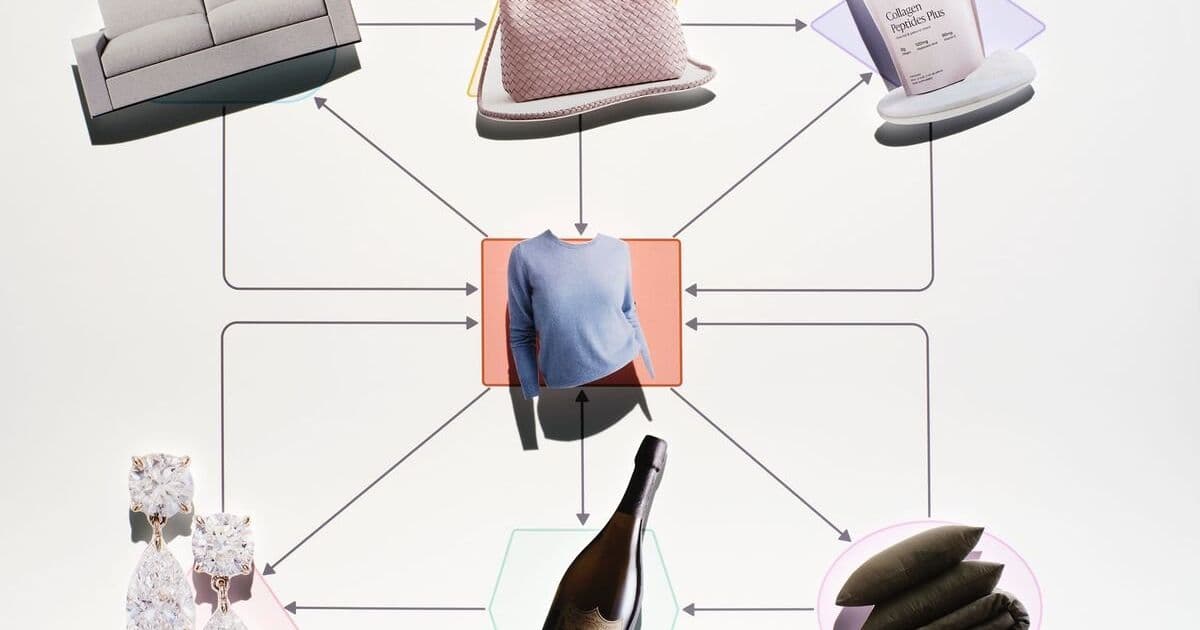
Bloomberg profiles Quince, the online luxury direct-to-consumer brand that has achieved a $10B+ valuation by leveraging data analytics and close manufacturer relationships to offer premium products at accessible prices.
In the crowded world of direct-to-consumer (DTC) brands, most startups struggle to find sustainable growth. But Quince, an online luxury retailer, has managed to carve out a unique position by mastering the art of the supply chain and building a $10 billion-plus e-commerce empire.
The Data-Driven Approach to Luxury
Quince's success story begins with its unconventional approach to product development. Rather than following traditional fashion cycles or relying on trend forecasting, the company uses sophisticated data analysis to identify which luxury products consumers want at accessible price points.
The company's data team analyzes search trends, social media conversations, and purchasing patterns to determine which high-end items have the most demand. This allows Quince to focus on products that already have proven market interest rather than gambling on untested designs.
Manufacturer Relationships as a Competitive Advantage
What truly sets Quince apart is its deep relationships with manufacturers. The company works directly with the same factories that produce luxury goods for premium brands, but eliminates the traditional retail markup by selling directly to consumers.
These close manufacturer ties serve multiple purposes:
- Quality control: Quince can ensure products meet luxury standards while maintaining lower prices
- Speed to market: Direct relationships enable faster production cycles
- Cost efficiency: Cutting out middlemen allows for competitive pricing
- Scalability: Strong partnerships facilitate growth without sacrificing quality
The Business Model That Works
Quince's model is deceptively simple: offer luxury-quality products at 50-80% lower prices than traditional retailers. The company achieves this through:
- Direct sourcing: Working directly with manufacturers
- Minimal marketing spend: Relying on word-of-mouth and organic growth
- Efficient operations: Streamlined supply chain and inventory management
- Data-driven decisions: Using analytics to minimize waste and maximize demand
Categories and Expansion
The retailer has found success across multiple categories, including:
- Cashmere sweaters and loungewear
- Silk dresses and bedding
- Leather goods and accessories
- Home goods and furniture
- Activewear and performance clothing
Each category follows the same formula: identify high-demand luxury items, source from premium manufacturers, and price competitively while maintaining quality standards.
The $10B+ Valuation
Quince's valuation reflects its impressive growth trajectory and sustainable business model. The company has achieved unicorn status without the typical venture capital burn rate that plagues many DTC brands.
Key factors contributing to the valuation:
- Recurring revenue: High customer retention rates
- Profitability: Operating efficiently without heavy marketing spend
- Scalability: Proven ability to expand into new categories
- Brand loyalty: Customers trust the quality-to-price ratio
Challenges and Competition
Despite its success, Quince faces several challenges:
- Copycat competitors: Other brands are adopting similar direct-to-manufacturer models
- Supply chain risks: Dependence on specific manufacturers could create vulnerabilities
- Brand perception: Maintaining luxury positioning while offering lower prices
- Market saturation: The DTC space is becoming increasingly crowded
The Future of Luxury Retail
Quince's model represents a fundamental shift in how consumers think about luxury goods. The company has demonstrated that:
- Transparency matters: Consumers appreciate understanding the true cost of products
- Quality doesn't require markup: Direct relationships can maintain standards while reducing prices
- Data beats intuition: Analytics can identify successful products more reliably than trend forecasting
As the retail landscape continues to evolve, Quince's approach offers a blueprint for how brands can compete in an era where consumers demand both quality and value.
What Makes This Story Different
Unlike many DTC success stories that rely on heavy marketing spend and venture capital, Quince has built its empire on operational excellence and strategic partnerships. The company's focus on data and manufacturer relationships rather than brand building through advertising represents a more sustainable approach to e-commerce growth.
The $10 billion-plus valuation isn't just about revenue—it's about proving that a different model for luxury retail can work at scale. Quince has shown that consumers are willing to embrace new brands when they offer genuine value, and that the traditional luxury retail model may be more vulnerable than many assumed.
As more consumers become comfortable buying luxury goods online and demand greater transparency in pricing, Quince's model could become the new standard for how premium products reach the market. The company's success suggests that the future of luxury retail may be less about exclusive boutiques and more about efficient supply chains and data-driven decision making.
For now, Quince continues to grow, adding new categories and expanding its customer base while maintaining the operational discipline that got it to $10 billion in the first place. In a retail world full of flash-in-the-pan DTC brands, Quince's steady, data-driven approach might be the most revolutionary thing of all.
Comments
Please log in or register to join the discussion