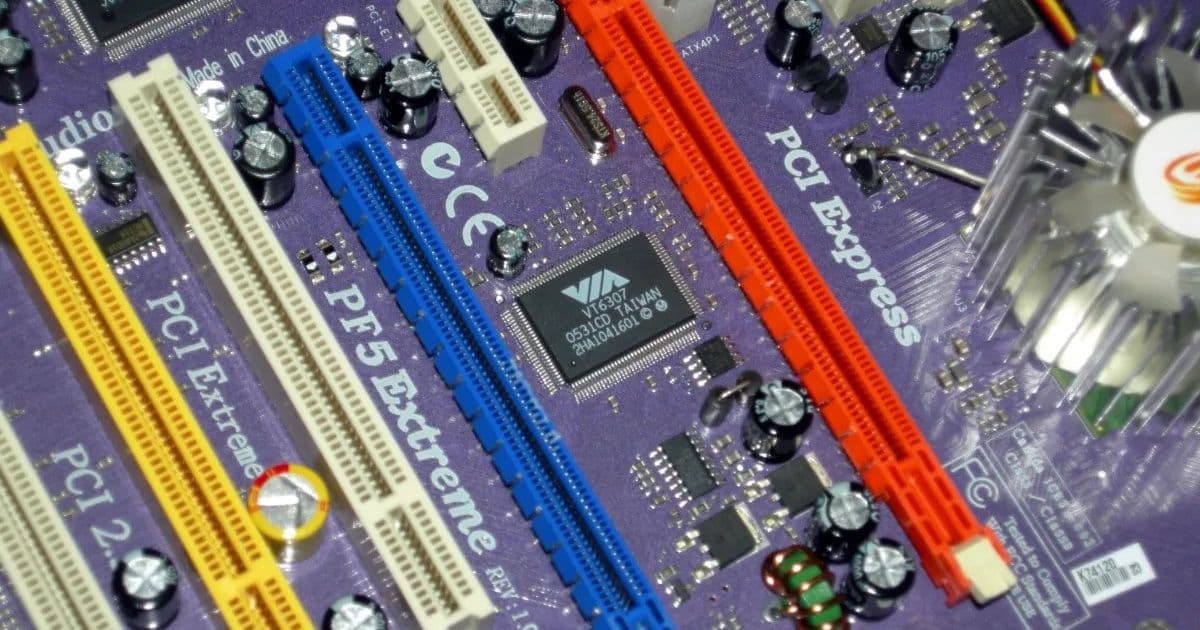
The Linux 7.1 kernel brings significant PCI subsystem changes including new PCIe drivers for modern hardware while removing decades-old PCI drivers that have outlived their usefulness.
The Linux 7.1 kernel development cycle has reached a significant milestone with the merging of extensive PCI subsystem updates, marking both progress for modern hardware support and the retirement of legacy components that have served their purpose. This release demonstrates the Linux kernel's ongoing evolution, balancing backward compatibility with the need to streamline and modernize core infrastructure.
Legacy PCI Support Retires
The most notable change in Linux 7.1 is the removal of the pc110pad driver, which dates back to the Linux 2.5.45 kernel development era. This driver was specifically designed for the IPM PC110 touchpad, a peripheral that saw its heyday during the Intel 486 CPU era. With Intel's decision to retire 486 CPU support across the Linux ecosystem, maintaining this driver has become unnecessary baggage.
This removal follows a broader pattern in the Linux kernel where drivers and subsystems that no longer serve a practical purpose are pruned to reduce maintenance overhead and code complexity. The pc110pad driver had been essentially dormant for years, maintained only for historical completeness rather than functional necessity.
Modern PCIe Enhancements
On the forward-looking side, Linux 7.1 introduces several significant PCIe improvements that enhance performance and reliability for modern hardware:
TLP Processing Hints for RCiEPs
One of the most technically interesting additions is support for PCI Express Transaction Layer Packet (TLP) Processing Hints (TPH) for Root Complex Integrated Endpoints (RCiEPs). Previously, TPH functionality was only advertised for both the Endpoint and its Root Port, but this update extends the capability to RCiEPs.
TLP Processing Hints allow devices to communicate processing requirements more efficiently, potentially reducing latency and improving throughput in complex PCIe topologies. This enhancement is particularly relevant for high-performance computing scenarios and data center applications where PCIe performance optimization can have measurable impacts on overall system efficiency.
AMD NPU Function Level Reset Workaround
The kernel now explicitly avoids Function Level Reset (FLR) for AMD Neural Processing Unit (NPU) devices. This change addresses a critical stability issue where FLR operations could cause AMD NPU devices to hang, rendering them temporarily or permanently unresponsive.
This workaround demonstrates the Linux kernel's pragmatic approach to hardware compatibility issues. Rather than waiting for AMD to provide a firmware fix, the kernel maintainers have implemented a protective measure that ensures system stability while maintaining NPU functionality.
New Hardware Support
Linux 7.1 adds two new PCIe host controller drivers:
ESWIN PCIe Root Complex driver - This addition brings support for ESWIN's PCIe root complex implementations, expanding Linux compatibility for systems using this hardware.
Andes QiLai SoC PCIe host controller driver - The inclusion of this driver provides Linux support for Andes' QiLai System-on-Chip platforms, which are increasingly relevant in embedded and specialized computing applications.
Political Hardware Decisions
In a move that extends beyond pure technical considerations, Linux 7.1 removes support for Russia's Baikal CPUs. The Baikal T-1 PCIe controller driver is being eliminated with the justification that "it never quite became usable."
This removal aligns with the broader Linux kernel's decision to drop support for Baikal CPUs entirely, a choice that reflects geopolitical considerations as much as technical merit. The Baikal processors, developed as Russia's attempt at domestic CPU production, never achieved significant market penetration or demonstrated competitive performance characteristics.
Technical Implications
These changes have several important implications for the Linux ecosystem:
Maintenance Burden Reduction - Removing obsolete drivers like pc110pad and the Baikal T-1 controller reduces the maintenance burden on kernel developers, allowing them to focus resources on actively used hardware and emerging technologies.
Performance Optimization - The TPH enhancements for RCiEPs could provide measurable performance improvements in systems with complex PCIe configurations, particularly in server and high-performance computing environments.
Hardware Compatibility - The new drivers expand Linux's hardware compatibility, ensuring support for emerging SoCs and specialized hardware platforms that might otherwise be overlooked.
System Stability - The AMD NPU FLR workaround directly improves system reliability for users with AMD's neural processing hardware, preventing potential hangs and system instability.
Looking Forward
The PCI subsystem changes in Linux 7.1 represent a microcosm of the kernel development process itself: carefully balancing progress with stability, removing the obsolete while embracing the new, and making pragmatic decisions that serve the broader user community.
As PCIe continues to evolve with newer generations offering increased bandwidth and capabilities, the Linux kernel's ability to adapt its core infrastructure while maintaining backward compatibility remains crucial. The 7.1 release demonstrates that this balance is being struck effectively, with meaningful improvements for modern hardware while responsibly retiring components that have reached the end of their practical lifecycle.
For system administrators and hardware enthusiasts, these changes underscore the importance of staying current with kernel versions to benefit from both performance optimizations and critical stability fixes. The removal of legacy support also serves as a reminder that even in the open-source world, hardware eventually reaches obsolescence, and maintaining support for every possible device indefinitely is neither practical nor beneficial to the overall ecosystem.
Comments
Please log in or register to join the discussion