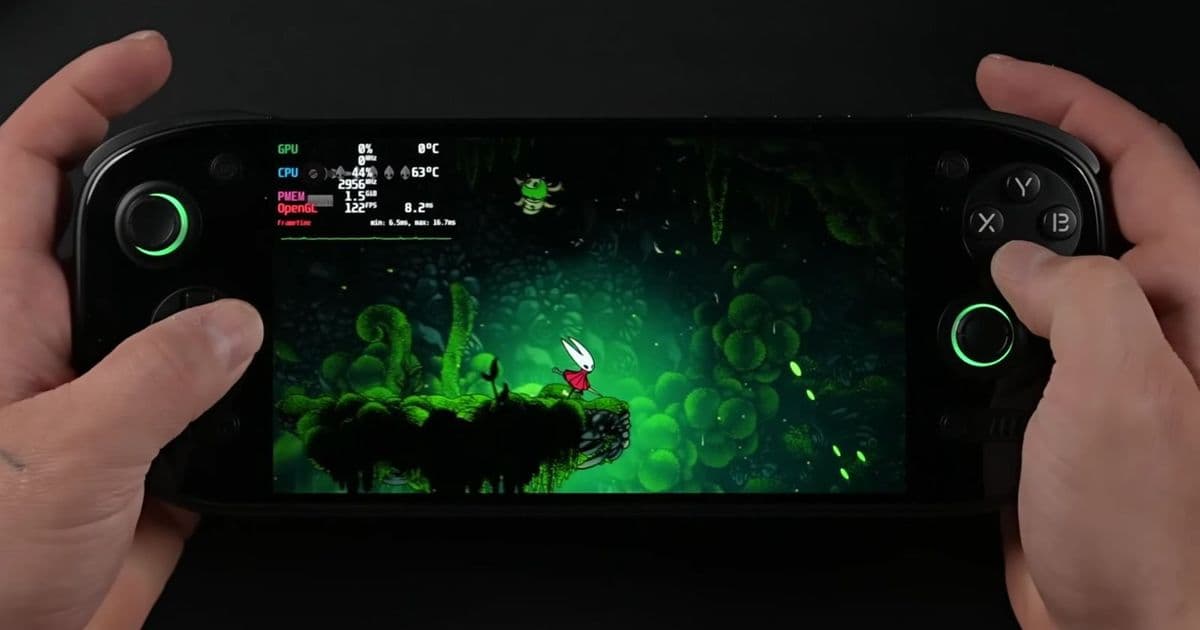
Valve's Proton 11 ARM beta enables Windows games to run at high frame rates on ARM-based handhelds like the Ayn Odin 2 Portal, with Hollow Knight: Silksong hitting 108 FPS and Half-Life 2 reaching 124 FPS through the Rocknix Linux distribution.
Valve has quietly laid the groundwork for ARM-based PC gaming with the release of Proton 11.0-Beta1, which includes support for FEX-2604 ARM64EC builds. This open-source x86-to-ARM translation layer enables Windows games to run on ARM-based Linux systems, marking a significant step toward broader ARM gaming compatibility.
While Valve hasn't formally announced an ARM64 version of Proton, the timing suggests preparation for upcoming hardware. Industry speculation points to the rumored Steam Frame VR headset, expected to use Qualcomm's Snapdragon 8 Gen 3 processor. The inclusion of FEX components in Proton indicates Valve is building the necessary infrastructure for ARM gaming well in advance of any official hardware announcements.
[[IMAGE:1]]
Community-Led ARM Gaming Takes Off
The gaming community hasn't waited for Valve's official rollout. The Rocknix project, originally designed for retro gaming handhelds, introduced official Steam support last week across multiple Qualcomm-powered devices. This includes the Ayn Odin 2, Retroid Pocket 6, Ayaneo Pocket S2, and Konkr Pocket Fit.
YouTube tech reviewer ETA Prime conducted extensive testing on three devices: the Ayn Odin 2 Portal (Snapdragon 8 Gen 2, $433 on Amazon), Ayaneo Pocket S2 (Snapdragon G3 Gen 3), and Konkr Pocket Fit (also Snapdragon G3 Gen 3). The results demonstrate the potential of this emerging ARM gaming ecosystem.
Performance Breakthroughs
Flashing Rocknix onto the Ayn Odin 2 Portal's internal storage delivered impressive results. The Steam client runs as a native ARM Linux binary, while games utilize the Proton + FEX translation layer. Performance metrics exceeded expectations:
- Hollow Knight: Silksong: Consistently above 100 FPS on the device's 120 Hz panel with frame cap disabled
- Cuphead: 60–70 FPS
- Half-Life 2: Comfortably exceeded 120 FPS
The Ayaneo Pocket S2 and Konkr Pocket Fit faced limitations running Rocknix from microSD cards, as internal storage installation isn't fully supported yet. This resulted in significantly slower game downloads and installations compared to the Ayn Odin 2 Portal.
[[IMAGE:2]]
Current Limitations and Challenges
Despite the promising performance, several issues remain. The Witcher 3: Wild Hunt refused to relaunch on the Ayn Odin 2 Portal after the first session. Half-Life 2 required external USB keyboard and mouse input, as the built-in controller wouldn't bind in-game. Users also reported random black screens and crashes during testing.
Kernel-level anti-cheat remains a significant hurdle for ARM translation layers. Current implementations haven't fully addressed compatibility with anti-cheat systems, limiting the library of playable games.
The Road Ahead
For now, this ARM gaming stack remains in enthusiast territory rather than serving as a true Steam Deck replacement. However, the foundation for an entirely new category of ARM-based Steam handhelds has been established.
The combination of Valve's Proton development, Rocknix's community-driven support, and capable ARM hardware creates a compelling vision for the future of portable PC gaming. As translation layers mature and hardware support improves, ARM-based handhelds could offer a viable alternative to x86-based gaming devices.
[[IMAGE:3]]
The progress made in just weeks demonstrates the rapid pace of ARM gaming development. With major players like Valve investing in the underlying technology and an active community pushing boundaries, the transition to ARM gaming appears increasingly inevitable rather than speculative.
Comments
Please log in or register to join the discussion