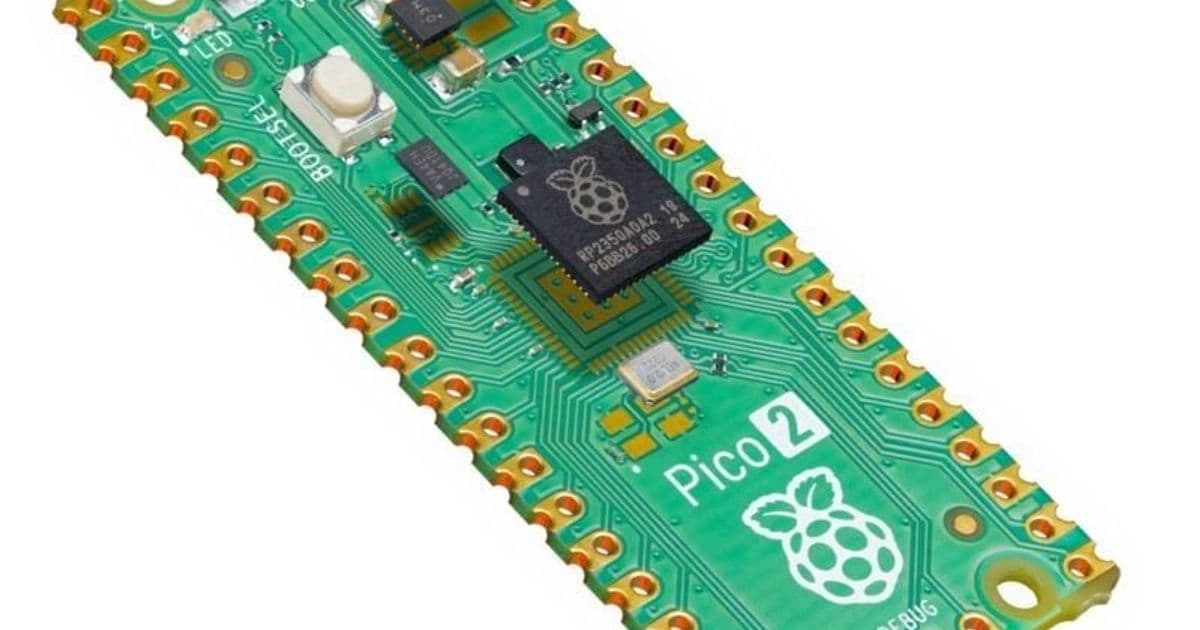
Engineering experiments reveal the Raspberry Pi RP2350 microcontroller can be reliably overclocked to over five times its rated frequency, unlocking unexpected performance gains through voltage adjustments and thermal management.
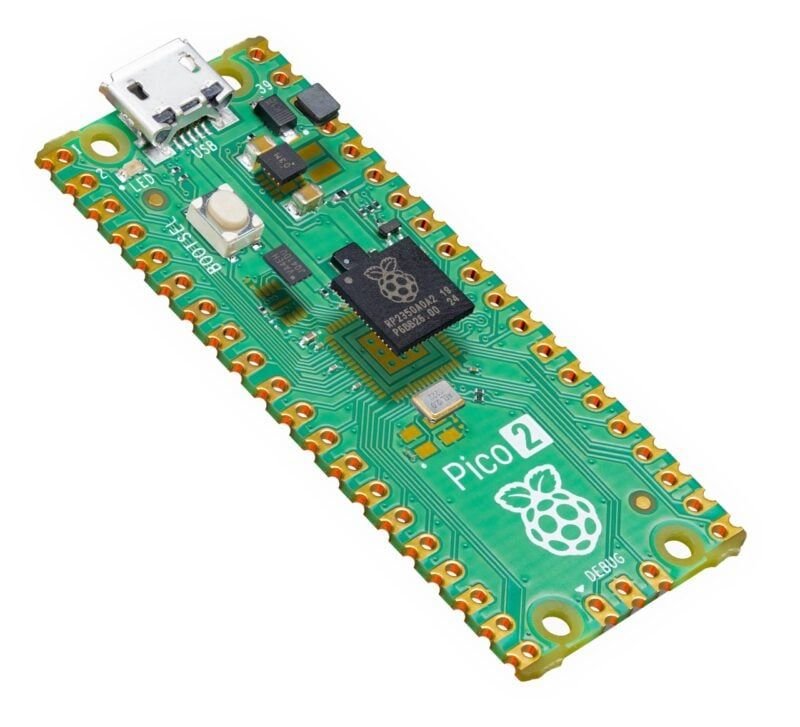
The Raspberry Pi RP2350 microcontroller, introduced in 2024, represents a significant evolution from its predecessor, the RP2040. Designed for embedded systems requiring low power consumption and deterministic response times, it features a hybrid architecture: two Arm Cortex-M33 cores and two Hazard3 RISC-V cores, both initially capped at 150 MHz. This specification targets applications like industrial sensors, wearables, and IoT devices where energy efficiency outweighs raw compute needs.
Recent testing by Mike Bell at Pimoroni reveals substantial untapped potential. By systematically modifying voltage delivery and implementing aggressive cooling, Bell pushed the RP2350 to frequencies exceeding 800 MHz—a 5.3x increase over its stock configuration. The breakthrough centers on bypassing the chip's integrated voltage regulator and externally supplying elevated voltages (up to 2.95V versus the default 1.1V). This approach minimizes power-delivery bottlenecks but intensifies heat generation, necessitating thermal solutions ranging from passive heatsinks to active fan cooling.
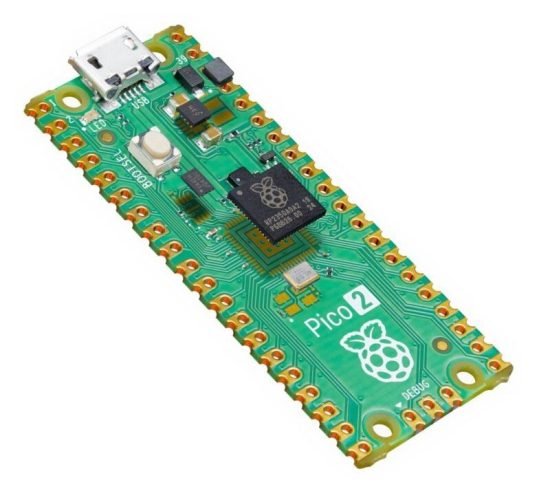
Practical results show core-dependent stability thresholds. Arm Cortex-M33 cores consistently operated at 800–840 MHz across multiple Raspberry Pi Pico 2 boards, while the RISC-V cores demonstrated higher tolerance, reaching 820–840 MHz under sustained load. Transient peaks hit 873.5 MHz using extreme cooling like dry ice, though such methods are impractical for most real-world use. Variability between individual units underscores silicon lottery dynamics; some chips stabilized near 840 MHz, while others peaked lower.
For developers, these findings suggest two key implications:
Performance-Sensitive Prototypes: Overclocking enables computationally intensive tasks—like real-time signal processing or edge AI inference—on hardware previously deemed insufficient. A Pico 2 running at 800 MHz could handle workloads typically requiring more expensive microcontrollers.
Design Trade-offs: Higher clocks increase power draw exponentially and demand thermal management. Projects must balance performance gains against reliability risks, especially in thermally constrained environments. Bell's experiments show instability manifests as crashes beyond sustainable frequencies, making thorough stress-testing essential.
This overclocking achievement highlights the RP2350's robust silicon design. However, Raspberry Pi's official stance remains conservative; warranty voiding and potential hardware degradation make this unsuitable for production deployments. Developers experimenting should prioritize redundant cooling and voltage monitoring. Resources like Pimoroni's blog offer technical guidance, but results require meticulous validation per device.
Ultimately, pushing the RP2350 beyond its specifications demonstrates engineering ingenuity. While not a recommendation for everyday use, it expands what's possible in resource-limited embedded systems—proving even budget microcontrollers harbor hidden reserves when pushed creatively.
Comments
Please log in or register to join the discussion