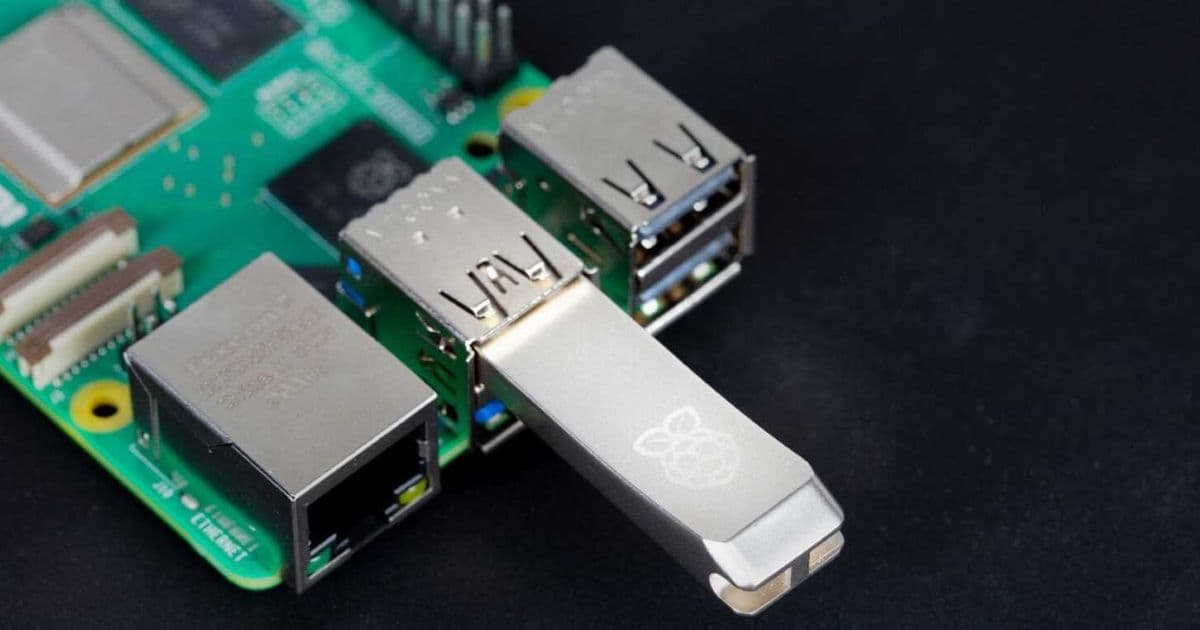
Raspberry Pi has launched two new branded USB flash drives with aluminum casings, pseudo-SLC caching, and performance claims that position them as a step up from microSD cards for booting Raspberry Pi computers, though they fall short of the company's own SSD kits.
Raspberry Pi has expanded its lineup of official accessories with two new USB flash drives, offering a blend of speed, durability, and the company's signature branding. The drives, available in 128GB ($30) and 256GB ($55) capacities, feature an all-aluminum chassis with a Raspberry Pi logo and a keyring hole, aiming to provide a premium alternative to generic USB sticks.
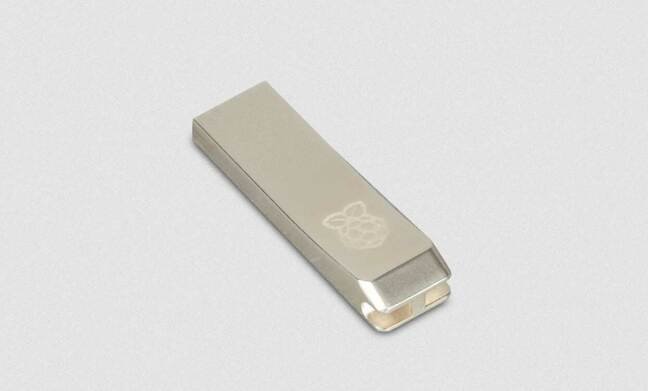
The drives are designed to work with any USB Type-A port but are optimized for USB 3 (also known as USB 3.1 Gen 1 or USB 3.2 Gen 1) connections, which can reach speeds up to 5 Gbps. A notable technical feature is the use of a pseudo-SLC cache. This technology temporarily converts some of the native QLC (quad-level cell) NAND flash memory into a single-bit mode, which significantly boosts performance for bursty workloads. According to Raspberry Pi, this cache allows the drive to approach the theoretical maximum sequential write speed of USB 3.0. However, once the cache is saturated and the drive must write directly to the slower QLC NAND, performance drops to 75 MB/s for the 128GB model and 150 MB/s for the 256GB model.
The company does not publish official sequential read speeds but provides estimates for random 4K read and write performance in IOPS (Input/Output Operations per Second). The 128GB drive is rated for 16,000 random 4K read IOPS and 21,000 random 4K write IOPS. The 256GB model improves slightly to 18,000 read IOPS and 22,000 write IOPS.
For Raspberry Pi users, these drives present a compelling upgrade over the standard microSD card, which is the most common boot medium for the single-board computers. Raspberry Pi's own A2-class microSD card (32GB for $15) delivers 5,000 random 4K read IOPS and 2,000 random 4K write IOPS on a Raspberry Pi 5, with lower rates on the Pi 4. The new USB drives thus offer a significant performance boost for random operations, which can lead to a more responsive system, especially when running an operating system or applications that frequently access small files.
For users seeking the absolute fastest storage for a Raspberry Pi 5, the company's official SSD kit remains the top choice. This kit, which includes a 256GB M.2 SSD and the necessary M.2 Pi HAT+ adapter, boasts 40,000 random 4K read IOPS and 70,000 random 4K write IOPS. It's important to note that this SSD solution is only compatible with the Raspberry Pi 5 and not with earlier models like the Pi 4.
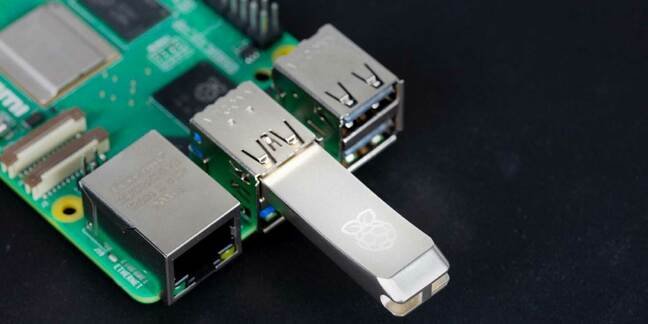
Beyond raw speed, Raspberry Pi emphasizes the durability of its new flash drives. The company states the drives have undergone rigorous testing, surviving tens of thousands of power cycles during read/write operations without failure. This resilience is crucial for devices that may be frequently connected and disconnected. Additionally, the drives support SMART (Self-Monitoring, Analysis, and Reporting Technology) health reporting, which can alert users to impending hardware failure, and TRIM commands, which help maintain long-term performance by allowing the operating system to inform the drive which data blocks are no longer in use.
In terms of market positioning, the Raspberry Pi flash drives are not the most affordable option. For example, a Samsung Bar Plus flash drive with a similar all-metal casing is available on Amazon for approximately $22 (128GB) and $32 (256GB). User reviews for the Samsung drive suggest sequential write speeds around 115 MB/s for the 256GB model, though direct IOPS comparisons are not available. The Samsung drive also boasts waterproofing, a feature not mentioned for the Raspberry Pi product.
The value proposition for Raspberry Pi's new drives extends beyond specifications. For enthusiasts and professionals who already trust the Raspberry Pi ecosystem for its quality and reliability—evident in products like the company's well-regarded 15-inch portable monitor and durable keyboards and mice—the branded flash drive offers a familiar level of build quality and design cohesion. It serves as both a functional storage device and a piece of branded gear for the keychain or desk.
Ultimately, the Raspberry Pi USB flash drives are a solid, premium accessory for users who prioritize build quality, brand loyalty, and a performance upgrade over basic microSD cards for their Raspberry Pi projects. While they don't replace the company's high-performance SSD kit for the Pi 5, they fill a niche for a durable, fast, and portable storage solution that carries the Raspberry Pi seal of approval.
Comments
Please log in or register to join the discussion