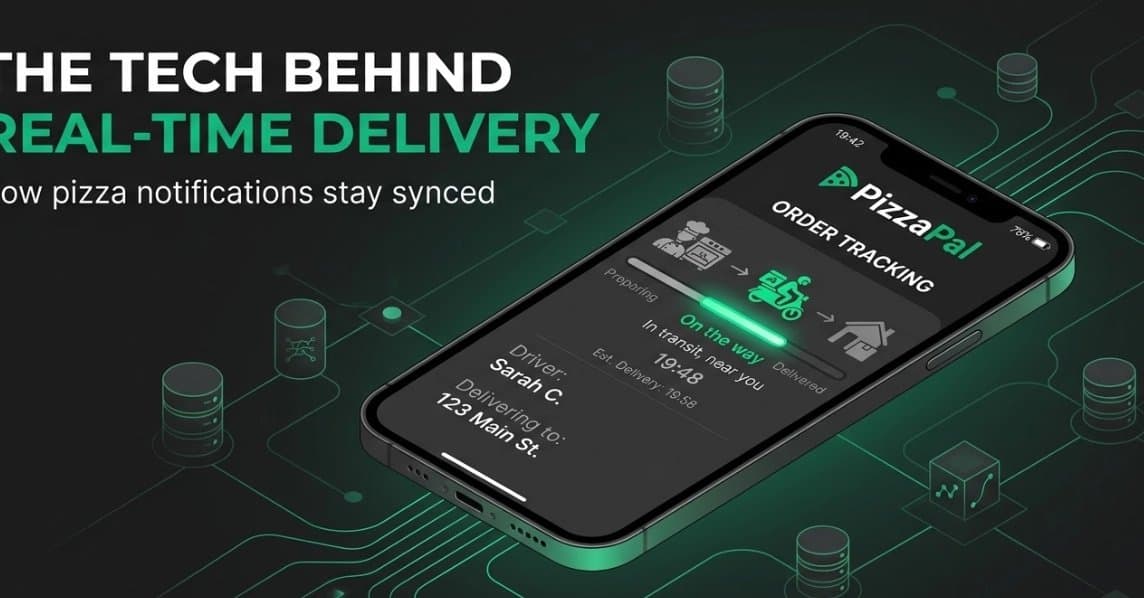
A deep dive into implementing scalable real-time notification systems using Server-Sent Events with FastAPI and Celery, examining architectural decisions, trade-offs, and production considerations.
Real-Time Notification Systems: SSE, FastAPI, and Celery Architecture Analysis
The Problem: Beyond the Loading Spinner
In distributed systems, user experience often hinges on how we handle long-running operations. When users click a button and the interface enters an ambiguous loading state, uncertainty breeds frustration. This isn't just a UI problem—it's a fundamental architectural challenge in distributed systems.
The core issue is communication latency between client and server during asynchronous operations. Traditional request-response models break down when operations exceed typical HTTP timeout limits. We need a mechanism for servers to push progress updates to clients without requiring clients to constantly poll for status.
Communication Protocols: SSE vs. Alternatives
The article correctly identifies Server-Sent Events (SSE) as a suitable protocol for many real-time use cases. Let's examine the technical landscape more deeply:
Polling Limitations
HTTP polling creates unnecessary network overhead and introduces artificial latency. Each poll requires a full HTTP request-response cycle, complete with headers and handshaking. In high-traffic systems, this polling pattern creates thundering herd problems where many clients simultaneously request updates, overwhelming backend services.
WebSocket Complexity
WebSockets offer bidirectional communication but introduce significant complexity:
- Connection management becomes non-trivial at scale
- Requires custom reconnection logic
- More difficult to load balance and route
- Higher memory footprint per connection
- Security considerations around cross-origin requests
SSE Advantages
SSE provides an elegant middle ground:
- Built on HTTP, leveraging existing infrastructure
- Automatic reconnection handled natively by browsers
- Simpler to implement and debug
- Better integration with HTTP/2 for multiplexing
- Lower resource consumption per connection
The article's comparison table is accurate, but we should add one more critical dimension: ease of horizontal scaling. SSE connections are stateless from the server's perspective, making them trivial to distribute across multiple instances. WebSocket connections, being persistent and stateful, require sticky sessions or complex session affinity mechanisms.
Architecture: Why 4 Components?
The proposed four-component architecture (Browser → FastAPI → Redis → Celery Worker) represents a sound distributed systems pattern. Let's analyze each component's role in more depth:
API Gateway (FastAPI)
FastAPI serves as the edge component, responsible for:
- Connection management (establishing and maintaining SSE streams)
- Request routing and validation
- Rate limiting and security enforcement
- Status aggregation from Redis
The critical insight here is separation of concerns. FastAPI excels at I/O-bound operations but isn't designed for CPU-intensive work. By offloading long-running tasks, we prevent event loop starvation and maintain API responsiveness.
Message Broker (Redis)
Redis plays a dual role:
- Message Broker: For task distribution from FastAPI to Celery workers
- State Store: For tracking task progress and results
This dual usage creates interesting consistency implications. When a worker updates task status in Redis, there's a brief window where the state might not be immediately visible to clients reading from Redis. In most cases, this eventual consistency is acceptable for progress updates, but for systems requiring strong consistency, we'd need to implement additional synchronization mechanisms.
Task Workers (Celery)
Celery workers provide scalability through horizontal distribution. Each worker processes tasks independently, with Redis handling work distribution. This pattern allows us to:
- Scale workers independently based on load
- Handle worker failures gracefully
- Implement priority queues if needed
- Distribute work across different machine types (CPU-optimized, GPU-optimized, etc.)
Client (Browser)
The client implementation using EventSource is appropriate, but we should consider additional production concerns:
- Connection resilience beyond basic reconnection
- Handling of partial updates
- Bandwidth optimization for mobile clients
- Offline capabilities with service workers
Implementation Deep Dive
SSE Stream Stability
The article correctly identifies StreamingResponse as the appropriate mechanism for SSE. However, there are additional considerations for production systems:
Backpressure Handling: The current implementation yields data immediately regardless of network conditions. In high-concurrency scenarios, this could overwhelm client connections. A more robust implementation would implement backpressure by monitoring request.is_disconnected() and adjusting yield rates accordingly.
Error Recovery: The current implementation breaks the loop when a task completes, but doesn't handle Redis connection failures gracefully. A production system would need to implement retry logic with exponential backoff for Redis operations.
Memory Management: For long-running tasks, the current implementation keeps the connection open indefinitely. In systems with many concurrent tasks, this could exhaust server resources. Implementing connection timeouts and cleanup mechanisms is essential.
Task Distribution
The current implementation uses Redis as both message broker and state store. While convenient, this creates tight coupling between components. A more scalable architecture might separate concerns:
- Use Redis as the message broker for Celery
- Use a dedicated database (like PostgreSQL or MongoDB) for state storage
This separation allows for:
- Independent scaling of messaging and state storage
- Better durability guarantees for task state
- More flexible querying capabilities
Frontend Considerations
The React implementation using EventSource is solid, but we should consider:
- Connection Pooling: With browser limits on concurrent connections (typically 6 for HTTP/1.1), applications with multiple SSE streams need careful management.
- Update Batching: For frequent progress updates, batching multiple updates into a single SSE event can reduce network overhead.
- Fallback Mechanisms: For browsers or environments that don't support SSE, implementing a WebSocket or polling fallback ensures broader compatibility.
Production Challenges
Nginx Buffering Issues
The article correctly identifies Nginx buffering as a critical issue. Beyond simply disabling buffering, we should consider:
- Using HTTP/2 for multiplexing multiple SSE streams over a single connection
- Implementing proper caching headers to prevent intermediate proxies from caching SSE streams
- Setting appropriate timeout values for long-running SSE connections
Connection Limits and Scaling
Browser connection limits become problematic at scale. Solutions include:
- Connection Multiplexing: Using HTTP/2 to overcome HTTP/1.1 connection limits
- Connection Pooling: Implementing client-side connection pooling to reuse connections across multiple SSE streams
- Edge Computing: Deploying SSE endpoints closer to users to reduce latency and connection overhead
Fault Tolerance
The current implementation has several single points of failure:
- Redis Dependency: If Redis becomes unavailable, both task queuing and state tracking fail
- Worker Availability: If all Celery workers are busy, new tasks queue indefinitely
- API Instance Failure: If the FastAPI instance handling a specific SSE stream fails, that stream is lost
A more robust system would implement:
- Redis clustering for high availability
- Multiple Celery worker pools with different priorities
- API instance health checks and automatic failover
Trade-offs and When to Use This Approach
When SSE is the Right Choice
SSE excels in scenarios where:
- Communication is primarily unidirectional (server → client)
- Data updates can tolerate eventual consistency
- Simplicity of implementation and debugging is valued
- HTTP infrastructure already exists
- Connection count is moderate (thousands, not millions)
When to Consider Alternatives
For systems with:
- Bidirectional communication requirements (chat, collaborative editing)
- Extremely high connection counts (millions of concurrent connections)
- Strict real-time guarantees (sub-second delivery)
- Complex routing requirements based on connection state
WebSockets or even custom TCP-based solutions might be more appropriate. For truly massive scale, event-driven architectures using Kafka or similar message brokers might be necessary.
Conclusion: A Pragmatic Approach
The proposed SSE + FastAPI + Celery architecture represents a pragmatic solution for many real-time notification systems. It strikes an excellent balance between simplicity and functionality while providing reasonable scalability characteristics.
The key insight is recognizing that not all real-time requirements are equal. By choosing the right tool for the specific use case—in this case SSE for unidirectional progress updates—we avoid over-engineering while maintaining system reliability and performance.
For teams implementing this architecture, the most critical success factors will be:
- Proper separation of concerns between components
- Comprehensive error handling and recovery mechanisms
- Careful monitoring of connection and task metrics
- Implementation of appropriate backpressure mechanisms
This approach demonstrates sound distributed systems principles: clear component boundaries, appropriate technology choices for specific responsibilities, and pragmatic trade-offs that favor maintainability over theoretical purity.
Comments
Please log in or register to join the discussion