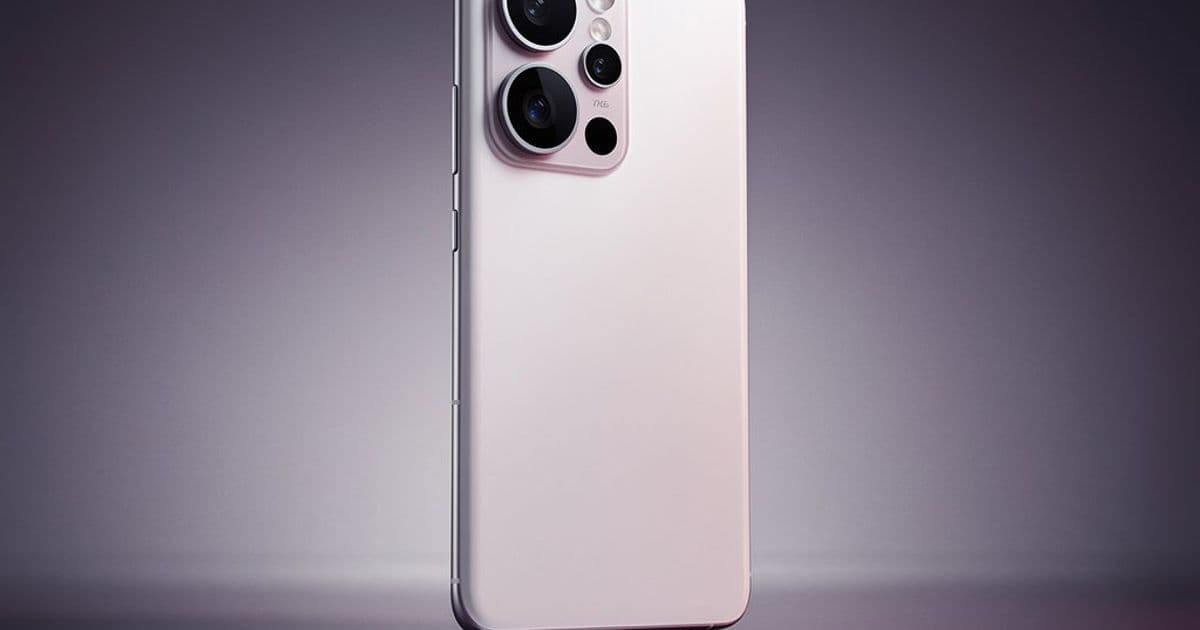
Realme's latest mid-range offerings push camera hardware into flagship territory, but the pricing strategy reveals a familiar trade-off between features and value.
Realme's strategy with the 16 Pro and 16 Pro+ follows a pattern we've seen across the industry: stuffing premium camera sensors into mid-range chassis to justify higher price points. The company launched both devices exclusively in India, a market where the competition for camera-centric phones is particularly fierce.

The 200MP sensor reality check
Both models share the same 200MP main camera with a 1/1.56" sensor and f/1.9 OIS lens. This is the Samsung ISOCELL HP3 sensor we've seen in other devices, which uses pixel binning to produce 50MP shots by default. The real advantage isn't the megapixel count itself, but the sensor's ability to crop into scenes for lossless 2x zoom. In our testing of similar implementations, this approach works well for portraits and detail shots, though it struggles in low light compared to larger 1-inch sensors.
The Pro+ model adds a 50MP 3.5x periscope telephoto with a 1/2.76" sensor. This is a mid-range periscope - smaller than the 1/2" units in flagship phones, but still meaningful for optical zoom quality. The f/2.8 aperture is relatively slow, which limits its low-light performance. The 8MP ultra-wide is disappointing for 2026, matching the resolution of budget phones from years past. Video stabilization issues mentioned in the review suggest Realme may have skimped on the ISP and algorithms needed to properly handle that massive 200MP sensor for moving footage.
Battery life as the real standout
The 7,000mAh battery in both phones delivered an 18:18 Active Use Score in the Pro+ review, which is exceptional for this class. Most mid-range phones score between 12-15 hours. This suggests Realme prioritized endurance over thinness - these phones are likely chunky. The 80W charging is fast enough (0-100% in about 45 minutes), though not class-leading when some competitors offer 100W+.

The chipset divide
Here's where the pricing gets tricky. The Pro+ uses the Snapdragon 7 Gen 4, while the Pro drops to the Dimensity 7300 Max. This isn't just a branding difference - the Snapdragon chip has superior CPU performance, better ISP for camera processing, and more mature driver support for gaming. The Dimensity 7300 Max is competent but sits closer to last year's mid-range performance tier.
For camera enthusiasts, this matters beyond just speed. The ISP (Image Signal Processor) in the Snapdragon chip handles the 200MP sensor's output more efficiently, which translates to better HDR processing, faster shot-to-shot times, and improved video quality. The review specifically called out video stabilization issues on the Pro+, suggesting even the Snapdragon chip struggles with the sensor. The Dimensity model will likely be worse.
Pricing context in India
The Pro+ starts at ₹40,000 for 8GB/128GB, while the Pro starts at ₹32,000. This places them against formidable competition:
- OnePlus Nord series often discounts to under ₹30,000 with cleaner software and faster charging
- Samsung's A-series offers better update policies (4 years of OS updates vs. Realme's 2-3)
- Xiaomi/Poco provide similar hardware at lower prices, though with MIUI quirks
The Pro+ is particularly vulnerable because ₹40,000 approaches flagship territory during sales. You can often find last year's flagship (like a Galaxy S24 or Pixel 8) around ₹45,000-50,000, which would offer better overall camera quality despite lower megapixel counts.
Ecosystem considerations
Realme's software situation remains mixed. Realme UI has improved, but it still includes bloatware and follows a shorter update schedule compared to Samsung or Google. For users planning to keep their phone 3+ years, this matters more than raw specs. The company's ecosystem is also less developed - there's no tablet, limited smartwatch integration, and no desktop mode comparable to Samsung DeX.
The verdict depends on your priorities
If you want the absolute longest battery life in this price range and don't mind the software trade-offs, the Pro+ makes sense. The periscope telephoto is genuinely useful for travel photography, and the 200MP sensor delivers detailed crops when lighting is good.
The regular Pro at ₹32,000 is harder to justify. You lose the telephoto and get a weaker chipset while still paying more than many competitors. Unless the 200MP main camera is your specific need, better all-rounders exist near that price.
Realme's India-exclusive launch suggests they're testing the waters. If these models succeed, we might see a global release. But for now, international buyers looking for 200MP cameras have alternatives like the Xiaomi 13T Pro or waiting for Samsung's next A-series iteration.
The real question isn't whether 200MP matters - it's whether the complete package justifies the premium when competitors offer more balanced experiences at lower prices.
Comments
Please log in or register to join the discussion