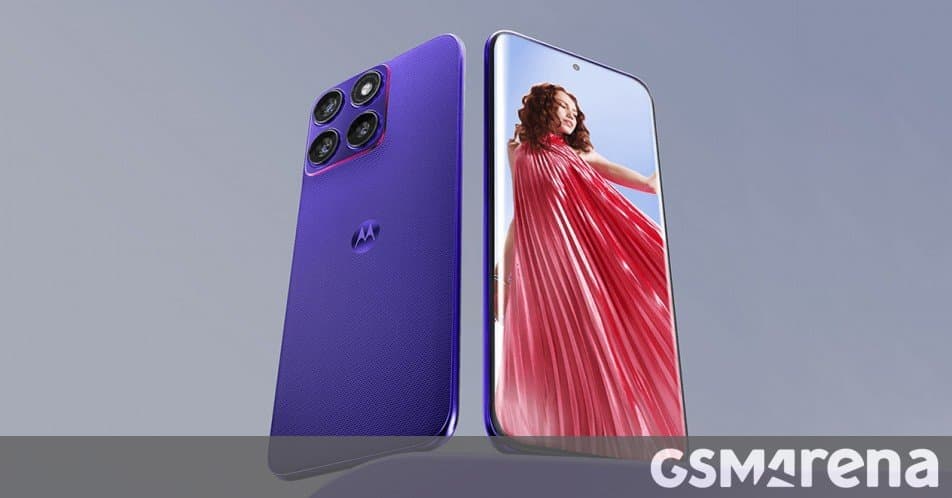
Motorola has quietly launched the Edge 70 Fusion+ with a Snapdragon 7s Gen 4 chip and upgraded camera system, featuring a 50MP main sensor and 3x telephoto lens.
Motorola has quietly expanded its Edge 70 lineup with the introduction of the Edge 70 Fusion+, a device that brings subtle but meaningful upgrades to the existing Fusion model. The new variant, which launched in Brazil without much fanfare, maintains the core design language of its siblings while introducing notable improvements to its camera system and processing power.
The most significant upgrade comes in the form of the camera hardware. The Edge 70 Fusion+ features a 50MP main camera module using the Lytia 710 sensor, paired with a 50MP ultrawide lens and a 10MP 3x telephoto shooter. This marks a departure from the standard Fusion model's camera configuration, offering users enhanced zoom capabilities and potentially better low-light performance thanks to the upgraded main sensor. The front-facing camera also receives an upgrade to 50MP, ensuring high-resolution selfies and video calls.
Under the hood, the device is powered by Qualcomm's Snapdragon 7s Gen 4 chipset, the same processor found in the Indian variant of the Edge 70 Fusion that launched last week. This mid-range processor strikes a balance between performance and efficiency, making it well-suited for everyday tasks, gaming, and multitasking. The inclusion of this chip in the Fusion+ model suggests Motorola is targeting a specific market segment that values camera capabilities alongside reliable performance.
Beyond the processor and camera upgrades, the Edge 70 Fusion+ maintains much of the hardware found in the global Edge 70 Fusion. The device sports a 6.8-inch quad-curved AMOLED display with FHD+ resolution and a smooth 144Hz refresh rate, providing an immersive viewing experience for content consumption and gaming. The substantial 5,200mAh battery supports 68W wired charging, ensuring users can quickly top up their device and stay connected throughout the day.
Durability remains a key focus, with the device carrying both IP68 and IP69 ingress protection ratings. This dual certification means the phone can withstand dust, dirt, and sand, and it's protected against immersion in water. The IP69 rating specifically indicates resistance to high-pressure and high-temperature water jets, making it suitable for use in challenging environments.
Software-wise, the Edge 70 Fusion+ boots Android 16 out of the box, giving users access to the latest features and security updates from Google. The device comes in a single configuration of 12GB RAM and 256GB storage, which should be sufficient for most users' needs, including those who store large amounts of media or install numerous applications.
In terms of availability, the Edge 70 Fusion+ is currently on open sale in Brazil with a retail price of BRL 2,969, which converts to approximately $571 USD. The device is offered in two color options: Pantone Orient Blue and Pantone Blue Surf, maintaining the aesthetic continuity with other models in the Edge 70 series.
The quiet launch of the Edge 70 Fusion+ raises questions about Motorola's regional strategy for the Edge 70 lineup. With different variants featuring different chipsets and specifications being released in various markets, it appears the company is tailoring its offerings to meet specific regional demands and carrier requirements. This approach allows Motorola to maximize its market reach while optimizing its supply chain and production costs.
For consumers in Brazil and potentially other markets where the device becomes available, the Edge 70 Fusion+ represents a compelling option in the mid-to-upper mid-range segment. The combination of a capable processor, upgraded camera system, high-refresh-rate display, and robust build quality positions it as a strong competitor against similar offerings from other manufacturers.
The introduction of the Fusion+ model also highlights the increasing fragmentation within smartphone lineups, where manufacturers are creating multiple variants of what might otherwise be a single model to address different market needs. This strategy can be confusing for consumers but allows companies like Motorola to fine-tune their products for specific audiences and price points.
As the smartphone market continues to evolve, with incremental improvements becoming the norm rather than revolutionary changes, devices like the Edge 70 Fusion+ demonstrate how manufacturers are finding ways to differentiate their products through targeted upgrades and regional customization. Whether this approach will resonate with consumers remains to be seen, but it certainly adds another layer of complexity to the already crowded smartphone landscape.
For now, Brazilian consumers have a new option in the Edge 70 family, one that offers a slightly different value proposition than its siblings. As Motorola continues to expand and refine its product lineup, it will be interesting to see how these various models perform in the market and whether the Fusion+ designation becomes a recurring theme in future product cycles.
Comments
Please log in or register to join the discussion