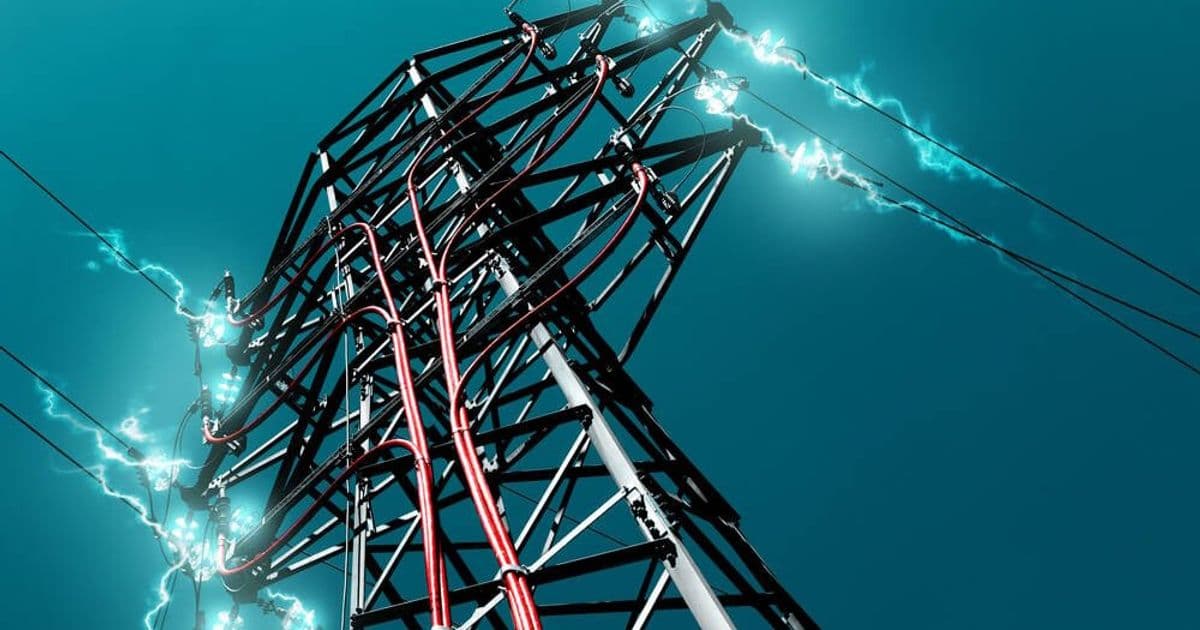
The UK government is consulting on reforms to prioritize 'strategically important' grid connections for datacenters and AI infrastructure, potentially allowing them to jump ahead of housing developments in the connection queue.
The British government is consulting on reforms to prioritize "strategically important" grid connections – including datacenters – amid reports of delays stretching more than a decade on some projects. The connection queue ballooned after the government's AI Opportunities Action Plan, unveiled at the start of 2025, encouraged a wave of datacenter construction. Applications to the transmission network grew 460 percent in the six months to June.
The finger of blame is being pointed at speculative applications inflating the pipeline, delaying connections for strategically important projects. This has contributed to waits for some developers of up to 15 years to get connected to the grid, or so Westminster claims.
To clear the backlog, the government is consulting on measures to tackle speculative applications and accelerate "viable projects that will benefit Britain." This includes datacenters, AI Growth Zones, electrified industrial sites, and charging hubs for electric vehicles.
The move is already stoking fears that AI infrastructure will jump the queue ahead of new homes. Those concerns aren't trivial. A single AI facility can consume as much energy as 100,000 homes, and a London Assembly report found that West London's local grid hit full capacity in 2022, stalling planned housing developments.
A spokesperson for the Home Builders Federation told The Register that the energy industry should be encouraged to invest in infrastructure capable of supporting both new housing and economic growth. "As we continue to face a housing crisis with the social and economic issues that it brings, it is frustrating that regulatory, planning, and policy arrangements effectively prioritize energy-intensive datacenters over energy-efficient homes for families," the spokesperson said.
This comes on top of planning reforms that make it easier for developers to get permission to construct massive server farms. Last year, the government stepped in to overturn a local council's decision against a proposed datacenter on green belt land near London.
The Register asked the Department for Energy Security and Net Zero if the proposed reforms mean datacenters will move to the front of the queue in terms of grid connections.
The government wants to tackle speculative applications by increasing the financial requirements for developers in the queue, including deposits or fees payable if key milestones are not met. This was first raised in a report by Uptime Institute last year. It found developers routinely apply to reserve power for projects that may never be built and apply for more than they need to account for future growth.
Alan Howard, Omdia principal analyst for Colocation and DC Building, told us recently that the power connection queue issue is a major problem. "The strategy for many datacenter operators is to secure multiple land parcel rights, request a grid load connection for each (often requiring a costly load study), and see what gets approved so they can build," he said. "The capital investment to take all these projects seriously is clearly untenable and a huge financial risk for the energy sector if the demand doesn't fully materialize."
The government aims to publish a list of "strategically important projects" including AI Growth Zones, which will be "at the front of the queue" as capacity is freed up or created. Developers may also build their own high-voltage connections and substations, bypassing network operators in some cases. The government says this will cut costs and speed up delivery, but to some Reg readers it will sound like a potential recipe for trouble.
In addition to priority grid access, the AI Growth Zone reforms mean datacenters in some locations may get discounts on their electricity bills, the government says. The Department for Science, Innovation and Technology (DSIT) outlined this move in a package of policy reforms published last November. The idea was to encourage developers to build in areas with abundant generating capacity, including parts of Scotland, but DSIT declined to give an official response when we asked if this meant ordinary citizens will end up subsidizing energy bills for datacenter operators.
A consultation document, "Accelerating electricity network connections for strategic demand," is available online now, with views welcomed from the wider public as well as industry. The deadline for submitting responses is midnight on April 15.
The proposed reforms highlight a growing tension between the UK's digital infrastructure ambitions and its housing needs. With datacenters potentially consuming power equivalent to entire towns, the question of who gets priority access to the grid is becoming increasingly contentious. As the consultation period continues, stakeholders from both the housing and technology sectors will be watching closely to see how the government balances these competing priorities.
Comments
Please log in or register to join the discussion