A Singapore, MIT and SMART team built an optical nanosensor that reads indole-3-propionic acid in plasma in minutes, giving clinicians a faster path to screen gut inflammation.
Researchers at the National Institute of Education in Singapore, MIT and the Singapore-MIT Alliance for Research and Technology reported a fluorescent nanosensor that can measure indole-3-propionic acid, a gut-derived metabolite tied to inflammation, oxidative stress and metabolic disease.
The team published the work June 15, 2026, through MIT News and in Advanced Healthcare Materials under the title "Fluorescent Nanosensor for Indole-3-Propionic Acid Detection in Gut Health Monitoring". The researchers say the sensor can read indole-3-propionic acid, or IPA, from biological samples in minutes.
Gut bacteria make IPA as they break down dietary tryptophan, an amino acid that supports protein synthesis. Clinicians and researchers track IPA because patients with inflammatory bowel disease, Type 2 diabetes and liver disease can show altered levels of the molecule. Researchers have linked low IPA levels with active gut inflammation in Crohn's disease and ulcerative colitis.
Mass spectrometry gives researchers a trusted way to measure gut metabolites, but that equipment requires trained operators, careful sample preparation and centralized labs. A clinic that wants a same-visit answer for a patient with suspected gut inflammation cannot use that workflow as a routine screen.
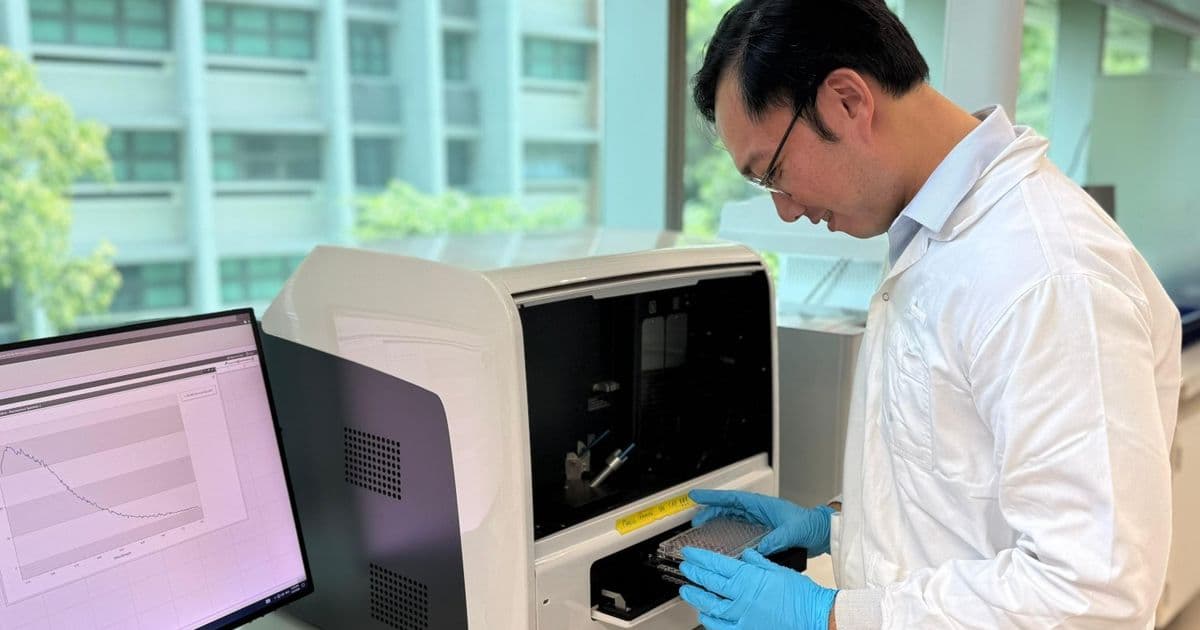
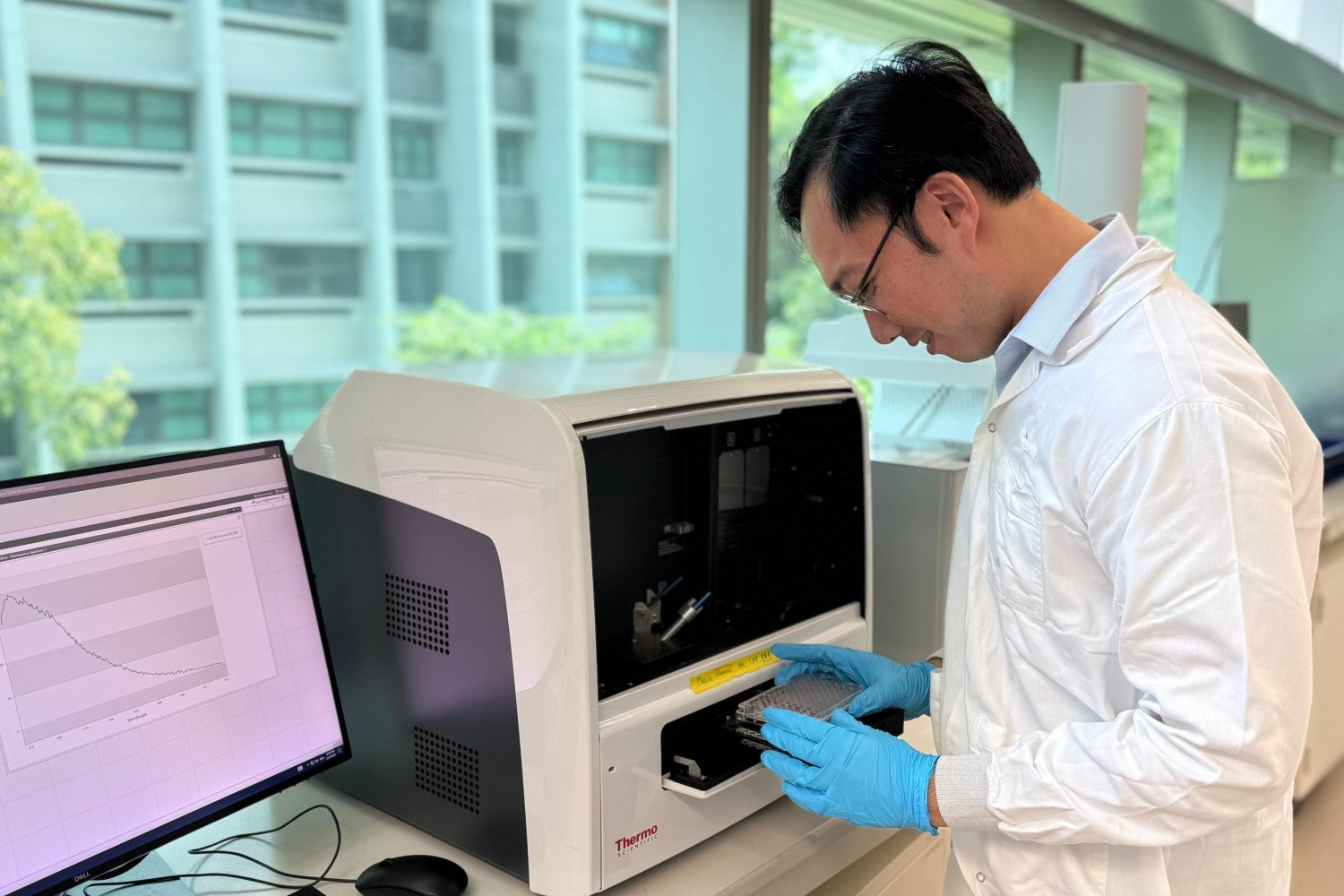
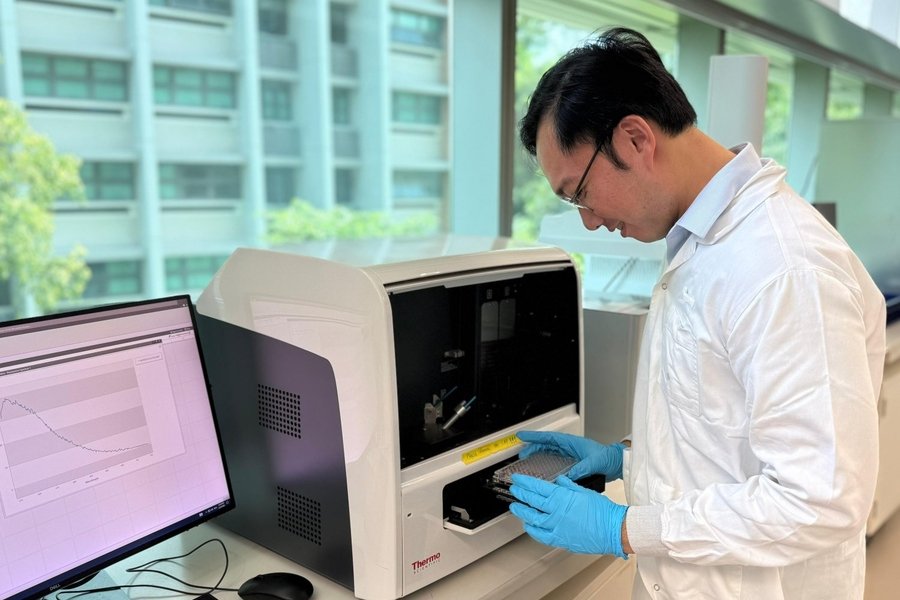
The new sensor attacks that bottleneck with an optical readout. Carbon nanotubes respond to IPA through changes in fluorescence, so the user can place a sample in a spectrometer and read a signal within minutes. The researchers designed the recognition chemistry to separate IPA from related gut metabolites, a hard requirement because plasma and serum contain many molecules with similar structures.
Mervin Ang, an assistant professor at the National Institute of Education within Nanyang Technological University, helped lead the work. Ang worked as associate scientific director at SMART's Disruptive and Sustainable Technologies for Agricultural Precision group when the project began.
The project extends a sensing platform that SMART DiSTAP researchers first used in agriculture. That program developed nano and optical sensors to monitor plant hormones, metabolites, growth signals and stress responses. For the gut health project, the researchers changed the molecular-recognition layer so the sensor would bind IPA instead of plant signals.
Michael Strano, the Carbon P. Dubbs Professor of Chemical Engineering at MIT and a SMART DiSTAP lead principal investigator, served as corresponding author. Strano's MIT Chemical Engineering profile lists nanosensors for reaction network analysis among his research interests, and the new gut sensor follows that line of work into health care.
The sensor runs in two modes. In visible fluorescence mode, a lab or clinic could screen many biological samples with lower-cost optical equipment. In near-infrared mode, carbon nanotubes emit at wavelengths that pass deeper through tissue than visible light, which gives the platform a path toward in vivo sensing, wearables, microneedles or microfluidic devices.
That dual-mode design matters for translation. A visible-light assay can fit the near-term clinical lab workflow. A near-infrared sensor points toward continuous or at-home monitoring for patients who manage chronic gut inflammation.
The team tested the nanosensor on 125 human plasma samples from healthy volunteers and patients with gastrointestinal disease. Researchers worked with clinicians from National University Hospital and the Yong Loo Lin School of Medicine at the National University of Singapore. The samples showed lower IPA levels in patients with active inflammatory bowel disease, matching earlier clinical evidence.
That validation step gives the platform more than a clean chemistry result. Many sensors perform well in buffer and fail in serum or plasma because proteins, salts and other metabolites interfere with the signal. The team reports reliable performance in complex biological fluids, a practical hurdle for any diagnostic tool.
A point-of-care IPA test would give clinicians a different view of the microbiome than standard sequencing panels. A sequencing test identifies bacteria in a stool sample. An IPA sensor measures a molecule that gut microbes produce. That functional readout can show whether microbes perform a useful chemical task, not just whether a bacterial group appears in the sample.
Patients with inflammatory bowel disease could benefit if clinicians can measure IPA during routine care. A fast readout could help doctors compare inflammation markers, symptoms and treatment response during the same visit. The sensor would complement existing tools, including endoscopy, stool tests, blood markers and imaging, rather than replace them.
Drug and probiotic developers could use the platform during screening. A company testing a probiotic strain, dietary intervention or small-molecule therapy could expose samples to a candidate treatment and measure IPA output without waiting for mass spectrometry results. Faster feedback would help researchers adjust dose, formulation and patient selection.
The research team has received an Innovation to Startup Innovation Grant to incubate a Singapore proto-startup. The next technical steps include more validation, conversion into a point-of-care diagnostic format and expansion from one metabolite to a panel of gut markers. The team also plans to use AI-driven signal deconvolution so one optical platform can separate overlapping signals from multiple metabolites.
The engineering challenge now moves from sensing chemistry to product design. Developers need stable reagents, simple sample handling, calibration standards, clinical thresholds and regulatory-grade studies. They also need hardware that clinicians can operate without a specialist in spectroscopy.
The carbon nanotube approach gives the team a plausible route because the sensor can already work in plasma and supports visible and near-infrared readouts. If follow-up studies confirm performance across larger patient groups, gut health testing could move closer to the clinic, the bedside and the home.
Comments
Please log in or register to join the discussion