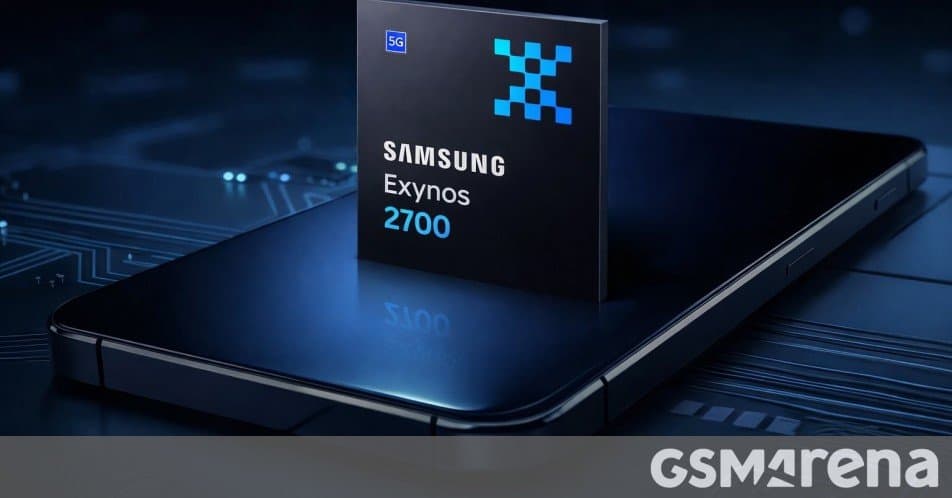
Samsung's upcoming Exynos 2700 chipset appears in early Geekbench listings, revealing 10-core CPU configuration and Xclipse 970 GPU ahead of Galaxy S27 launch.
Samsung's next-generation mobile processor, the Exynos 2700, has made an early appearance in Geekbench listings, offering the first concrete performance data for the chipset expected to power the upcoming Galaxy S27 and S27 Plus smartphones later this year.
The Geekbench listings reveal several key specifications about the new SoC. The processor carries the S5E9975 model number and appears to be running on an engineering development board, as indicated by the ERD identifier in the test results. This engineering sample status is important to note, as final retail performance may differ from these early results.
CPU Configuration and Performance
The Exynos 2700 features a 10-core CPU configuration built on ARMv8 architecture. The processor includes high-performance cores clocked at 2.88GHz, alongside efficiency cores operating between 2.3GHz and 2.4GHz. In the Geekbench tests, the engineering sample achieved 2,603 points in single-core performance and 10,350 points in multi-core performance.
These scores, while not groundbreaking, should be viewed with context. Engineering samples typically don't represent final performance levels, as manufacturers often optimize clock speeds, power management, and thermal characteristics before mass production. The 2.88GHz clock speed for the primary cores may also be adjusted in the final version.
GPU Details Emerge
A separate OpenCL test provides insight into the graphics capabilities of the Exynos 2700. The chipset appears to feature the Xclipse 970 GPU, which achieved a score of 15,618 in the graphics benchmark. Notably, rumors suggest this GPU is being developed entirely in-house by Samsung without the assistance of AMD, marking a departure from previous Exynos generations that utilized AMD's RDNA architecture.
Manufacturing Process and Efficiency
According to industry rumors, the Exynos 2700 will be manufactured using Samsung's refined 2nm process node, designated as SF2P. This advanced manufacturing process is expected to deliver significant improvements over its predecessor. Samsung claims the new chip will offer approximately 12% better overall performance while reducing power consumption by 25% compared to the Exynos 2600.
These efficiency gains are particularly important for mobile devices, where battery life remains a critical factor for consumers. The combination of a more advanced manufacturing process and architectural improvements could help Samsung close the performance gap with competitors.
Market Context and Competition
The appearance of the Exynos 2700 in benchmark listings comes at a crucial time for Samsung's mobile chipset division. The company has faced criticism in recent years for the performance gap between its in-house Exynos chips and Qualcomm's Snapdragon processors, particularly in markets where both are available.
Reader comments on the Geekbench listings reflect this ongoing concern, with some users questioning the decision to stick with ARMv8 architecture rather than moving to the newer ARMv9 standard. Others note that engineering sample results should be taken with caution, as final retail performance often differs significantly.
Looking Ahead
The Exynos 2700 is expected to debut alongside the Galaxy S27 series, likely in early 2027. If the rumored specifications and performance improvements materialize, this chipset could represent a significant step forward for Samsung's mobile processor division.
The shift to a fully in-house GPU design with the Xclipse 970, combined with the advanced 2nm manufacturing process, suggests Samsung is investing heavily in differentiating its mobile silicon from competitors. Whether these efforts will be enough to challenge Qualcomm's dominance in the Android flagship market remains to be seen.
As with all early benchmark appearances, these results should be viewed as preliminary indicators rather than definitive performance metrics. The mobile chipset landscape continues to evolve rapidly, and Samsung's Exynos division appears determined to regain competitive ground with its next-generation offerings.
Comments
Please log in or register to join the discussion