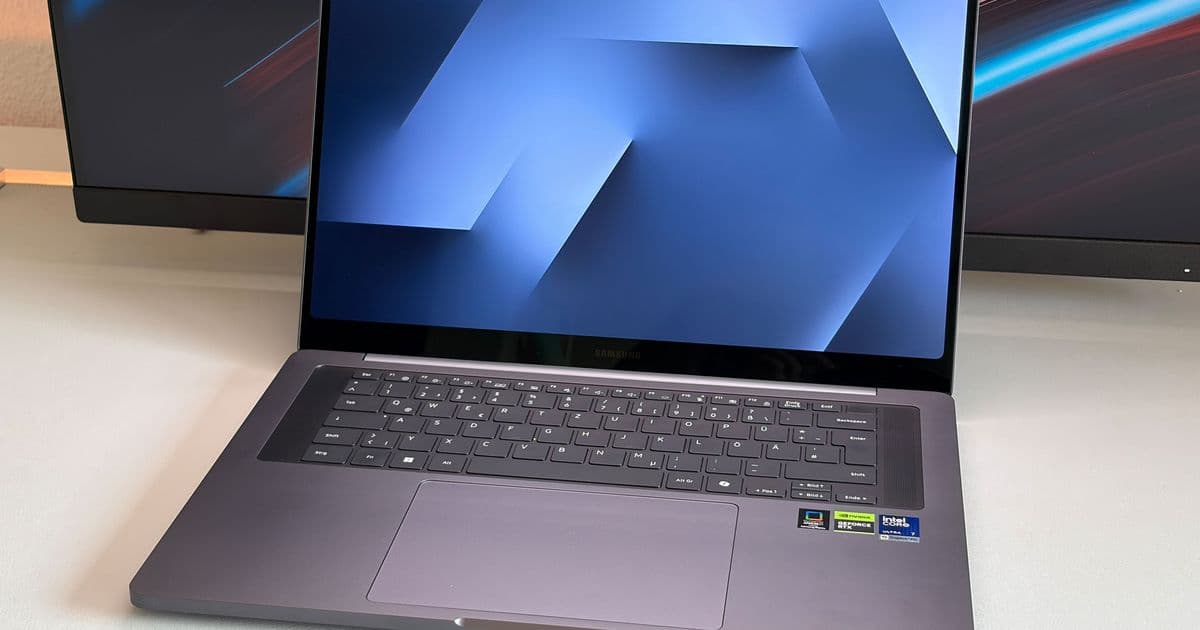
Samsung's Galaxy Book6 Ultra finally gets a brighter OLED panel, but it still can't match the peak brightness of competitors' tandem OLED or Mini-LED displays.
Samsung has made a significant improvement to the display technology in its latest Galaxy Book6 Ultra, finally addressing one of the most common criticisms of its previous OLED-equipped laptops. The new 16-inch OLED touchscreen panel offers substantially better brightness performance compared to its predecessors, but a closer look at the competitive landscape reveals that Samsung still has some catching up to do.
What's New in the Galaxy Book6 Ultra Display
The Galaxy Book6 Ultra features a 16-inch OLED touchscreen with a resolution of 2880 x 1800 pixels and a 120 Hz refresh rate. While these specifications remain unchanged from the previous generation, the brightness capabilities have seen a notable upgrade.
Our testing reveals that the new panel delivers approximately 500 nits of sustained brightness for standard dynamic range (SDR) content, up from the roughly 400 nits measured in last year's Galaxy Book5 models. More impressively, the HDR performance has been significantly enhanced, with peak brightness now exceeding 1100 nits for HDR content.
This improvement translates to a noticeably better viewing experience, particularly when watching HDR movies or playing HDR-enabled games. The increased brightness makes highlights pop more effectively and improves overall visibility in well-lit environments.
How It Compares to the Competition
Despite this welcome upgrade, Samsung's latest offering still falls short when compared to the brightest displays available in the premium laptop market. The competition has moved beyond single-layer OLED technology to more advanced solutions.
Tandem OLED panels, which stack two OLED layers to improve brightness and efficiency, are now available in several high-end laptops. For instance, the Asus ProArt P16 and Lenovo Yoga Pro 9i 16 both feature tandem OLED displays that achieve higher sustained brightness levels and can reach peak brightness values of up to 1600 nits in HDR mode.
Apple's MacBook Pro 16-inch, while using Mini-LED technology rather than OLED, still outperforms Samsung's latest offering with sustained brightness of up to 1000 nits in SDR and 1600 nits in HDR. This raises questions about Samsung's display technology choices for its flagship multimedia laptop.
The Efficiency Question
One puzzling aspect of Samsung's decision is that tandem OLED technology would likely have been even more efficient than the single-layer panel they chose. Tandem OLED displays typically offer better power efficiency and longer lifespan compared to traditional single-layer OLEDs, while simultaneously delivering superior brightness performance.
Given that Samsung is one of the world's largest suppliers of OLED panels and has demonstrated tandem OLED technology in other products, the absence of this technology in the Galaxy Book6 Ultra seems like a missed opportunity, especially considering the premium positioning and pricing of this laptop.
Image Quality Assessment
Despite the brightness limitations relative to competitors, the Galaxy Book6 Ultra's display still delivers excellent image quality. The subjective picture impression remains very good, with vibrant colors, deep blacks, and smooth motion thanks to the 120 Hz refresh rate.
Importantly, the addition of a touch layer doesn't introduce the grainy appearance that sometimes affects touch-enabled OLED displays. This means users get the benefits of touch functionality without sacrificing the visual quality that makes OLED displays so appealing.
Who This Laptop Is For
The Galaxy Book6 Ultra with its improved display is well-suited for users who prioritize color accuracy and contrast in a multimedia laptop but don't necessarily need the absolute maximum brightness available. Content creators working in controlled lighting environments, students, and professionals who value the OLED experience will find this laptop compelling.
However, users who frequently work outdoors, in brightly lit offices, or who specifically need maximum HDR brightness for their workflow might want to consider alternatives with tandem OLED or Mini-LED displays.
The Bottom Line
Samsung's decision to upgrade the display in the Galaxy Book6 Ultra represents a step in the right direction, addressing one of the main criticisms of its previous OLED laptops. The jump to over 1100 nits peak brightness in HDR mode is genuinely impressive and makes a noticeable difference in real-world use.
However, the competitive landscape has evolved rapidly, and what was once considered excellent brightness is now merely adequate. While the Galaxy Book6 Ultra's display is no longer the limiting factor it once was, it still can't match the peak performance of the latest tandem OLED or Mini-LED alternatives.
For a laptop positioned as a premium multimedia device at a high price point, this gap to the competition is notable. Samsung has closed the brightness gap significantly, but whether that's enough to satisfy users comparing it against the brightest options on the market remains to be seen.
For more detailed analysis, including color accuracy measurements, battery life impact, and gaming performance with the new display, please refer to our comprehensive review of the Samsung Galaxy Book6 Ultra.
Comments
Please log in or register to join the discussion