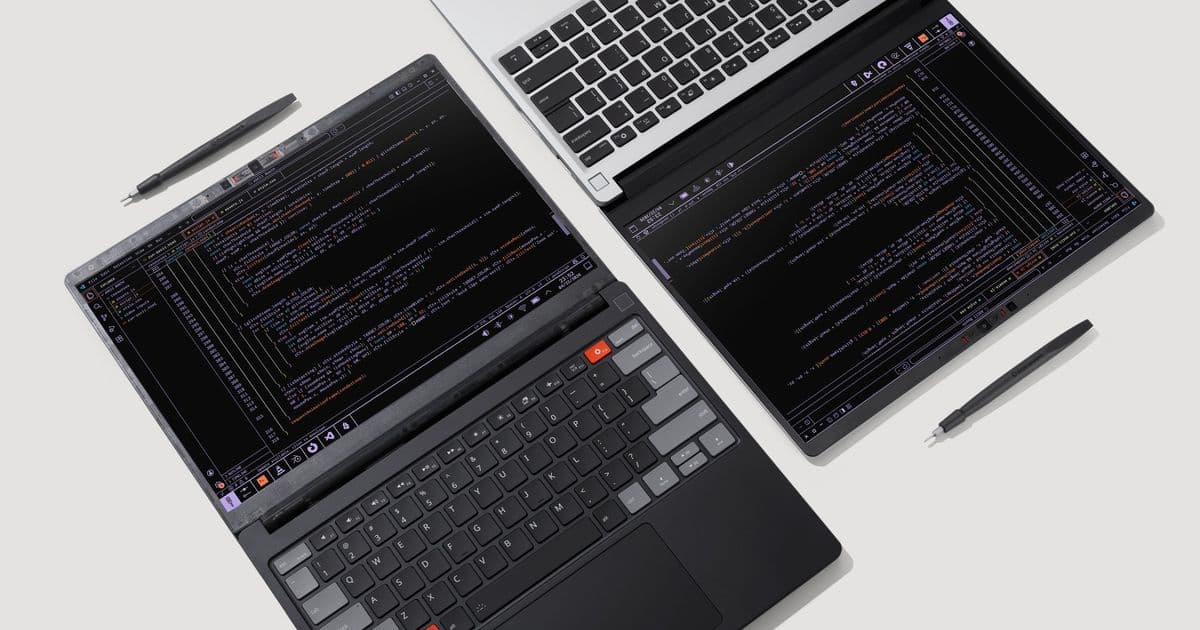
Framework announces a redesigned Laptop 13 Pro with Intel Core Ultra Series 3 processors, PCIe 5.0 support, Wi-Fi 7, and a larger 74 WHr battery, positioning it as a 'MacBook Pro for Linux users' with Ubuntu pre-installation option.
Framework has unveiled its most significant laptop redesign since the original Framework Laptop 13 launched in 2021, introducing the Laptop 13 Pro with a CNC-machined aluminum chassis, Intel's latest Core Ultra Series 3 processors, and several firsts for the company including PCIe 5.0 support and Wi-Fi 7 connectivity.
The new model represents a substantial evolution in Framework's approach to modular, repairable computing, with the company targeting Linux users specifically by offering Ubuntu pre-installed alongside traditional Windows options. The Laptop 13 Pro introduces several technological advancements that place it among the most technically interesting laptops of 2024.
Technical Specifications and Performance
At the heart of the Framework Laptop 13 Pro are Intel's Core Ultra Series 3 processors, available in Core Ultra 5, Core Ultra X7, and Core Ultra X9 configurations. These chips mark Intel's latest advancement in mobile computing, bringing improved performance-per-watt ratios that Framework highlights as crucial for extending battery life in the new 74 WHr battery. The company also continues to offer AMD Ryzen AI 300 mainboards for users preferring AMD's architecture.
The memory configuration represents a significant upgrade, with Framework adopting LPCAMM2 modules in 16GB, 32GB, and 64GB capacities, featuring speeds up to 7,467 MT/s. This memory standard offers improved bandwidth and power efficiency compared to traditional SO-DIMM modules. Framework CEO Nirav Patel emphasized the company's commitment to ensuring supply of these modules, which remain uncommon in typical retail channels.
The display is another area of significant advancement, featuring a 13.5-inch panel with 2880 x 1920 resolution, 3:2 aspect ratio, and a variable refresh rate ranging from 30Hz to 120Hz. This represents Framework's first fully-custom display, with claimed brightness up to 700 nits and anti-glare properties. Notably, it's also the company's first touchscreen offering in a 13-inch laptop, addressing a common request from the user community.
Manufacturing and Design Evolution
The most visible change in the Laptop 13 Pro is the new chassis, machined from 6000-series aluminum to provide increased rigidity while maintaining the same outer dimensions as the previous model at 15.86 mm thick. Framework has introduced a new graphite color option, while continuing to offer silver for users upgrading existing systems.
The battery represents a 22% increase over the previous 13-inch Framework model, requiring changes to the bottom cover geometry and keyboard deck design to accommodate the larger 74 WHr cell. Framework claims the battery will retain 80% capacity after 1,000 cycles, paired with a new 100W GaN charger for faster charging capabilities.
Input experience receives attention with a new haptic touchpad from LiteOn, the same vendor supplying Framework's existing mechanical touchpads. The input cover maintains the same 1.5 mm key travel as previous models, ensuring familiar typing experience for existing Framework users.
Supply Chain and Component Strategy
Framework's approach to component supply reflects its commitment to the modular ethos that defines the brand. The company has strategically selected components that balance performance with availability, particularly in the current semiconductor supply environment.
The adoption of LPCAMM2 memory modules represents both a technical advancement and a supply chain challenge. These modules offer higher bandwidth and better power efficiency than traditional laptop memory but remain uncommon in consumer channels. Framework's decision to stock these modules directly addresses potential barriers to adoption, particularly for DIY users who might otherwise struggle to source compatible memory.
Framework's backwards compatibility strategy continues with the Laptop 13 Pro, with the new mainboard and display compatible with earlier Framework Laptop 14 systems. This approach extends the product lifecycle and provides upgrade paths for existing users, potentially reducing electronic waste and increasing the total addressable market for Framework's expansion cards and components.
The company's decision to maintain the same external dimensions while increasing internal capacity demonstrates sophisticated engineering, particularly in accommodating the larger battery without increasing the laptop's footprint. This design constraint likely influenced component selection and placement decisions, contributing to the product's development timeline.
Market Positioning and Ecosystem Expansion
Framework explicitly positions the Laptop 13 Pro as a "MacBook Pro for Linux users," targeting the growing segment of professionals and developers who prefer Linux but desire premium hardware typically associated with Apple's offerings. The addition of Ubuntu pre-installation in the DIY edition removes a significant barrier to entry for Linux users, who previously needed to source and install their own operating system.
The introduction of the OCuLink developer kit for the Framework Laptop 16 represents a significant expansion of the company's ecosystem, enabling direct connection to external GPUs without Thunderbolt overhead. This 8-lane PCIe implementation with up to 128 Gigabit bidirectional throughput addresses performance limitations that have constrained modular laptop designs in the past.
Framework's broader product strategy includes complementary accessories like a new laptop sleeve, a keyboard with built-in touchpad for HTPC applications, and a 10 GBps Expansion Card for faster networking. These accessories expand the use cases for Framework laptops and create additional revenue streams while reinforcing the company's modular philosophy.
The company's approach to pricing reflects its target market, with DIY editions starting at $1,199 and pre-built configurations beginning at $1,499. This positions the Laptop 13 Pro competitively against premium Windows laptops and Apple's MacBook lineup, particularly when considering the repairability, upgradeability, and Linux support advantages.
Conclusion
The Framework Laptop 13 Pro represents a significant evolution in the company's product line, introducing substantial technical advancements while maintaining the core principles of modularity and repairability that define the brand. The adoption of Intel's latest Core Ultra Series 3 processors, PCIe 5.0 support, and Wi-Fi 7 places the laptop among the most technically competitive offerings in its class.
By addressing Linux users specifically and ensuring component availability, Framework has positioned itself to capture a growing segment of the premium laptop market. The company's commitment to backwards compatibility and modular expansion ensures that existing users can incrementally upgrade their systems, potentially extending the product lifecycle and increasing customer retention.
As the semiconductor industry continues to face supply constraints and environmental concerns around electronic waste, Framework's approach represents a compelling alternative to traditional laptop manufacturers. The Laptop 13 Pro, with its technical specifications, manufacturing quality, and market positioning, demonstrates that premium computing experiences can coexist with repairability and sustainability.
Comments
Please log in or register to join the discussion