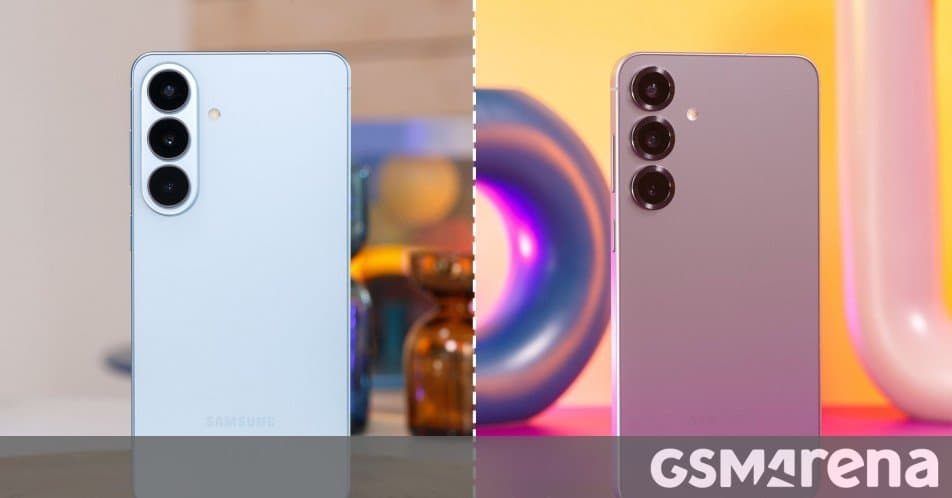
Samsung's latest flagship brings subtle improvements over its predecessor, with chipset differences being the most significant upgrade. Our detailed comparison helps you decide if the S26 Plus is worth the premium.
Samsung has released the Galaxy S26 Plus, the latest addition to its flagship lineup, but with modest upgrades over last year's S25 Plus. For consumers looking to make an informed decision, the key question is whether these improvements justify the price premium. In this comprehensive comparison, we'll examine the differences between these two devices across all key aspects to help you determine which model best suits your needs.
Design and Build: Familiar Form Factor
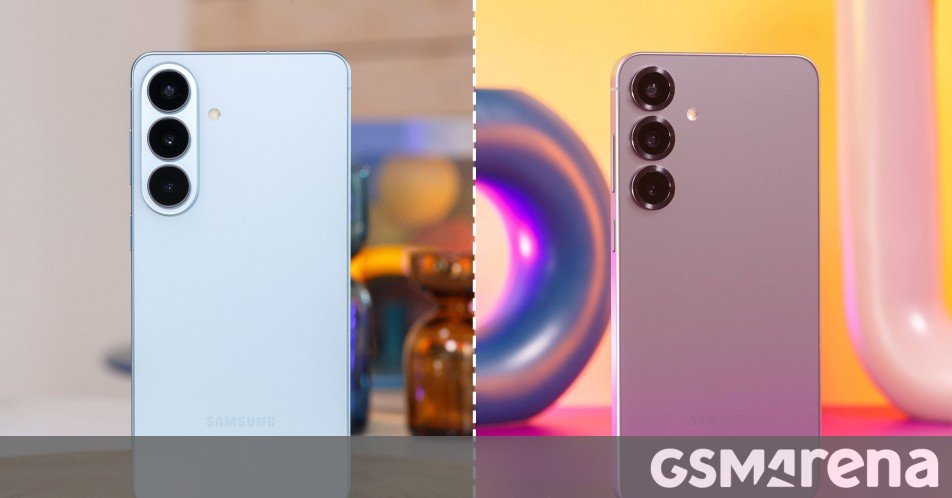 When it comes to physical design, Samsung has maintained consistency between generations. Both the Galaxy S26 Plus and S25 Plus share identical dimensions (158.4 x 75.8 x 7.3 mm) and weight (190g), featuring the same Armor aluminum 2 frame and Gorilla Glass Victus 2 protection on both front and back. The IP68 rating remains unchanged, ensuring water and dust resistance.
The most noticeable design difference is in the camera stack, with the S26 Plus featuring a slightly revised camera layout. Samsung has also introduced a new set of color options for this year's model, described as more muted and "serious" compared to previous generations. Subjectively, some users might prefer the simpler camera design of the S25 Plus, though the newer model's aesthetic may appeal to others.
One practical difference worth noting is that the S26 Plus tends to wobble when placed on a flat surface due to its camera design, a minor inconvenience that might factor into your decision if you frequently place your phone down on surfaces.
Display: Consistent Quality
Both devices feature identical 6.7-inch LTPO OLED displays with 120Hz refresh rate and 1440x3120 resolution. Our brightness tests confirm similar performance, with both phones achieving 1,400+ nits peak brightness. The pixel density is nearly identical as well, with the S26 Plus at 516 ppi and the S25 Plus at 513 ppi.
This consistency in display quality means you won't be sacrificing visual experience regardless of which model you choose. The LTPO technology allows for adaptive refresh rates, balancing smooth scrolling with battery efficiency.
Battery Life: Marginal Improvement
Despite sharing the same 4,900 mAh battery capacity and display specifications, the two phones don't exhibit identical battery performance. Contrary to expectations, the Galaxy S26 Plus demonstrates slightly better endurance across most usage scenarios.
Our tests show:
- Web browsing: S26+ (16h 25m) vs S25+ (14h 26m)
- Video streaming: S26+ (30h 27m) vs S25+ (35h 33m)
- Gaming: S26+ (13h 17m) vs S25+ (10h 56m)
- 4G calling: S26+ (25h 12m) vs S25+ (18h 12m)
- Music playback: S26+ (10h 4m) vs S25+ (10h 7m)
The S26 Plus achieves a higher overall Active Use Score, suggesting better overall battery endurance. This improvement could be attributed to the newer Exynos 2600 chipset or optimizations in the latest One UI software, though Samsung hasn't specifically highlighted these changes.
Charging: Similar Performance
Both phones support 45W charging via Power Delivery, and our tests show remarkably similar charging performance:
- 15 minutes: S26+ (38%) vs S25+ (42%)
- 30 minutes: S26+ (69%) vs S25+ (75%)
- Full charge: S26+ (61 minutes) vs S25+ (59 minutes)
The minor differences are likely due to ambient temperature variations or statistical error rather than any significant technological advancement. If fast charging is a priority for you, both devices perform adequately, though neither supports the fastest charging speeds available in the market.
Audio: Better Tuning Wins Out
While the Galaxy S25 Plus features slightly louder speakers (-25.1 LUFS vs -26.2 LUFS for the S26 Plus), the newer model offers superior audio tuning. The S26 Plus produces a warmer, deeper sound without overpowering vocals and mid-range frequencies. For most users who value audio quality over sheer volume, the S26 Plus represents the better choice, especially considering the minimal loudness difference between the two models.
Performance: The Most Significant Upgrade
This is where the two models diverge most significantly. Last year's Galaxy S25 Plus featured the Snapdragon 8 Elite for Galaxy chipset across all global markets. This year, Samsung has returned to its dual-chip strategy:
- Galaxy S26 Plus in US, China, and Japan: Snapdragon 8 Elite Gen 5 for Galaxy
- Galaxy S26 Plus in most other markets: Exynos 2600
The Exynos 2600 is built on a more advanced 2nm manufacturing process compared to the Snapdragon's 3nm. It also features AMD's Xclipse 960 GPU versus the Snapdragon's Adreno 830. Both devices maintain the same memory configurations, with 12GB/256GB as the base option and 12GB/512GB available as an upgrade.
Benchmark tests reveal the Exynos 2600's superiority:
- AnTuTu 10: S26+ (2,459,298) vs S25+ (2,133,477) - 15% improvement
- Geekbench 6: S26+ (10,982) vs S25+ (9,669) - 13% improvement
- 3DMark Wild Life: S26+ (7,138) vs S25+ (6,340) - 13% improvement
The Exynos also demonstrates better sustained performance, which benefits gaming and other intensive tasks. For users in markets receiving the Exynos variant, this represents a meaningful upgrade over last year's Snapdragon 8 Elite.
Camera System: Subtle Improvements
The camera hardware sees only minor changes between generations. The S26 Plus introduces a new Isocell GNG main sensor, which appears to be an evolution of the GN3 sensor found in the S25 Plus, maintaining similar specifications (1/1.56" optical format, 50MP resolution, 1.0µm pixel size).
The telephoto camera maintains the same sensor size (1/3.94") but uses a different sensor model (3LD vs 3K1). The ultrawide camera appears unchanged (1/2.55", no AF). The most noticeable change is in the selfie camera, which now features a wider 23mm equivalent lens (compared to 25-26mm on the S25 Plus).
In practical terms, image quality between the two models is very similar. The S26 Plus tends to produce slightly more saturated colors and finer detail structure in daylight shots. In low-light conditions, both phones struggle with full-auto performance, though the S26 Plus may expose slightly brighter and cleaner images in some scenarios. The S26 Plus also introduces color shifts when using maximum auto night mode, while the S25 Plus's dedicated night mode proves more reliable.
For selfies, the wider lens on the S26 Plus provides better coverage and sharper results, representing a clear improvement over the previous generation.
Video capabilities remain largely identical, with both phones offering 4K60 recording on all cameras and 8K30 on the main rear cameras. The S26 Plus introduces two new features: Horizon lock stabilization and the ability to use LUTs when recording in Log format. While these are niche additions for most users, they could be deciding factors for content creators.
Ecosystem Considerations
Both devices run Samsung's One UI based on Android, with the S26 Plus launching with the latest version. Samsung's ecosystem lock-in remains a consideration for users invested in the company's services and accessories. The similar physical dimensions mean most cases and accessories designed for the S25 Plus will likely fit the S26 Plus, though the camera design change might affect some specific cases.
The decision between these two models also involves regional considerations. In markets where the S26 Plus uses the Exynos 2600, users get the latest silicon technology. In contrast, US, Chinese, and Japanese consumers receive the Snapdragon 8 Elite Gen 5, which offers competitive performance but with different characteristics compared to the Exynos variant.
Value Proposition: Is the Upgrade Worth It?
The price difference between the two models varies by region:
- Europe: €100-200 premium for the S26 Plus
- US: Official pricing shows $1,000 for S25+ vs $1,100 for S26+, though third-party retailers offer the S26+ for around $850
From a European perspective, the S25+ likely offers better value given the modest improvements. The €100-200 price difference is hard to justify for the incremental upgrades in design, display, battery, and camera performance.
In the US market, the situation is more nuanced. While the S25+ is difficult to find outside official channels at $1,000, the S26+ can be acquired from third-party retailers for approximately $850, making it the more attractive option despite being the newer model.
Final Recommendations
Choose the Samsung Galaxy S26 Plus if:
- You want the latest chipset performance (especially with Exynos 2600 in your region)
- You prioritize battery life and speaker quality
- You want the wider and sharper selfie camera
- You need LUTs in Log video recording or Horizon lock stabilization
- You're in the US and can find it at a discounted price from third-party retailers
Choose the Samsung Galaxy S25 Plus if:
- You're looking for better value, especially in European markets
- You prefer the simpler camera design
- The price difference isn't justified by the modest upgrades for your needs
- You can find it at a reasonable price
Ultimately, the decision comes down to your priorities and budget. For most users, the S25+ represents a sensible choice that delivers nearly all the functionality of the newer model at a lower price point. However, for those who demand the absolute latest performance and features, the S26 Plus offers meaningful improvements in chipset performance, battery endurance, and camera capabilities.
For more detailed specifications and comparisons, you can visit Samsung's official product pages or check out the GSMArena comparison tool for additional data points and user reviews.
Comments
Please log in or register to join the discussion