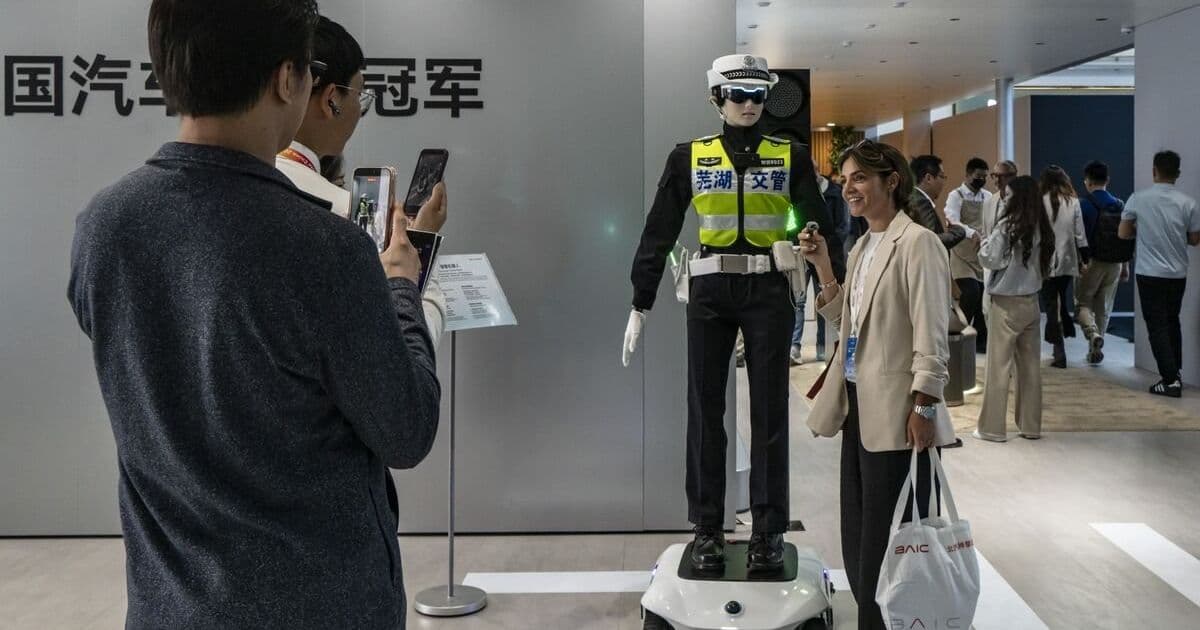
A Chinese court has ruled that companies cannot terminate employees solely to replace them with AI systems, reinforcing labor protections in the age of automation.
A Chinese court has established an important legal precedent by ruling that companies cannot terminate employees merely to replace them with artificial intelligence systems. This decision follows a similar ruling by another Chinese court in December 2025, signaling a growing judicial trend to protect workers from being displaced by automation without proper justification.
The ruling represents a significant development in the ongoing global conversation about AI's impact on employment. As organizations increasingly explore automation to reduce costs and increase efficiency, courts in China are stepping in to establish boundaries that protect workers from being replaced solely by technological alternatives.
This legal decision comes at a time when many companies worldwide are considering AI implementations that could potentially reduce their workforce. The Chinese courts appear to be taking a stance that while technological advancement is acceptable, it should not come at the expense of workers' rights when no legitimate business justification exists beyond simply replacing humans with machines.
The ruling raises important questions about the balance between technological progress and labor protection. On one hand, businesses argue that they need the flexibility to adopt new technologies to remain competitive. On the other hand, workers and labor advocates contend that employees should not be sacrificed solely for the sake of automation without proper consideration of human impact.
Legal experts note that this decision doesn't necessarily prevent companies from automating roles when it makes business sense, but rather requires them to demonstrate that the replacement is based on legitimate operational needs rather than simply a desire to cut costs by replacing workers with AI systems.
This development in China reflects similar concerns being raised in other countries about AI's impact on employment. In the United States and Europe, policymakers are grappling with how to regulate AI's impact on jobs while still encouraging innovation. The Chinese court rulings suggest a more protective approach, potentially setting a precedent that other jurisdictions might consider.
Business leaders will need to navigate this evolving legal landscape carefully when implementing AI solutions. Companies that have already begun replacing workers with AI systems may need to reassess their strategies to ensure compliance with these new interpretations of labor law.
The ruling also highlights the growing importance of ethical AI deployment. As AI becomes more capable of performing tasks traditionally done by humans, organizations will need to consider not only the technical and economic aspects of implementation but also the ethical implications for their workforce and communities.
For workers, this decision offers some reassurance that legal systems are beginning to recognize the potential harms of unchecked automation. However, experts caution that ongoing vigilance will be needed as AI technology continues to evolve and new challenges emerge.
As AI adoption accelerates globally, this Chinese court ruling may serve as an important reference point for other legal systems developing frameworks to govern AI's impact on employment. The balance between technological advancement and worker protection will likely remain a critical issue in the coming years.
Comments
Please log in or register to join the discussion