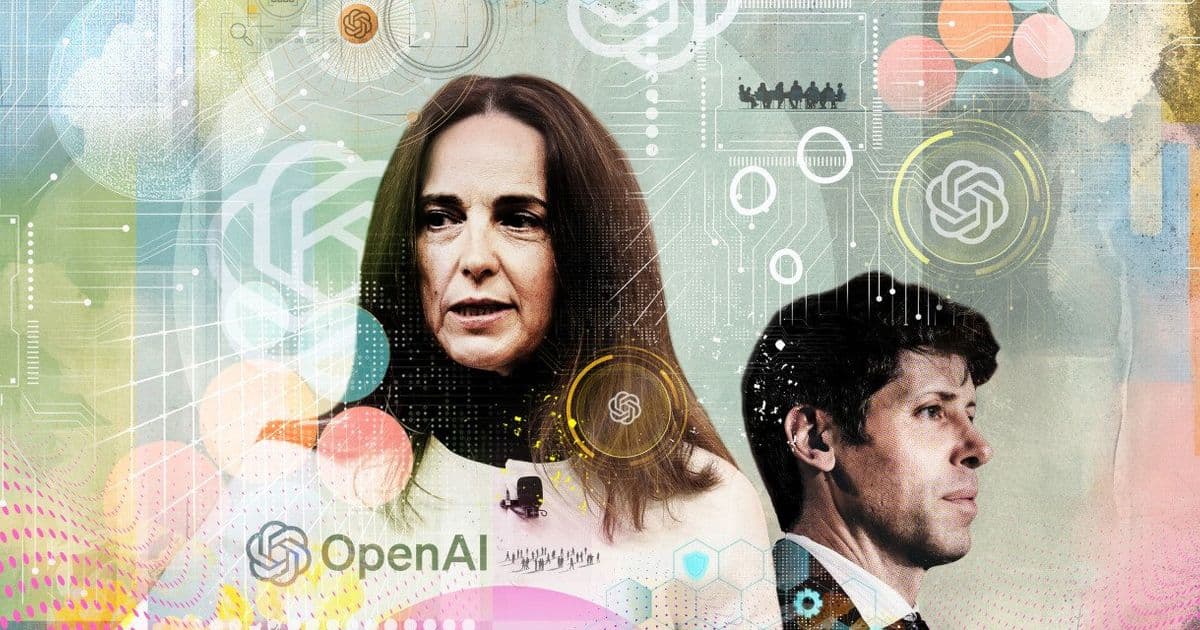
OpenAI CFO Sarah Friar emerges as a key figure in navigating the company's complex relationship with Microsoft and steering toward what could be one of the largest IPOs in history, with sources indicating she's pushing for a 2027 debut amid intense market scrutiny.
In the high-stakes world of artificial intelligence, few executives operate with as much influence behind the scenes as OpenAI's Chief Financial Officer Sarah Friar. According to sources familiar with the matter, Friar has played a pivotal role in keeping OpenAI's lucrative partnership with Microsoft on track while privately advocating for a 2027 IPO timeline, positioning herself as the financial architect of one of tech's most anticipated public offerings.
Friar's ascent to this position comes at a critical juncture for OpenAI. The company, valued at approximately $80 billion following its latest funding round, stands at the intersection of explosive growth and unprecedented scrutiny. Her background, which includes previous CFO roles at Square and a stint as CEO of Nextdoor, suggests a leader comfortable with navigating the complex intersection of technology, finance, and public expectations.
The Microsoft partnership represents perhaps the most significant corporate relationship in the current AI landscape. Sources indicate that Friar has been instrumental in maintaining this delicate alliance, which reportedly involves a $13 billion investment from Microsoft and provides OpenAI with critical computing resources. Her management of this relationship becomes increasingly important as regulatory scrutiny intensifies and competitive pressures mount from rivals like Anthropic and Google.
"Sarah brings a level of financial discipline that OpenAI desperately needs," noted one former executive at a major tech firm who requested anonymity. "She understands that you can't build a $100 billion company on enthusiasm alone—there has to be a sustainable path to profitability."
The 2027 IPO timeline, if accurate, represents a strategic departure from earlier expectations. Many industry observers had anticipated an OpenAI debut as early as 2025, given the company's rapid growth and market dominance. Friar's apparent preference for a later debut suggests a calculated approach to market timing, potentially waiting for greater regulatory clarity and more established profitability metrics.
"Pushing to 2027 is a bold move, but it makes sense from a financial perspective," explains tech analyst Sarah Johnson of Silicon Valley Insights. "The AI market is still finding its footing, and going public too soon could expose the company to valuation volatility that might not reflect its long-term potential."
Community sentiment around Friar's influence appears mixed among developers and AI researchers. Some view her as a stabilizing force necessary for OpenAI's maturation, while others express concern that financial priorities might overshadow the company's original mission of ensuring artificial general benefits all of humanity.
"There's a legitimate tension between OpenAI's stated mission and its financial ambitions," notes AI ethicist Dr. Maya Rodriguez. "Friar's background in traditional tech companies suggests she may bring valuable operational experience, but we need to ensure that profitability doesn't come at the expense of the company's core principles."
The Wall Street Journal profile highlights Friar's history with "impossible" IPOs, referring to her work at Square during its landmark 2015 public offering. This experience positions her uniquely to handle the complexities of what could be one of the largest tech IPOs in history, with some analysts suggesting it could surpass $100 billion in valuation at debut.
OpenAI's financial strategy has taken on increased importance as the company faces mounting operational costs. Training and running advanced AI models requires substantial computational resources, with estimates suggesting that developing models like GPT-4 costs hundreds of millions of dollars. The recent announcement of o1, which demonstrated diagnostic capabilities exceeding human doctors in certain scenarios, only underscores the resource-intensive nature of AI development.
"The economics of AI are brutal right now," explains venture capitalist Michael Chen. "Companies like OpenAI are burning through cash at an extraordinary rate while figuring out how to monetize these technologies effectively. Having someone with Friar's experience managing that transition is invaluable."
Counter-perspectives to Friar's approach suggest that waiting until 2027 for an IPO could be overly conservative. Some industry voices argue that OpenAI has already achieved sufficient market dominance and technological leadership to justify an earlier public offering, which would provide additional capital for expansion and research.
"The AI landscape is evolving at an unprecedented pace," argues tech entrepreneur Raj Patel. "Delaying an IPO until 2027 might mean missing a critical window of market opportunity when investor enthusiasm for AI is at its peak. The competitive landscape won't wait."
Regulatory uncertainty adds another layer of complexity to OpenAI's path to public markets. Recent developments, including a Chinese court ruling against replacing employees with AI systems and new Oscar eligibility requirements mandating human involvement in acting and writing, signal increasing global scrutiny of AI technologies. Friar's apparent caution about timing may reflect an awareness of these evolving regulatory landscapes.
As OpenAI navigates these challenges, Friar's influence continues to grow. Her management of the company's finances, partnerships, and eventual path to public markets will likely shape not only OpenAI's future but also set precedents for how other AI companies approach their own financial strategies in this rapidly evolving sector.
The coming years will test Friar's ability to balance competing priorities: maintaining OpenAI's technological edge, satisfying Microsoft's strategic expectations, preparing for a massive IPO, and upholding the company's original mission. Her success in this balancing act could determine whether OpenAI becomes a lasting technological titan or another cautionary tale in the annals of tech history.
Comments
Please log in or register to join the discussion