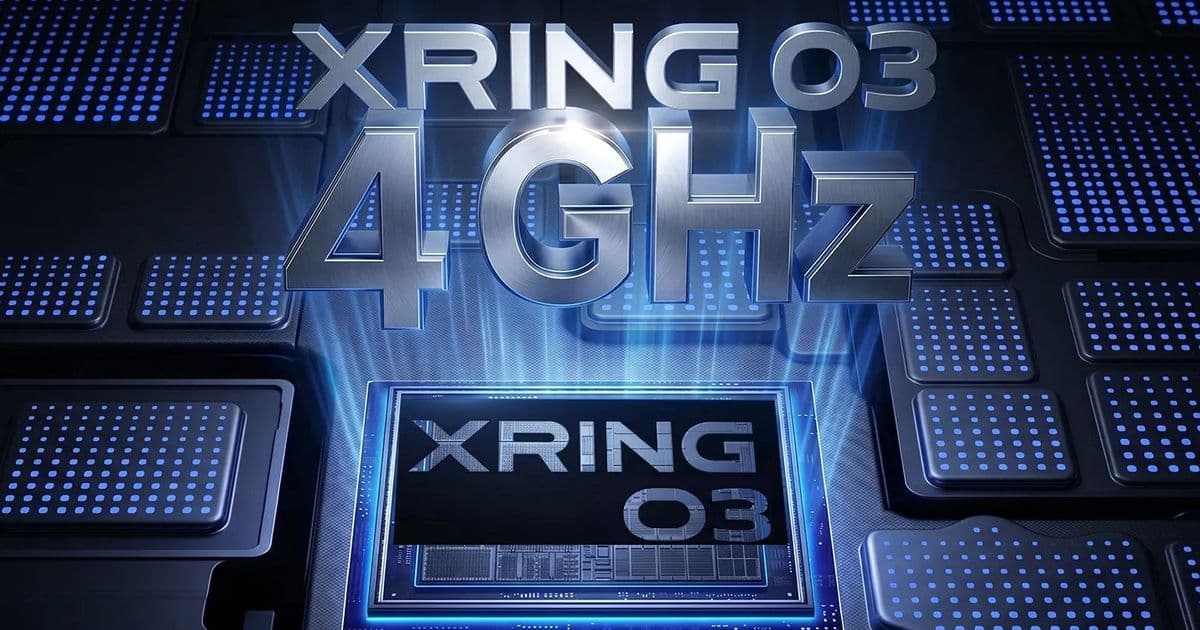
Xiaomi's second-generation in-house ARM processor, the Xring O3, appears in code leaks with significant performance improvements over its predecessor. The chip will reportedly skip traditional big cores in favor of a more balanced architecture, featuring a faster Prime core, upgraded Titanium Core, and dramatically improved little cores, positioning Xiaomi as a serious competitor to Qualcomm and MediaTek in the premium mobile chip market.
Xiaomi continues its ambitious push into semiconductor design with the upcoming Xring O3, the company's second-generation in-house ARM processor that could significantly challenge Qualcomm's Snapdragon and MediaTek's Dimensity chipsets. Following the debut of Xiaomi's first custom ARM chip in the 15S Pro, which never made it to European markets, the Chinese manufacturer appears committed to developing its silicon solution, following a strategy similar to Apple's transition from ARM-based chips to its own designs.
What's New: The Xring O3 Architecture
According to a HyperOS code leak analyzed by Ximitime, the Xring O3 represents a significant architectural departure from traditional ARM designs. Most notably, Xiaomi appears to be skipping the traditional "big cores" configuration that has dominated mobile processors for years. Instead, the chip will reportedly feature:
- A Prime core clocked at 4.05 GHz, approximately 4% faster than its predecessor
- A "Titanium Core" running at nearly 3.42 GHz
- Heavily upgraded "little cores" reaching 3.00 GHz, a substantial increase from the previous 1.79 GHz
- A GPU boosted to 1.49 GHz from 1.2 GHz, potentially offering nearly 25% better graphics performance
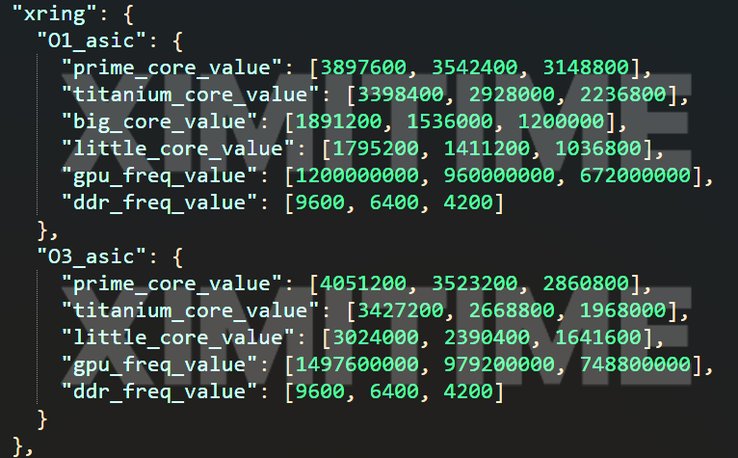
The architecture is expected to be based on the Lumex generation with C1 Ultra and C1 Pro cores, though the specific cluster configuration remains unclear. This design philosophy suggests Xiaomi is targeting a more balanced performance profile rather than the traditional hierarchy of big, medium, and little cores found in most mobile processors.
How It Compares to the Competition
The Xring O3 enters a fiercely competitive market where Qualcomm's upcoming Snapdragon 8 Elite Gen 5 and MediaTek's Dimensity series dominate the premium segment. By skipping big cores, Xiaomi is taking a different approach than both Qualcomm and MediaTek, which typically feature one or two high-performance Cortex-X4 cores alongside several efficiency cores.
Compared to Xiaomi's first-generation chip in the 15S Pro, the Xring O3 shows substantial improvements across the board. The 4.05 GHz Prime core represents a meaningful clock speed increase, while the leap in little core frequency from 1.79 GHz to 3.00 GHz suggests dramatically improved multi-threaded performance for background tasks and efficiency workloads.
The GPU's potential 25% performance increase could position the Xring O3 as a competitive gaming chipset, though without actual benchmarks, it's difficult to determine how it will stack up against the Adreno GPU in Qualcomm's Snapdragon 8 Elite Gen 5 or the Immortalis GPU in MediaTek's flagships.
Who It's For: Xiaomi's Foldable Ambitions
The Xring O3 is expected to power Xiaomi's next foldable device, likely called either Mix Fold 5 or Xiaomi 17 Fold. This strategic choice makes sense for several reasons:
- Foldable phones represent premium products where manufacturers can justify custom silicon
- These devices typically face more demanding thermal constraints, making efficiency improvements valuable
- Xiaomi's foldable lineup directly competes with Samsung's Galaxy Z Fold series, which traditionally uses Snapdragon processors
By deploying its own chip in its foldable flagship, Xiaomi can differentiate its product from Samsung's offerings while potentially reducing its dependence on Qualcomm. This strategy mirrors Apple's approach with its A-series chips in iPhones, which have become a key differentiator for the company.
Market Implications and Consumer Impact
The Xring O3 represents Xiaomi's continued commitment to vertical integration and reducing its reliance on third-party chip suppliers. While the company has stated that the majority of its products will still ship with Snapdragon SoCs, the development of custom silicon demonstrates a long-term ambition to control more of its hardware stack.
For consumers, the Xring O3 could mean several things:
- Potentially more competitive pricing for Xiaomi devices as the company reduces licensing costs
- Better optimization between hardware and software, particularly for MIUI/HyperOS
- Unique performance characteristics that might favor certain workloads over others
- A viable alternative to Qualcomm and MediaTek in the premium segment
However, without independent verification of the leaked specifications and actual performance benchmarks, it's too early to determine how the Xring O3 will compare to established competitors. The chip's real-world performance will depend not just on clock speeds but on efficiency, thermal management, and software optimization.
The Road Ahead
The Xring O3 is expected to debut in 2026, coinciding with Xiaomi's next foldable device. Between now and then, we can expect Xiaomi to continue refining its chip design capabilities, potentially learning from the first-generation implementation in the 15S Pro.
For the chip to succeed, Xiaomi will need to demonstrate clear advantages over established competitors. This could come through superior power efficiency, better AI processing capabilities, or unique features tailored to Xiaomi's ecosystem. The company will also need to address concerns about software support and long-term updates, which have traditionally been weaker points for devices with custom chipsets.
As Xiaomi continues its journey into semiconductor design, the Xring O3 represents a critical step in establishing the company as a serious player in the mobile chip market. Whether it can challenge Qualcomm and MediaTek's dominance remains to be seen, but the ambitious specifications suggest Xiaomi is not content to remain merely a follower in the smartphone hardware race.
Comments
Please log in or register to join the discussion