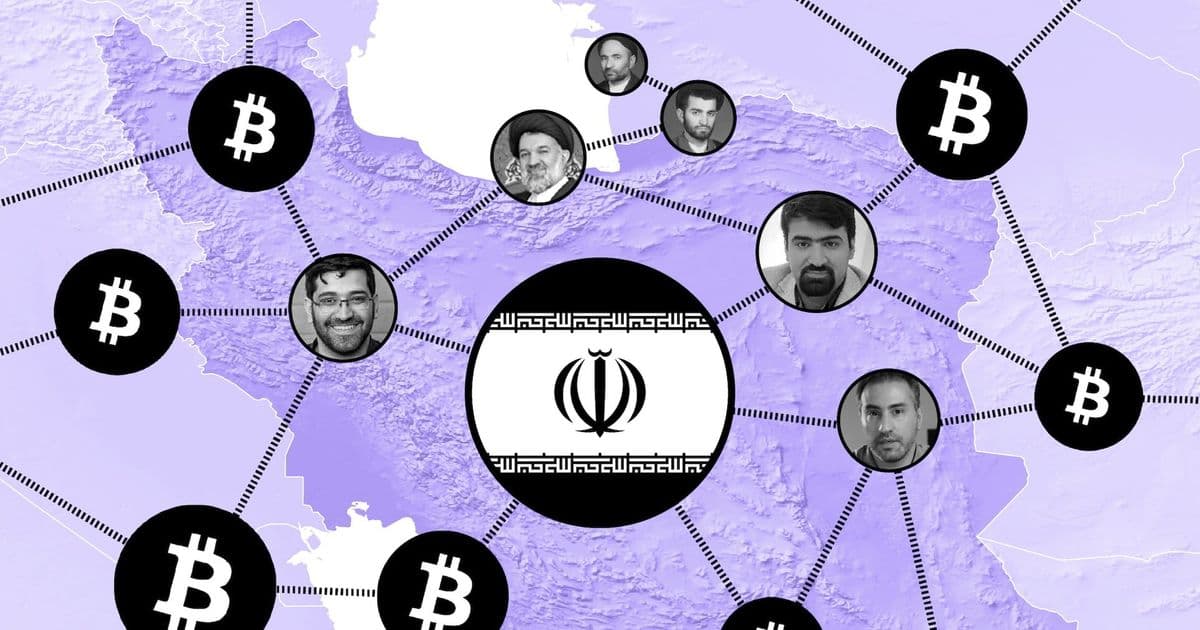
Reuters investigation reveals Nobitex, founded by Iran's elite Kharrazi family, facilitated substantial transactions violating US sanctions, highlighting ongoing challenges in regulating global cryptocurrency markets.
A Reuters investigation has uncovered that Nobitex, a Tehran-based cryptocurrency exchange, processed hundreds of millions of dollars in transactions that violated US sanctions, with the platform founded by two brothers from Iran's influential Kharrazi family. The exchange, established in 2018, allegedly facilitated significant financial flows that circumvented international restrictions, raising serious questions about enforcement capabilities in the rapidly evolving digital asset space.
The investigation reveals that the two brothers utilized an alternative surname when establishing Nobitex, a tactic that allowed the platform to operate with relative obscurity while processing transactions worth hundreds of millions of dollars. This approach enabled the exchange to maintain connections with international cryptocurrency markets while operating from within Iran, a country under extensive financial sanctions.
Sanctions violations involving cryptocurrency have become increasingly sophisticated as digital assets provide mechanisms to circumvent traditional financial controls. The scale of Nobitex's operations—processing hundreds of millions—demonstrates the significant volume of capital that can move through these channels without triggering traditional banking safeguards.
The Kharrazi family's involvement adds another layer of significance to this case. As members of Iran's elite, the brothers bring connections and influence that likely facilitated both the establishment and expansion of Nobitex's operations. The family's status suggests potential political connections that may have provided some level of protection or understanding of regulatory boundaries within Iran.
From a market perspective, this revelation underscores the persistent challenges regulators face in monitoring cryptocurrency transactions. Traditional financial systems have established compliance frameworks for sanctions enforcement, but the decentralized and pseudonymous nature of cryptocurrency creates significant enforcement gaps.
The implications extend beyond regulatory concerns. Financial institutions that unknowingly processed transactions through Nobitex or its partners could face secondary sanctions, creating ripple effects throughout the global financial system. Additionally, this case may prompt more aggressive enforcement actions against cryptocurrency exchanges operating in sanctioned jurisdictions.
Cryptocurrency markets have grown exponentially in recent years, with total market capitalization exceeding $2 trillion at various points. This growth has attracted both legitimate participants and those seeking to exploit the system's relative anonymity. The Nobitex case exemplifies how digital assets can become vehicles for sanctions evasion, potentially undermining international efforts to isolate specific economies or entities.
Regulatory responses to such violations have typically lagged behind the pace of innovation in cryptocurrency. While frameworks like the Financial Action Task Force (FATF) recommendations provide guidelines, implementation varies significantly across jurisdictions. The Nobitex case may accelerate efforts to establish more robust monitoring systems for cross-border cryptocurrency transactions.
For the cryptocurrency industry, this investigation represents another challenge to its mainstream acceptance. Despite growing institutional adoption, cases like Nobitex reinforce concerns about the industry's potential for facilitating illicit financial flows. The sector continues to grapple with balancing innovation with compliance, a tension that will likely intensify as regulatory scrutiny increases.
The investigation also highlights geopolitical complexities in cryptocurrency regulation. As digital assets transcend national boundaries, enforcement becomes increasingly challenging when sanctioned jurisdictions maintain active cryptocurrency ecosystems. The Nobitex case demonstrates how technological innovation can intersect with geopolitical tensions, creating new frontiers in financial regulation.
Looking ahead, this case may prompt several developments: increased pressure on cryptocurrency exchanges to implement more sophisticated transaction monitoring systems, enhanced cooperation between international regulatory bodies, and potentially more restrictive approaches to cryptocurrency businesses operating in sanctioned countries.
The cryptocurrency industry's response to such challenges will likely determine its trajectory in coming years. While innovation continues at a rapid pace, the ability to address legitimate regulatory concerns will ultimately determine whether digital assets achieve widespread adoption as legitimate financial instruments or remain marginalized due to persistent compliance issues.
Comments
Please log in or register to join the discussion