
Two Android titans face off: Samsung's feature-packed S26 Ultra versus Google's pure Android Pixel 10 Pro XL. Which big-screen flagship deserves your money?
The Android flagship landscape has long been dominated by two distinct philosophies: Samsung's feature-rich, heavily customized approach versus Google's pure Android vision. The newly announced Galaxy S26 Ultra and Pixel 10 Pro XL represent these opposing ends of the spectrum, each appealing to different types of users. Let's dive into how these two behemoths compare across every major category.
Design and Build Quality
The physical differences between these phones tell you everything you need to know about their design philosophies. The Galaxy S26 Ultra measures 163.6 x 78.1 x 7.9mm and weighs 214g, while the Pixel 10 Pro XL is slightly thicker at 8.5mm and heavier at 232g despite having a marginally smaller screen.
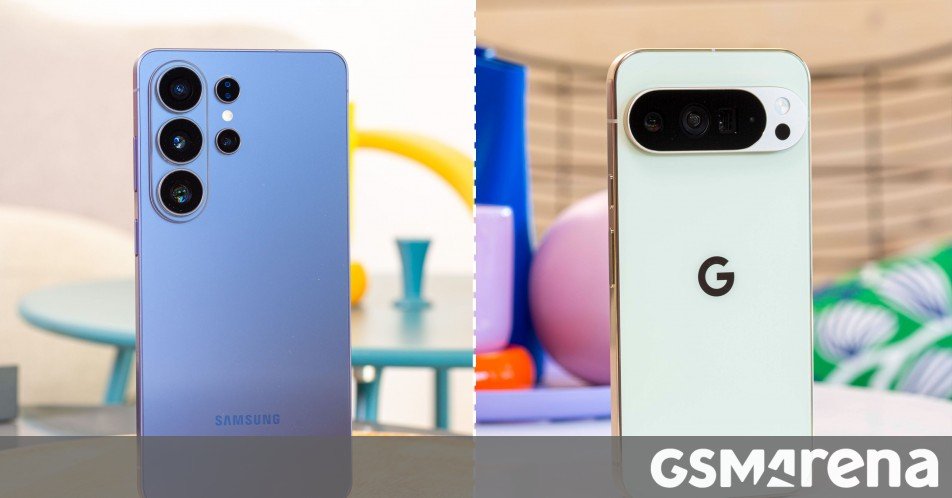
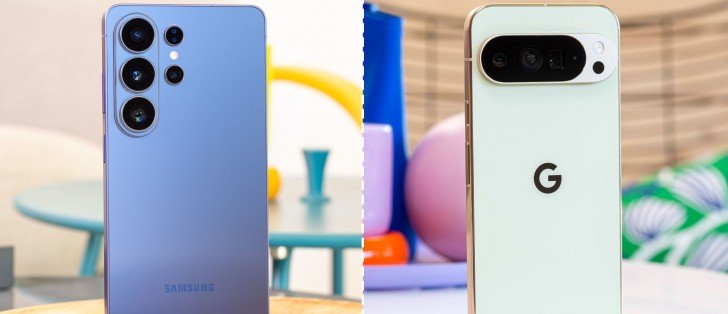
Samsung's use of Gorilla Glass Armor 2 on the front gives the S26 Ultra superior protection compared to the Pixel's Gorilla Glass Victus 2 on both sides. The S26 Ultra's sharper corners and vertical camera stack contrast with the Pixel's more oval design and horizontal camera arrangement.
One practical consideration: the Pixel's camera bump is more functional, preventing the phone from wobbling when placed on flat surfaces. The S26 Ultra's design, while sleeker, can be borderline frustrating to use when lying flat on a desk.
Display Technology
Both phones feature LTPO OLED panels with 120Hz refresh rates, but the similarities end there. The Galaxy S26 Ultra boasts a 6.9-inch display with 1440x3120 resolution (500ppi) and 1480 nits peak brightness, while the Pixel 10 Pro XL has a 6.8-inch 1344x2992 panel (486ppi) that can reach an impressive 2265 nits.
The S26 Ultra pulls ahead with its anti-reflective coating for better sunlight legibility and a unique Privacy Display feature that limits viewing angles to prevent "shoulder surfing." The Pixel compensates with superior peak brightness that can mitigate the absence of anti-reflective coating.
Battery Life and Charging
Here's where the numbers get interesting. The Pixel 10 Pro XL packs a 5200mAh battery compared to the S26 Ultra's 5000mAh, but real-world performance tells a different story. In our battery tests:
Galaxy S26 Ultra: 16:23h active use, 37:44h standby, 13:01h web browsing, 24:48h video playback Pixel 10 Pro XL: 12:29h active use, 21:47h standby, 13:56h web browsing, 19:43h video playback
The S26 Ultra dominates in every category except web browsing, where the Pixel narrowly edges ahead. This demonstrates that battery capacity alone doesn't determine real-world endurance.
Charging speeds show an even more dramatic difference. The S26 Ultra supports 60W wired charging, reaching 51% in 15 minutes and 84% in 30 minutes, with a full charge in just 43 minutes. The Pixel 10 Pro XL tops out at 45W, achieving only 38% in 15 minutes, 64% in 30 minutes, and requiring 82 minutes for a full charge.
Google's approach includes an algorithm that limits charging speed after approximately 200 cycles to preserve battery health long-term, meaning the Pixel will charge even slower after extended use.
Wireless charging reveals another distinction: the Pixel supports native Qi2.1 magnetic charging (Pixel Snap) out of the box, while the S26 Ultra requires a magnetic case to achieve the same functionality despite both being rated for 25W wireless charging.
Audio Performance
Speaker quality often gets overlooked in flagship comparisons, but it's an area where the Galaxy S26 Ultra shines. Both phones achieve "VERY GOOD" loudness scores at -25.9 LUFS (S26 Ultra) and -25.3 LUFS (Pixel 10 Pro XL), but the S26 Ultra offers better tuning with more pronounced bass, better midrange clarity, and warmer vocals.
Performance and Hardware
The chipset battle reveals the most significant performance gap. The Galaxy S26 Ultra features the Snapdragon 8 Elite Gen 5 "for Galaxy" - an overclocked version of Qualcomm's flagship. The Pixel 10 Pro XL uses Google's Tensor G5, which has significantly lower clocks and a less powerful GPU that lacks ray tracing support and certain Vulkan features.
Benchmark Results:
- AnTuTu 10: S26 Ultra 2,627,986 | Pixel 10 Pro XL 1,378,904
- Geekbench 6: S26 Ultra 11,566 | Pixel 10 Pro XL 6,255
- 3D Mark Wild Life: S26 Ultra 7,744 | Pixel 10 Pro XL 3,377
The Snapdragon 8 Elite Gen 5 is essentially twice as powerful as the Tensor G5 across all synthetic benchmarks. Both phones start at 256GB storage with 1TB maximum capacity, but the Pixel offers 16GB RAM across all configurations while the Galaxy provides 12GB for 256/512GB models.
Software Experience
This is where the philosophical divide becomes most apparent. The Pixel 10 Pro XL delivers the purest Android experience with timely updates - you'll get the latest Android features as soon as Google releases them. Major Android updates arrive sooner on Pixel devices than on Samsung phones.
Samsung's One UI, while arriving later, offers significantly more features: extensive customization options, productivity tools, the S Pen functionality, and Samsung DeX for desktop-like experiences. Both phones promise 7 years of full software support, matching the longest commitment in the Android ecosystem.
Camera Systems
The camera comparison is fascinating because these phones have essentially identical hardware specifications:
- Main cameras: 1/1.3" sensors with similar focal lengths
- Ultrawides: AF-capable with 1/2.5" sensors
- Telephotos: 100mm+ 5x optical zoom with 1/2.5" sensors
- Front cameras: Galaxy uses 12MP conventional sensor, Pixel uses Quad Bayer-type sensor
The software processing creates the real differences. In daylight at 1x, photos are remarkably similar, with the Pixel showing slightly grittier detail that some might prefer. The Galaxy tends toward warmer, more saturated colors.
At 2x zoom, the Galaxy has a clear sharpness advantage. The Pixel's approach to 3x zoom is particularly clever - it composites the center from its 5x camera with the periphery from the main camera, often producing better results than the Galaxy's dedicated 3x camera.
In low light, both phones perform similarly at 1x, though the Pixel's dedicated Night Sight mode outperforms the Galaxy's auto night mode. The Galaxy pulls ahead at 2x and 5x in low light, while the Pixel's 10x zoom shows less noise and better sharpness in challenging conditions.
For selfies, the Pixel's 18mm ultrawide lens is significantly wider than the Galaxy's 23mm, making it the clear winner for group shots. However, the Galaxy delivers higher quality detail in standard selfies.
Video capabilities heavily favor the Galaxy: it offers 4K120 recording, native 8K@30fps, Pro video mode, Horizon Lock stabilization, and the APV codec for professional editing. The Pixel is limited to more basic point-and-shoot video, requiring cloud processing for 8K and lacking 4K120 support.
The Verdict
Choose the Samsung Galaxy S26 Ultra if you want:
- Thinner, lighter design with superior front glass protection
- More feature-rich display with anti-reflective coating and Privacy Display
- Significantly longer battery life
- Much faster charging (60W vs 45W)
- Better-sounding speakers with enhanced bass
- Twice the performance for gaming and demanding tasks
- Higher quality selfies and better low-light videos
- Professional video features including 4K120, 8K recording, and APV codec
- S Pen functionality and Samsung DeX desktop experience
- More extensive software features and customization
Choose the Google Pixel 10 Pro XL if you prefer:
- Brighter display (2265 nits vs 1480 nits)
- Ultrawide selfies for group photos
- Pure Android experience with immediate updates
- Significantly lower price (€849 vs €1099 for 256GB)
- Native magnetic charging support out of the box
Price Considerations
The €300-€350 price difference between these phones in Europe and the US is substantial. While the Galaxy S26 Ultra offers superior hardware and features across virtually every category, the Pixel 10 Pro XL represents excellent value for users who prioritize software purity and don't need the absolute cutting edge in performance and camera capabilities.
Ultimately, the choice comes down to whether you value Samsung's comprehensive feature set and superior performance or Google's clean software experience and better value proposition. Both are excellent flagships that represent the best of what Android has to offer, just from very different perspectives.
Comments
Please log in or register to join the discussion