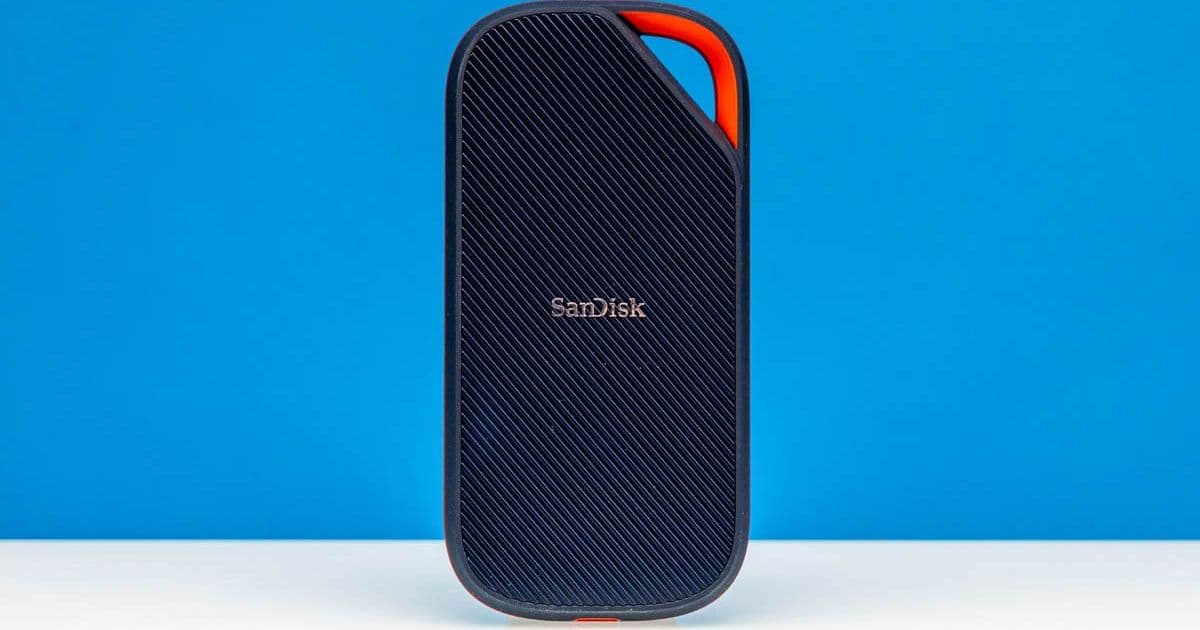
The SanDisk Extreme PRO Portable SSD with USB4 represents a significant leap in external storage performance, finally delivering on the promise of 40Gbps connectivity for portable drives. This review examines the drive's new, larger chassis, its internal PCIe 4.0 x4 NVMe architecture, and the real-world performance gains that come with saturating a USB4 connection.
The external storage market has been in a holding pattern for years. While USB4 hosts have been available since 2020, the devices to fully utilize that 40Gbps bandwidth have been conspicuously absent. This gap created a frustrating bottleneck: users with powerful laptops and workstations were limited to 20Gbps (USB 3.2 Gen 2x2) or 10Gbps (USB 3.2 Gen 2) portable SSDs, leaving the full potential of their systems untapped. The SanDisk Extreme PRO Portable SSD with USB4 is one of the first major products to address this gap, promising sequential read speeds up to 3.8GB/s and write speeds up to 3.7GB/s.
This isn't merely a firmware update to an existing model. The USB4 version of the Extreme PRO is a complete redesign, both internally and externally. It represents a shift from the older SATA-based or lower-speed NVMe architectures to a full PCIe 4.0 x4 NVMe SSD behind a USB4 bridge controller. This is the same fundamental architecture found in high-performance internal SSDs, now packaged for external use. The result is a drive that can, in theory, nearly saturate the USB4 bus, delivering a performance profile that was previously exclusive to internal storage or much larger desktop enclosures.
Hardware Overview: A Larger, More Capable Chassis
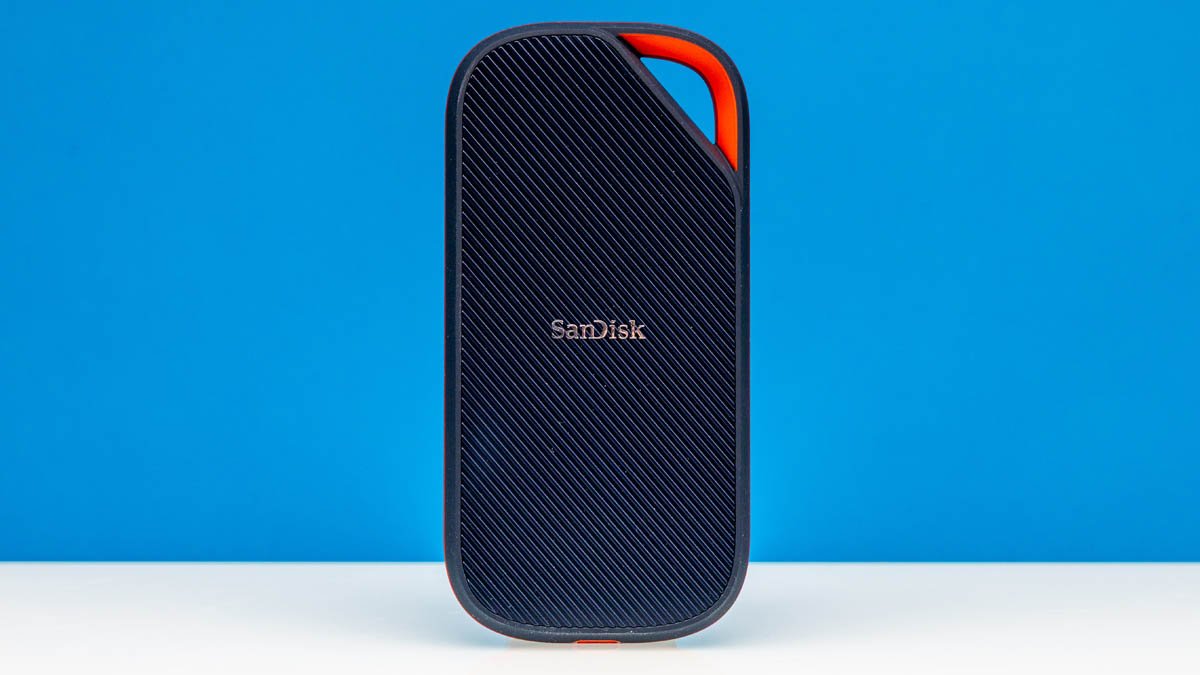
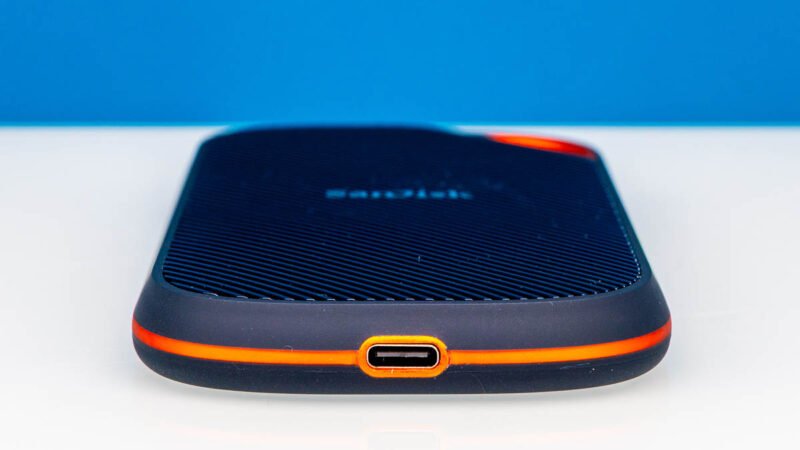
The first thing you notice when handling the SanDisk Extreme PRO USB4 is its size. While the drive maintains the brand's signature ruggedized aesthetic—a black and orange rubberized shell with a prominent lanyard loop—the dimensions have increased substantially. The previous generation Extreme PRO measured 110 x 57 x 10 mm. The new USB4 model expands to 110 x 68.6 x 12 mm.
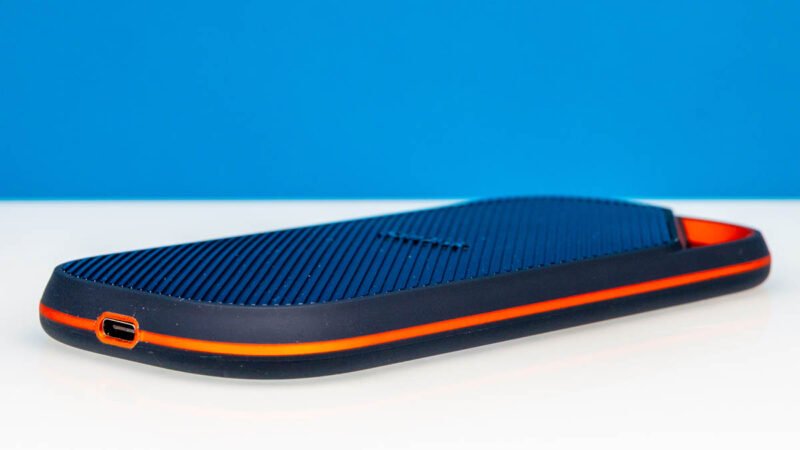
This represents a 44% increase in volume (from ~62.7cm³ to ~90.6cm³). The increase is necessary to accommodate the more complex internal electronics, including the USB4 bridge controller, the PCIe 4.0 x4 NVMe SSD module, and the power regulation required for the 40Gbps interface. While the drive is still portable, it's now approaching the size of a modern smartphone, requiring deeper pockets or a dedicated spot in a bag. The added bulk, however, contributes to a more substantial feel and likely aids in heat dissipation during sustained transfers.
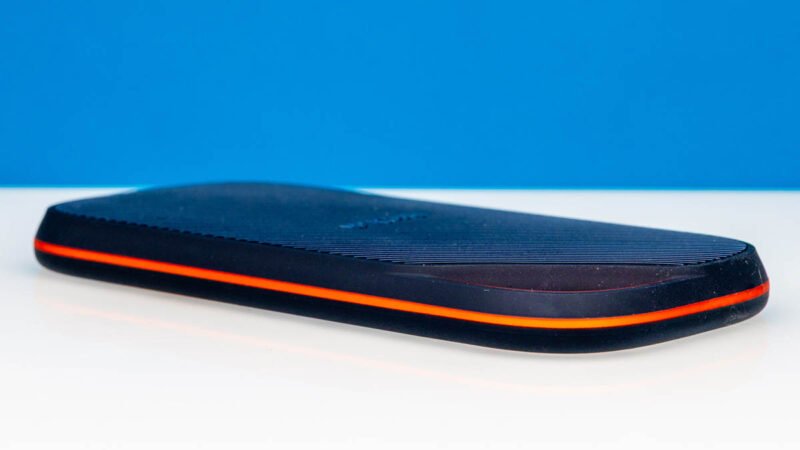
The ruggedization remains a key selling point. The drive carries an IP65 rating, meaning it's dust-tight and protected against low-pressure water jets from any direction. The thick rubber casing provides excellent shock absorption, making it suitable for field work or travel. The single USB-C port is recessed and protected, and the drive is bus-powered, drawing all necessary power from the host connection. This simplifies setup—no external power bricks are needed.
The packaging reflects the drive's premium positioning. It includes the drive and a single USB-C to USB-C cable. Notably, SanDisk has stopped including a USB-C to USB-A adapter cable in the box. This is a pragmatic decision, as USB4 requires a USB-C port, and legacy USB-A ports cannot provide the necessary bandwidth or power. Users with older systems will need to purchase a compatible adapter separately.
The Technology Inside: PCIe 4.0 x4 Over USB4
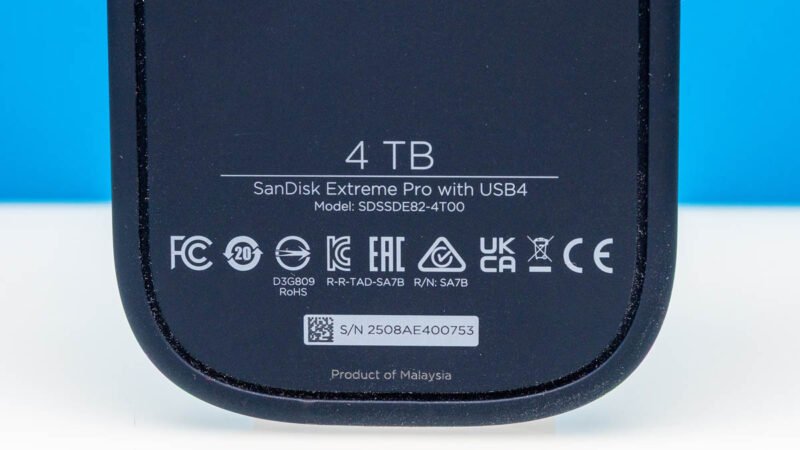
To understand the performance leap, it's important to dissect the architecture. The SanDisk Extreme PRO USB4 uses a bridge controller to translate the NVMe protocol (which runs over PCIe lanes) into the USB4 protocol. The drive inside is a PCIe 4.0 x4 NVMe SSD, capable of theoretical speeds up to 8GB/s (64Gbps). However, USB4's 40Gbps (5GB/s) bandwidth becomes the limiting factor.
This is a critical point: the drive is not limited by its internal SSD's capability, but by the interface. This is a good problem to have. Previous portable SSDs were often bottlenecked by their internal storage (e.g., SATA SSDs maxing out at 550MB/s) or by slower USB standards (20Gbps USB 3.2 Gen 2x2). With this drive, the bottleneck shifts to the external interface, which is now a much higher ceiling.
The 4TB capacity uses 3D TLC NAND flash, a good balance of performance, endurance, and cost. The drive's controller and firmware are optimized for sustained write performance, which is crucial for large file transfers. SanDisk rates the drive for 3.8GB/s read and 3.7GB/s write. In real-world testing, these numbers are achievable under ideal conditions (with a capable host and proper file sizes).
Real-World Performance and Implications
What does 3.7GB/s write speed actually mean for a user? Consider these scenarios:
- Video Professionals: Transferring a 100GB 4K video project from a camera card to the drive would take approximately 27 seconds, compared to over a minute on a 20Gbps drive and several minutes on a 10Gbps drive. This drastically reduces downtime on set.
- Data Scientists & Researchers: Moving large datasets (e.g., 500GB of genomic data) between a laptop and a portable drive becomes a matter of a couple of minutes, enabling more fluid workflows between office and field work.
- Gamers: Modern game installations can exceed 100GB. Loading a game from this drive to a USB4-equipped laptop or handheld (like the ROG Ally or Legion Go) will be significantly faster than from a traditional external HDD or even a SATA SSD.
However, there are trade-offs and considerations:
- Host Dependency: To achieve these speeds, you need a host with a USB4 or Thunderbolt 4 port. A Thunderbolt 3 port will also work, as it's electrically compatible, but you may not get the full 40Gbps in all scenarios. A standard USB 3.2 Gen 2 (10Gbps) port will limit the drive to ~1GB/s.
- Thermal Throttling: Sustained writes at 3.7GB/s generate significant heat. The drive's large chassis and rubber shell act as a heat sink, but during extended transfers (e.g., copying 2TB of data), performance may dip slightly as the drive warms up. This is normal for high-performance NVMe drives and is managed by the internal controller.
- File System Overhead: Real-world speeds are also affected by the file system (NTFS, exFAT, APFS) and the size of the files being transferred. Transferring thousands of small files will always be slower than transferring a single large file due to metadata overhead.
Competition and Market Position
The SanDisk Extreme PRO USB4 enters a nascent but growing market. Competitors like Crucial (with their X10 Pro) and Samsung (with the T9) have also released USB4 portable SSDs. SanDisk's pricing is at the premium end of this spectrum. The 4TB model carries a street price of around $480, which is a significant investment.
This price reflects several factors: the current upward trend in NAND flash prices, the cost of the USB4 bridge controller, and SanDisk's brand premium for its ruggedized designs and 5-year warranty. For users who need the absolute maximum portable performance and durability, the cost may be justified. For those with less demanding needs, a 20Gbps USB 3.2 Gen 2x2 drive offers a better value proposition.
Conclusion: A Glimpse of the Future of Portable Storage
The SanDisk Extreme PRO Portable SSD with USB4 is more than just an incremental update. It represents a necessary evolution in external storage, finally allowing portable drives to keep pace with the internal storage speeds of modern laptops. The performance is tangible and transformative for workflows that involve moving large amounts of data.
The increased size is a necessary compromise for the technology, but the drive remains genuinely portable. The combination of high-speed NVMe storage, a rugged IP65-rated enclosure, and a 5-year warranty makes it a compelling tool for professionals and enthusiasts who demand both speed and resilience.
As USB4 becomes more ubiquitous on laptops, desktops, and even handheld gaming devices, drives like this will become the new standard for high-performance external storage. The SanDisk Extreme PRO USB4 is a solid first-generation product that delivers on its core promise: breaking the 20Gbps bottleneck and unlocking the full potential of portable SSD performance.
Learn More:
Comments
Please log in or register to join the discussion