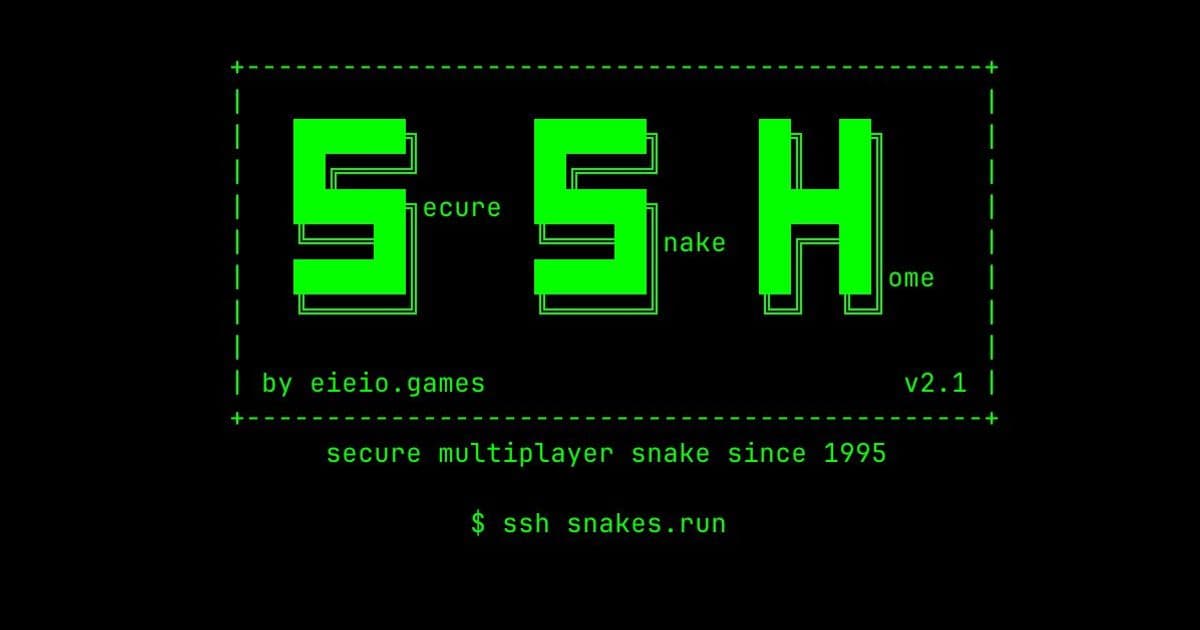
A satirical reimagining of the Secure Shell protocol as a multiplayer Snake game, blending technical accuracy with humorous gaming culture.
The article presents "Secure Snake Home (SSH)" as both a parody and a creative reinterpretation of the real SSH protocol. At its core, this is a humorous take on how a serious security protocol might be adapted for entertainment purposes, while maintaining enough technical accuracy to be recognizable to those familiar with actual SSH.
The central concept is positioning SSH as a protocol for playing multiplayer Snake with encrypted gameplay to prevent cheating. This satirical twist cleverly repurposes real SSH concepts like server validation using ssh-keyscan and ssh-keygen commands, framing them as anti-cheating measures rather than security precautions. The article even includes a warning about potential "man in the middle" attacks in the game context, mirroring real SSH security concerns.
The technical implementation described—using wish and a modified version of bubbletea—appears to be based on real technologies, suggesting the author has technical knowledge of both SSH and terminal-based applications. The mention of Unicode Block Elements for rendering indicates an understanding of terminal limitations and display technologies.
The historical timeline from 1976 to 2026 is particularly clever, blending actual computer game history with fictional developments in SSH-based gaming. The reference to Tatu Ylonen (the actual creator of SSH) as the creator of "Secure Snake Home" exemplifies the article's blend of fact and fiction. The inclusion of real organizations like MIT and CalTech in this fictional history adds another layer of authenticity to the parody.
The gameplay mechanics described—using WASD, arrow keys, or HJKL controls, with a special "jump" ability—combine classic Snake gameplay with modern multiplayer elements. The server's claimed capacity to support over 2,000 concurrent players represents an ambitious technical goal, even if exaggerated for comedic effect.
The FAQ section addresses potential concerns about compatibility and alternative clients, demonstrating an understanding of user experience issues in terminal applications. The mention of MacOS Terminal.app's rendering issues reflects real-world technical limitations that terminal application developers must address.
This satirical article serves multiple purposes: it educates readers about SSH concepts through humor, highlights the cultural significance of the Snake game, and demonstrates how technical protocols can be creatively repurposed. The humor works on multiple levels, appealing to both technical readers who recognize the SSH references and general gamers familiar with Snake.
The article's greatest strength is its ability to maintain technical plausibility while delivering humor. By grounding the parody in real technologies and concepts, it creates a more engaging and informative experience than pure fantasy. This approach encourages readers to think about how protocols and technologies might be adapted for different purposes, fostering creative thinking about technical applications.
The historical narrative, though fictional, effectively traces the evolution of both Snake games and network protocols, showing how cultural and technological developments might intersect. This temporal perspective adds depth to the parody, positioning it within a broader context of computing history.
In conclusion, "Secure Snake Home (SSH)" represents a successful blend of technical accuracy, cultural reference, and creative humor. It demonstrates the potential for satire to educate and engage, using a familiar technology as a canvas for imaginative reinterpretation. The article invites readers to reconsider the boundaries between serious protocols and playful applications, suggesting that technical tools can serve multiple purposes beyond their original intentions.
Comments
Please log in or register to join the discussion