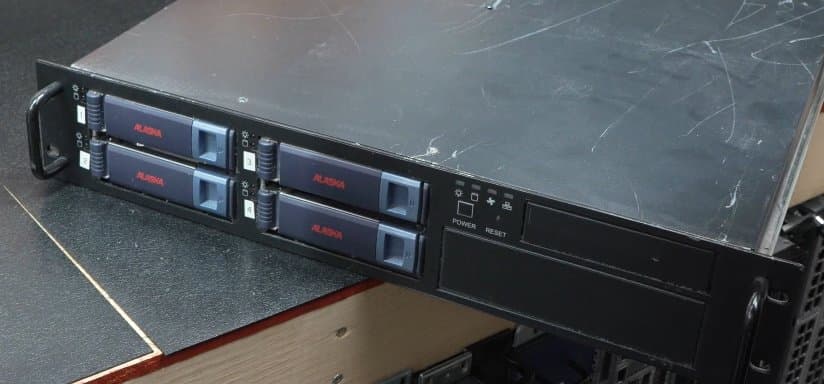
Serial Port opened a dead 2U file server and traced its Alaska badge to a Laredo and Monterrey PC group that sold Intel-based machines across Mexico.
Serial Port pulled a dead 2U rackmount file server from storage in June and traced its Alaska badge to a Mexican PC brand from the late 1990s and early 2000s.
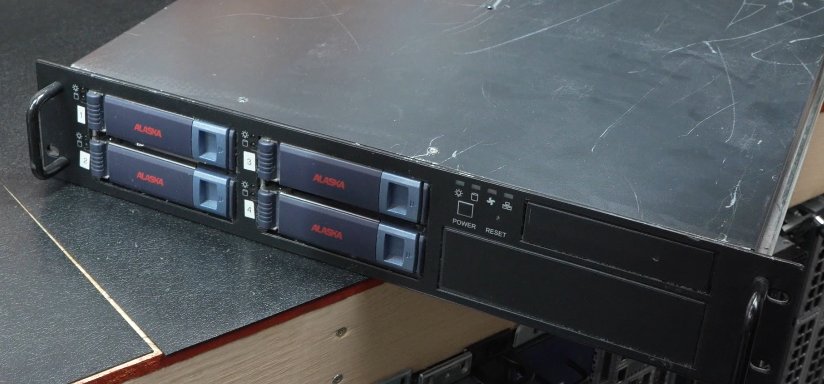
Mark, the author behind Serial Port, had used the machine as a personal file server for more than 10 years. After the power supply failed, he and site supporters started checking the chassis, badge and old web records.
They identified the unit as a Chenbro RM21200, a general-purpose 2U rackmount chassis that Chenbro of Taiwan sold in the early 2000s. The Alaska branding pointed to a server line called Alaska Artic Power, sold by Mexmal Mayorista S.A. de C.V. and Dinastía International Corp.
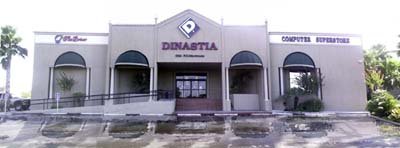
The companies operated from Monterrey, Nuevo León, and Laredo, Texas. Patrick Wong and Alfredo Flores founded the group around 1990, then built a cross-border computer business that bought components, assembled systems and distributed PCs through Mexico and parts of Latin America.
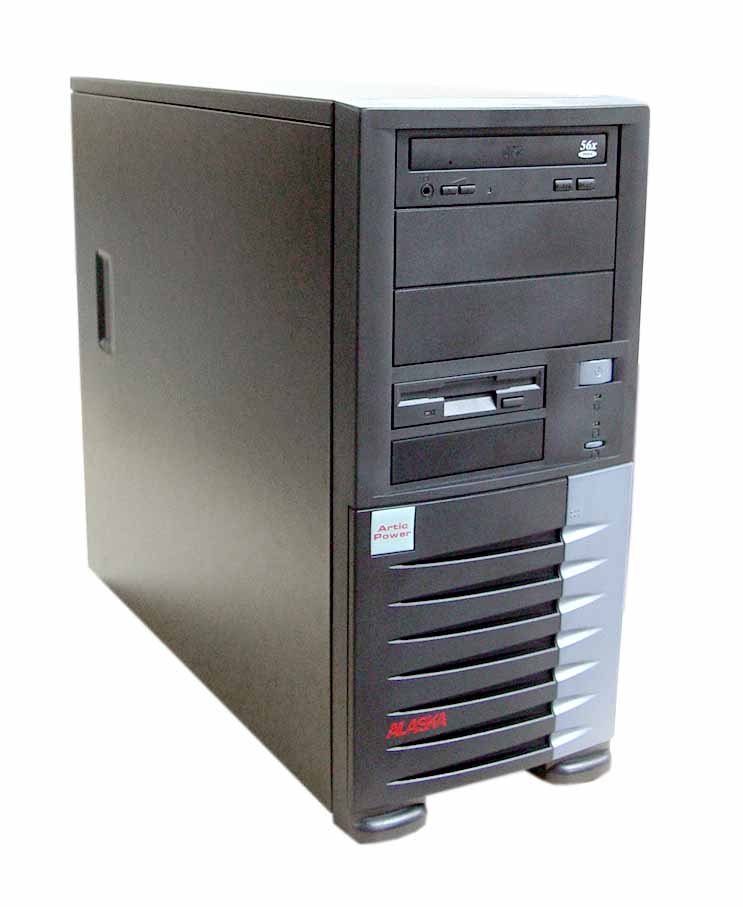
Dinastía and Mexmal launched the Alaska brand in 1998. The companies gave the line a cold-weather naming scheme: Alaska Artic Power and Alpine for servers, Icy Blue and Coastal for desktops, and Avalanche for notebooks.
The brand sat in a part of the PC market that many buyers have forgotten. Local assemblers competed against global vendors by combining Taiwan-made chassis, Intel or AMD motherboards, Microsoft certification and local distribution. Alaska machines gave Mexican resellers a branded product that still resembled the white-box systems common in the period.

The Alaska Artic Power server line moved with the era’s x86 hardware. Archived Dinastía web pages show dual Pentium III models around 2000 and an AMD Athlon-based Artic Power 3500/600 by 2003. Serial Port also found Chenbro RM21200 references for Intel server boards such as the SCB2, which suggests Dinastía may have built Alaska servers around standard Intel server platforms.
The group described Alaska computers as Intel-based and Microsoft certified. It also promoted ISO 9001:2000 and Microsoft WHQL certification, signals that mattered to resellers and business buyers who wanted commodity PC economics without losing warranty and support claims.
Sales figures show why Alaska deserves a place in regional PC history. A 2011 retrospective reported about $160 million in 1998 sales and roughly 40% of Mexico’s local white-box market. The companies distributed systems in Mexico and reached Bolivia, Chile, Uruguay, Argentina and Peru.
Dinastía handled purchasing and assembly in Laredo. Mexmal Mayorista handled Mexican distribution from Monterrey. A related CNet arm sold networking products. The business grew from about $1 million in sales in 1990 to about $81 million in 1996, and the Laredo Morning Times named Wong and Flores Small Business Persons of the Year in 1997.
The business unraveled in the early 2000s. The International Finance Corporation, the private-sector arm of the World Bank, lent Mexmal Mayorista $10 million on June 27, 2003. Dinastía’s U.S. entities filed Chapter 11 in the Southern District of Texas on March 10, 2005, under In re Dinastia, L.P., No. 05-33650. Mexmal Mayorista entered concurso mercantil, Mexico’s commercial bankruptcy process, in Monterrey.
Mexmal entered liquidation Aug. 30, 2006. ASI Computer Technologies acquired the IFC debt and assets, and U.S. court opinions later documented the dispute: Enterasys Networks, Inc. v. Mexmal Mayorista and Flores v. ASI Computer Technologies, Inc.
Serial Port posted the recovered material at files.serialport.org/Alaska because search results offered little about the company, its products or its market position. That archive gives hardware researchers a path from one failed rackmount server to a cross-border PC maker that once held a large share of Mexico’s local computer market.
Comments
Please log in or register to join the discussion