
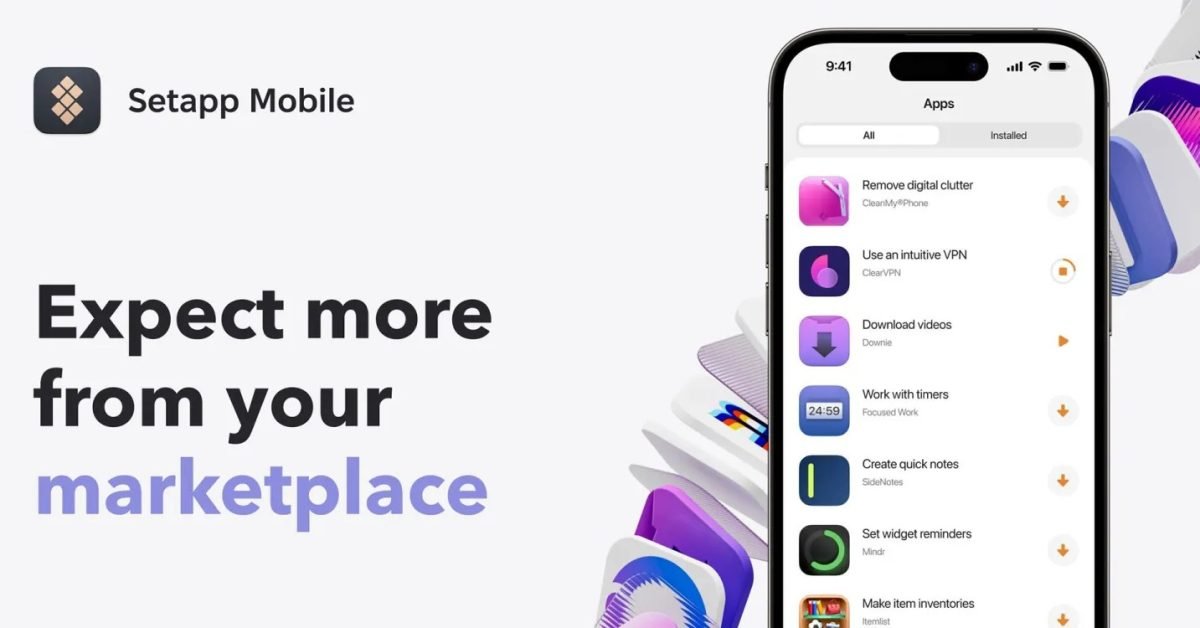
MacPaw's Setapp Mobile, one of the first third-party iOS app stores launched under EU antitrust rules, is shutting down after just over a year of operation, blaming Apple's complex and evolving business terms for making the service unsustainable.
The promise of third-party app stores on iPhone in the European Union, a direct result of the Digital Markets Act (DMA), has hit a significant speed bump. MacPaw, the company behind the popular Setapp subscription service for Mac, has announced it will sunset its Setapp Mobile iOS app store on February 16, 2026. The closure, less than two years after its public launch, is attributed directly to Apple's business terms, which the company describes as "still-evolving and complex" and incompatible with its current business model.
Setapp Mobile was one of the first major third-party app stores to emerge following Apple's compliance with EU antitrust regulations. The service aimed to replicate the success of Setapp for Mac, offering subscribers access to the paid versions of more than 50 iPhone apps for a single monthly fee, free of in-app purchases and ads. It entered a limited beta in the spring of 2024 and launched publicly in September of that year, positioning itself as a curated alternative to the official Apple App Store.
The core of the problem, according to MacPaw, lies in the terms Apple has established for operating a third-party app store on iOS. While the DMA forced Apple to open the door, the company has significant control over the rules of engagement. For developers and storefronts like Setapp, these terms create a challenging environment. The specific details of the business terms that Setapp found unsustainable have not been fully disclosed, but they likely involve a combination of Apple's Core Technology Fee, which applies to apps distributed outside the App Store, and other operational requirements that complicate a subscription-based model.
The closure has direct consequences for Setapp Mobile subscribers. The company warns that users may be forced to purchase individual subscriptions for at least some of the apps they've been using through Setapp to maintain access to their data. This highlights a critical risk for consumers in a fragmented app ecosystem: data portability and continuity of service when a third-party store ceases to operate.
For developers, this event serves as a cautionary tale. While the EU's DMA opened a new distribution channel, the practical realities of operating within Apple's framework present significant hurdles. Setapp's model relied on a single subscription covering multiple apps, a structure that may conflict with Apple's fee structures or reporting requirements for third-party stores. Developers considering distribution through alternative iOS app stores must now carefully evaluate whether the potential audience reach justifies the operational complexity and financial model imposed by Apple's terms.
It's important to note that this shutdown only affects Setapp Mobile for iOS. The original Setapp service for macOS remains fully operational and unaffected. This distinction underscores that the challenges are specific to Apple's iOS ecosystem and its implementation of the DMA, not a reflection on Setapp's core subscription model for desktop software.
The failure of Setapp Mobile raises broader questions about the effectiveness of the DMA in fostering genuine competition. If one of the most prominent early adopters of third-party distribution cannot sustain its business under Apple's terms, it suggests the regulatory framework may not be creating the level playing field it intended. The complex and evolving nature of the terms, as cited by MacPaw, points to an environment where the rules are not yet stable, making long-term business planning difficult for developers and storefronts.
For users, the closure reinforces the current reality of iOS app distribution. While the option for third-party stores now exists in the EU, the official Apple App Store remains the most stable and comprehensive platform. The Setapp Mobile experiment demonstrates that alternative models face an uphill battle against Apple's entrenched ecosystem and its control over the terms of operation.
Developers and users alike will be watching closely to see if other third-party iOS app stores, such as AltStore or Epic Games' planned store, can navigate these same challenges more successfully. The sustainability of third-party distribution on iOS will likely depend on Apple's willingness to adjust its terms in response to market feedback and regulatory pressure, or on the ability of storefronts to innovate business models that can work within the existing constraints.
The Setapp Mobile story is a concrete example of the tension between regulatory mandates and platform control. It shows that simply allowing third-party stores is not enough; the operational and financial terms set by the platform holder are critical to whether such stores can thrive. As the EU continues to monitor Apple's DMA compliance, this case provides a clear data point on the real-world impact of the legislation.
In the meantime, developers interested in distributing their apps outside the official App Store should conduct thorough due diligence. Understanding Apple's Core Technology Fee, the process for notarizing apps for third-party stores, and the user experience implications is essential. The failure of Setapp Mobile does not mean third-party distribution is impossible, but it does highlight the need for a sustainable business model that can withstand Apple's fees and operational requirements.
For consumers in the EU, the landscape of iOS app stores is now slightly less diverse. The closure of Setapp Mobile removes one option, but others may emerge. However, the experience underscores the importance of considering where you purchase and subscribe to apps, as the stability of third-party stores is not guaranteed in the same way as the official App Store.

Ultimately, the Setapp Mobile saga is a reminder that regulatory change is only the first step. The practical implementation and the terms set by the platform holder determine whether new opportunities can be realized. As the DMA continues to evolve, and as Apple refines its approach to third-party distribution, the mobile app ecosystem in the EU will remain a space to watch, with Setapp's experience serving as a key lesson for all involved parties.
Comments
Please log in or register to join the discussion