
A Canadian bakery's digital signage malfunction left customers staring at Windows 10 desktops instead of mouthwatering pastries, creating an unintentionally ironic display of outdated tech in a fresh food environment.
A bakery in Ontario, Canada, has inadvertently become the latest victim of digital signage gone wrong, with customers greeted by three Windows 10 desktops instead of images of freshly baked goods. The incident, captured by Reg reader Chris Paxton, highlights the sometimes awkward intersection of technology and traditional retail environments.
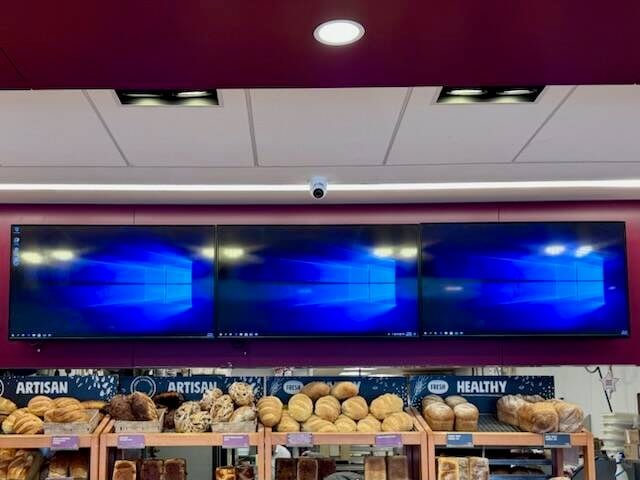
The bakery's signage promises "Artisan, Fresh, and Healthy" products, which creates an interesting contrast with the decidedly stale technology on display. While freshly baked bread might be delightful, three Windows 10 desktops running the default wallpaper create a rather different impression for potential customers.
This particular bork is noteworthy for several reasons. First, it involves Windows 10, which many users still prefer over its successor. As the article notes, Windows 10's spyware allegedly pales in comparison to Windows 11's more invasive features. The security camera keeping watch over the bakery's wares adds another layer of surveillance irony to the scene.
The choice of Windows 10 desktops is particularly telling. The operating system's stylized "Window" wallpaper with light shining through evokes a simpler technological era - one where taskbars could be moved with ease and AI assistants weren't crammed into every corner of the OS. This nostalgic element adds depth to what might otherwise be a simple technical failure.
Digital signage failures in retail environments are surprisingly common, though this instance stands out for its complete disconnect between the technology being displayed and the products being sold. Most businesses would opt for a slideshow or rotating images of their offerings, but this bakery appears to have defaulted to whatever was easiest to display.
The incident serves as a reminder that modern technology, despite its capabilities, can sometimes fall short of expectations. While Windows 10 may have occasionally carried the whiff of software failure, that's arguably more than compensated for by the intoxicating fragrance of fresh bakery products - even if those products are now being advertised via what the article describes as "Microsoft's finest."
This bork joins a long tradition of technology failures in unexpected places, from billboards surviving wind but not boots to railway networks paying tribute to Microsoft's Blue Screen of Death. Each incident tells a story about our increasingly digital world and the sometimes humorous consequences when that technology doesn't quite work as intended.
The bakery's choice to use Windows 10 desktops as signage, whether intentional or accidental, creates an unintentional commentary on the state of modern technology in retail. It suggests either a lack of technical expertise, budget constraints, or perhaps a deliberate choice to use whatever equipment was readily available.
For customers, the experience of seeing Windows 10 desktops instead of mouthwatering pastries must be jarring. It breaks the immersive experience that retailers typically try to create, replacing the warm, inviting atmosphere of a bakery with the cold, clinical interface of a computer desktop.
This incident also raises questions about the maintenance and updating of digital signage systems. How long have these Windows 10 desktops been running? Are they connected to the internet? What security implications might there be for a business displaying operating system interfaces instead of curated content?
The broader implication is that as businesses increasingly rely on digital technology for customer-facing applications, the potential for these kinds of failures grows. While digital signage offers flexibility and dynamic content capabilities, it also introduces new failure modes that can be more confusing and less aesthetically pleasing than traditional static signs.
For Microsoft, this incident might be seen as either a win or a loss. On one hand, Windows 10 is still being used in commercial applications years after its release. On the other hand, seeing the operating system displayed in such an unintended context might not be the endorsement the company would prefer.
As technology continues to permeate every aspect of retail and customer experience, incidents like this serve as gentle reminders that sometimes the simplest solutions - like traditional printed signage - might be more reliable than complex digital alternatives. The yeast they could do was show Windows 10 desktops, but perhaps the yeast they should have done was stick with something more traditional and less prone to these kinds of failures.
Comments
Please log in or register to join the discussion