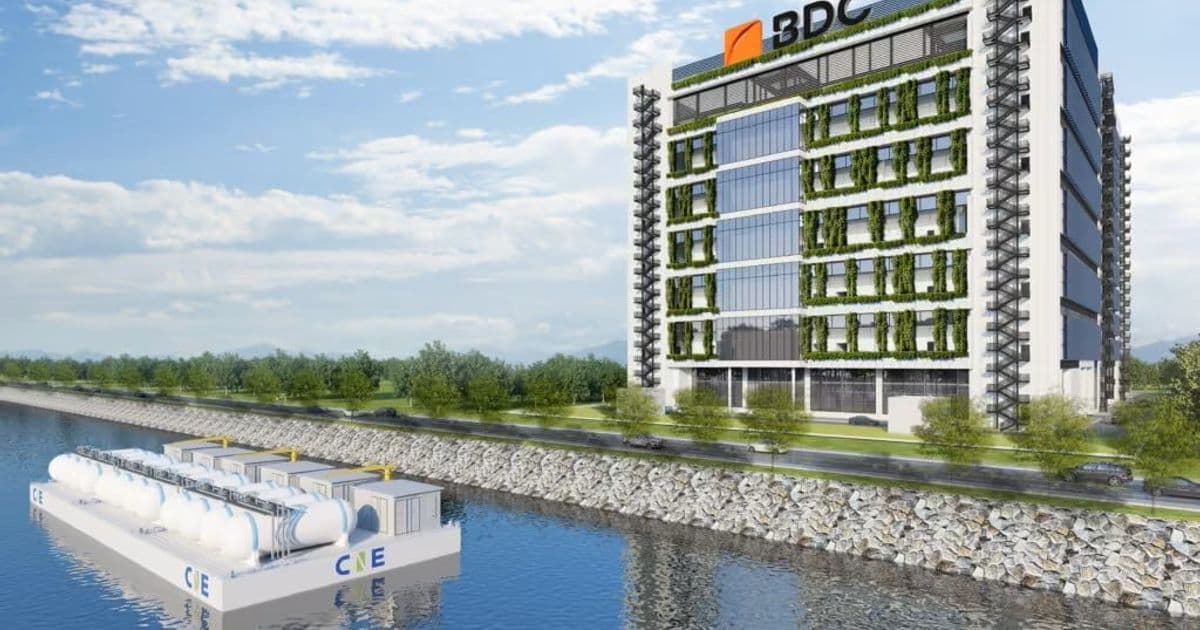
Bridge Data Centres and Concord New Energy are pioneering barge-based hydrogen power generation to address Singapore's land constraints and growing AI datacenter demands.
Singapore is exploring an innovative approach to datacenter power generation by placing hydrogen fuel systems on barges, addressing both the nation's severe land constraints and the surging energy demands of AI infrastructure.
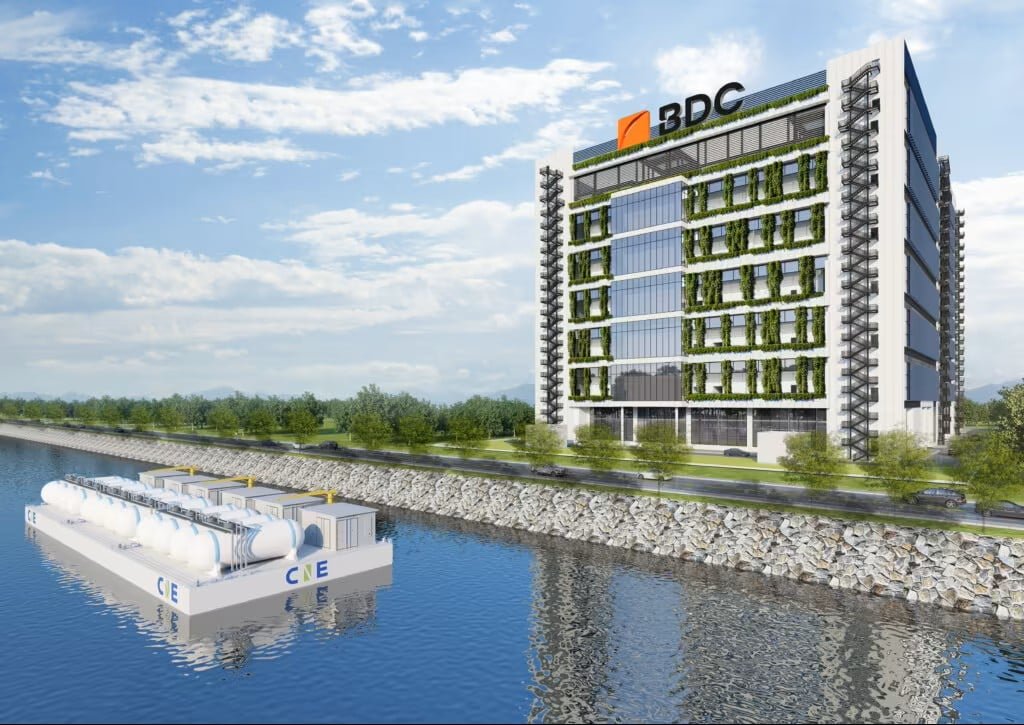
The partnership between Bridge Data Centres (BDC) and Concord New Energy (CNE) represents a significant shift in how power infrastructure can be deployed in land-scarce environments. By moving hydrogen power generation offshore or nearshore, the companies aim to optimize Singapore's limited real estate while creating a dedicated power source for energy-intensive AI datacenters.
The Land Constraint Problem
Singapore's geographic reality presents unique challenges for datacenter operators. At just 728 square kilometers, the city-state is smaller than many major metropolitan areas, including London. Traditional datacenter power infrastructure requires substantial land allocation for fuel storage, generation facilities, and safety buffers. By relocating these facilities to barges, BDC and CNE can free up valuable land for the datacenters themselves while maintaining necessary safety separations between hydrogen infrastructure and server operations.
The maritime approach also leverages Singapore's established shipping ecosystem. Hydrogen fuel can be delivered via sea routes, potentially simplifying logistics compared to land-based transport. This integration with existing maritime infrastructure could reduce costs and improve supply chain reliability.
Safety and Technical Considerations
Hydrogen power presents specific safety challenges that the barge-based approach may help mitigate. While hydrogen is not inherently more dangerous than conventional fuels when properly handled, it does burn with an almost invisible flame and requires careful management of high-pressure storage or cryogenic temperatures.
The separation of hydrogen handling infrastructure from core datacenter operations on different physical platforms adds a layer of safety redundancy. In the event of an incident, the physical distance between power generation and data processing could limit potential damage to critical IT infrastructure.
Singapore's Hydrogen Policy Framework
This initiative aligns with Singapore's broader energy transition strategy. Starting in 2024, the country mandates that all new and repowered natural gas plants achieve at least 30 percent hydrogen compatibility by volume and demonstrate improved carbon efficiency compared to existing units. The policy also requires future retrofit capability for full hydrogen operation.
This regulatory framework creates a clear pathway for hydrogen adoption while ensuring that new power infrastructure can evolve with advancing technology. The barge-based approach could accelerate this transition by creating dedicated hydrogen infrastructure that can be scaled and optimized independently of land-based constraints.
AI-Driven Energy Demands
The timing of this initiative reflects the dramatic increase in power requirements driven by artificial intelligence workloads. AI training and inference operations consume significantly more power than traditional computing tasks, creating new challenges for datacenter operators.
"The accelerating demand for AI-ready datacenters requires new energy architectures that are resilient, scalable, and sustainable," said Eric Fan, CEO of Bridge Data Centres. The barge-based hydrogen solution represents an attempt to create energy infrastructure that can scale with AI demands while maintaining environmental sustainability goals.
Industry Context and Competition
The Singapore initiative is part of a broader trend toward innovative datacenter power solutions. Japanese shipping company Mitsui OSK Lines (MOL) announced plans last year for a floating datacenter with 20 to 73 MW capacity, capable of drawing power from shore or an accompanying powership. This demonstrates growing industry recognition that traditional land-based approaches may not suffice for future datacenter needs.
Wärtsilä, a combustion engine manufacturer, already supplies floating power plants, typically using diesel generators, to locations like Jamaica. The extension of this concept to hydrogen power represents a natural evolution in floating power technology.
Supply Chain Implications
The barge-based approach could catalyze broader hydrogen infrastructure development in Singapore. By creating dedicated demand for hydrogen power, the initiative may spur investment in storage facilities, transportation networks, and supply chain capabilities. This could position Singapore as a regional hub for hydrogen technology and expertise.
The maritime delivery model also opens possibilities for international hydrogen sourcing, potentially allowing Singapore to tap into regional hydrogen production while maintaining energy security through diversified supply routes.
Technical Implementation Questions
While the announcement provides a compelling vision, several technical details remain unclear. The accompanying mock-up suggests fuel cell technology, but Singapore also has active development in hydrogen combustion turbines. The companies did not immediately respond to requests for clarification on the specific technology approach.
Key questions include the efficiency of power transmission from barge to shore, the scalability of the barge-based model for larger datacenter campuses, and the long-term maintenance requirements for offshore power infrastructure.
Future Outlook
The success of this initiative could influence datacenter development patterns globally, particularly in coastal regions with land constraints. If proven effective, the barge-based hydrogen model might become a template for sustainable datacenter power in other dense urban environments.
The integration of clean energy with advanced digital infrastructure represents a convergence of sustainability and technological advancement that could define the next generation of datacenter design. As AI workloads continue to drive exponential growth in power demands, innovative solutions like Singapore's floating hydrogen power may become increasingly essential.
This pioneering approach demonstrates how geographic constraints can drive technological innovation, potentially creating new models for sustainable datacenter development that balance land use, energy efficiency, and environmental responsibility.
Comments
Please log in or register to join the discussion