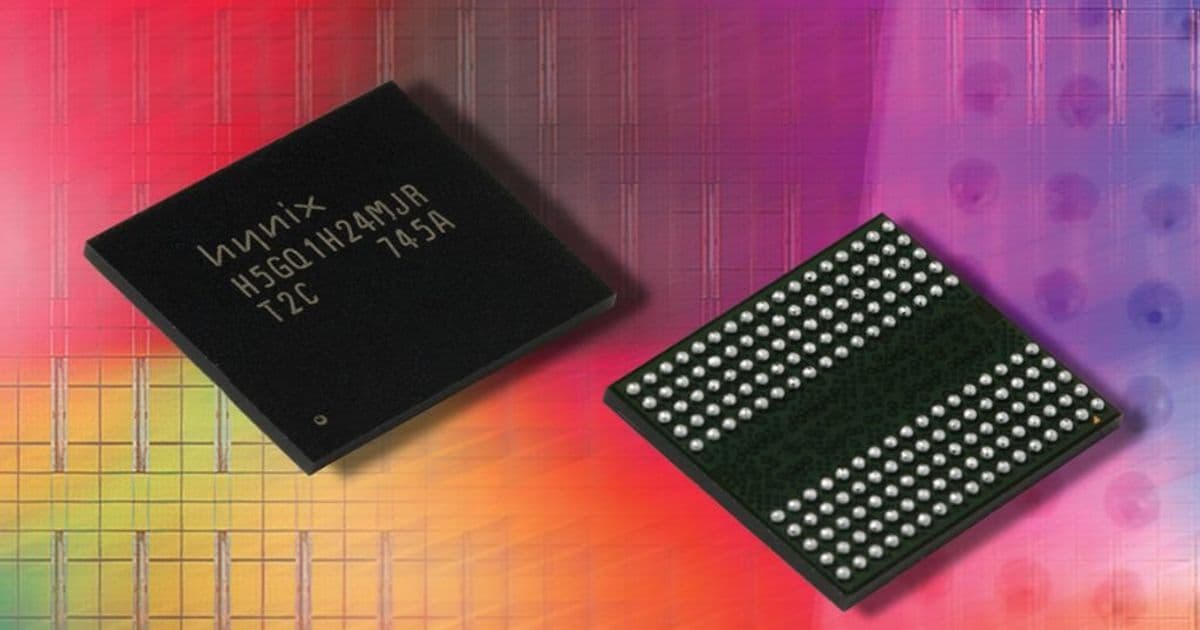
SK hynix accelerates fab construction timeline by a decade, but tripled capacity won't arrive soon enough to ease the DRAM shortage strangling AI data centers and consumer hardware budgets alike.
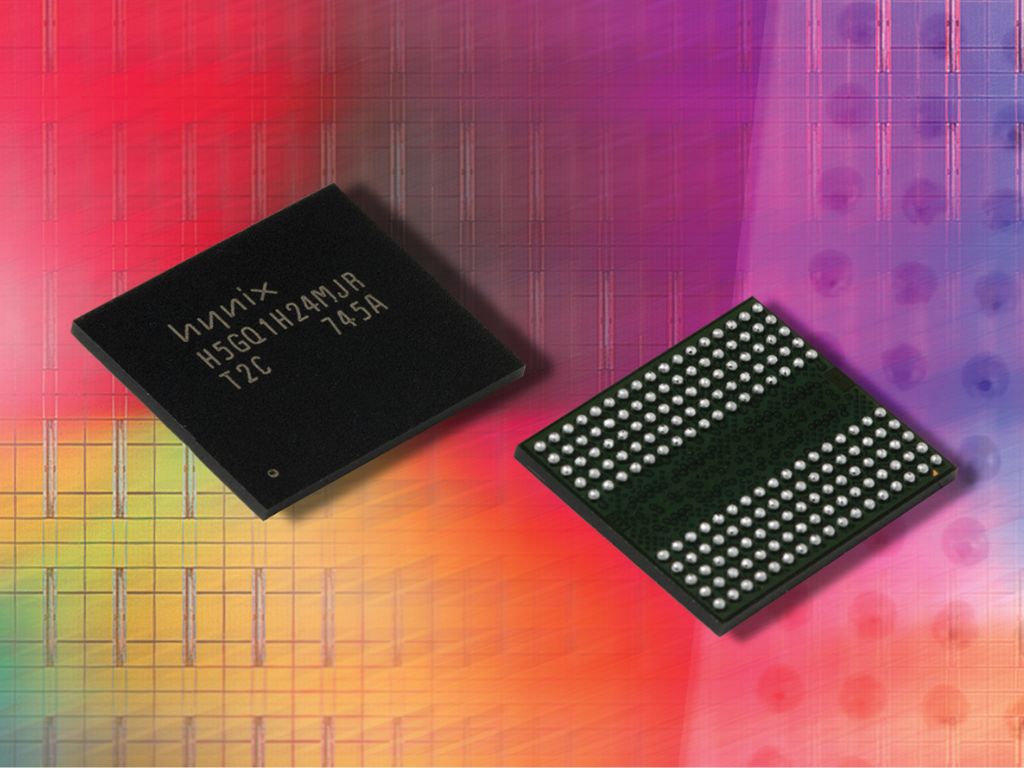
SK hynix has announced a significant acceleration in its memory manufacturing expansion plans. The South Korean DRAM giant now expects to triple its silicon wafer production capacity by 2034, a full decade ahead of the original 2045 target. The announcement came from SK Group Chairman Chey Tae-won, who confirmed the revised timeline in an interview with Nikkei Asia.
The company is currently constructing four large fabrication plants in Yongin, South Korea, with the first phase scheduled for completion in early 2027. These facilities will produce both conventional DRAM and HBM (High Bandwidth Memory) chips, the specialized memory that has become essential for AI accelerator cards and data center infrastructure.
What the Numbers Actually Mean
Chey Tae-won provided specific capacity projections: SK hynix's wafer output will double within five years and reach triple the current capacity by 2034. That represents an enormous manufacturing footprint. To put it in perspective, a single advanced fab costs billions of dollars and takes years to build. Four fabs running at full capacity would make SK hynix one of the largest memory producers on the planet by a considerable margin.
But the chairman also tempered expectations for anyone hoping for near-term relief. "Since we're proceeding with the plan to expand as much as possible, our calculations show that our wafer capacity will double within five years," he said. "But honestly, once all these facilities are built, it won't just double; it will triple by around 2034." He added bluntly: "There is currently no way to move faster than this. People are already saying that even this won't be enough."
That admission from the top of SK Group is telling. The company is spending aggressively to build capacity and still cannot satisfy projected demand.
Why the Memory Crunch Persists
The core problem is a mismatch between supply growth and demand acceleration. Memory manufacturers plan capacity expansion years in advance because fabs take 2-3 years to construct and another year or two to reach full production yield. Those timelines were set based on historical demand patterns from PCs, smartphones, and enterprise servers.
Then generative AI happened.
NVIDIA's H100 and subsequent B100 accelerators each require massive amounts of HBM3e memory. A single H100 GPU contains 80GB of HBM3, and data centers deploy these by the thousands. The hyperscalers, Amazon Web Services, Microsoft Azure, and Google Cloud, have been placing multi-year prepayment reservations with memory manufacturers to lock in supply. That kind of buying behavior creates a feedback loop: every advance payment funds more fab construction, but the output won't materialize for years.
The result is a market where DRAM and HBM memory chips are effectively allocated years in advance. Samsung, SK hynix, and Micron, the three companies that collectively control nearly all global DRAM production, are all ramping expansion, but their combined output still falls short of what AI infrastructure buildouts require.
Consumer Impact: Real Prices, Real Pain
The shortage is not confined to enterprise procurement departments. Consumer DRAM prices have climbed steadily, and the trend shows no sign of reversing. A 32GB DDR5 Corsair kit that retailed for $370 three months ago now sells for $440 on Amazon, a 19% increase. That's not an anomaly. DDR5 pricing across all capacities has trended upward throughout 2026, driven by the same supply constraints affecting the HBM market.
Memory manufacturers prioritize the highest-margin products. HBM sells for significantly more per bit than standard DDR5, so production lines are allocated accordingly. When fabs are running at maximum utilization producing premium HBM for AI accelerators, the overflow to consumer DDR5 production shrinks. Less supply at the consumer level means higher prices.
For PC builders and system integrators, this translates to tangible cost increases. A mid-range build that included $100 of DDR5 RAM twelve months ago now requires $140 to $160 for equivalent capacity and speed. The memory line item, once a minor fraction of a system budget, has become a meaningful expense.
How SK hynix's Expansion Compares
SK hynix is not alone in its construction ambitions. Samsung has announced its own multi-fab expansion in Pyeongtaek, and Micron is building advanced packaging facilities in the United States and Japan. All three companies are racing to increase HBM production specifically, since that is where the demand and margins are strongest.
What sets SK hynix apart is the aggressiveness of its timeline revision. Moving a target from 2045 to 2034 implies the company sees structural reasons to believe demand will remain elevated for the foreseeable future. That's a bet on continued AI infrastructure spending, which is itself a bet on the commercial viability of large-scale AI deployments.
The company is also investing heavily in next-generation memory technology. SK hynix has been first to sample HBM4, which doubles bandwidth over HBM3e, and is working on 1bnm process DRAM that will offer better power efficiency and density. These technological leads matter because they determine which manufacturer gets selected for premium contracts.
What This Means for Buyers
If you are purchasing memory in 2026, the practical guidance is straightforward: buy what you need now. Prices are on track to reach fresh highs as the year progresses, and the supply situation will not meaningfully improve until new fabs come online in 2027 and beyond. Even when those facilities start producing, it takes months for output to reach volume and additional time for that supply to filter through distribution channels to retail.
For enterprises planning server deployments, lead times on HBM-equipped accelerators remain long. Securing allocation requires advance agreements with manufacturers, and those agreements increasingly come with premium pricing and volume commitments.
The memory crunch, in other words, is not a short-term blip. SK hynix's accelerated construction timeline confirms that the industry's largest players expect constrained supply to persist through the end of the decade. Tripled capacity by 2034 sounds impressive until you realize that demand projections for 2034 dwarf the current shortfall. The gap between what the world needs and what fabs can produce continues to widen, and closing it will require not just new facilities but fundamental advances in memory technology and manufacturing efficiency.
For now, SK hynix is building as fast as it can, and it still is not enough.
Comments
Please log in or register to join the discussion