Bloomberg insider Jason Schreier reveals Sony's growing concerns about diminishing returns from its premium game studios, as Naughty Dog and Bungie fail to meet expectations for PS5 game output amid ballooning development costs and extended production cycles.
Sony's first-party strategy faces significant challenges as premium studios Naughty Dog and Bungie reportedly fall short of the company's expectations for PS5 game output. According to Bloomberg insider Jason Schreier, Sony has grown increasingly concerned about the return on its substantial investments in these renowned developers, highlighting a broader industry dilemma where AAA game development becomes increasingly expensive and time-consuming.
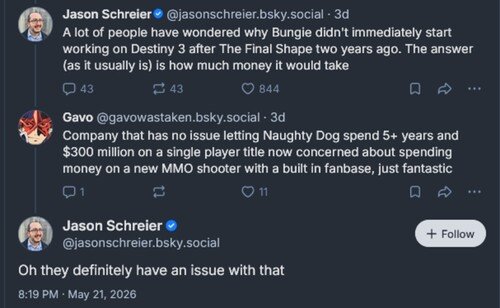
During a discussion on Bluesky about Bungie's current struggles following the Destiny 2 era, Schreier explained that funding constraints have prevented the studio from immediately beginning work on Destiny 3. When a gamer suggested Sony should be equally concerned about spending at Naughty Dog, the reporter confirmed, "Oh they definitely have an issue with that." Later clarifying on ResetEra forums that he wasn't singling out Naughty Dog specifically, Schreier emphasized that Sony's concerns span all its game-making divisions as the company grapples with ballooning budgets and extended development cycles.
The Naughty Paradox
For PS3 and PS4, Naughty Dog maintained an impressive release schedule. The California-based studio debuted Uncharted: Drake's Fortune in 2007, followed by two additional entries in the action-adventure franchise. The Last of Us Part 1 further established the studio's reputation for creating critically acclaimed titles with impressive sales figures. This consistent output created high expectations for the PS5 generation, yet those expectations remain largely unmet.
Instead of new original games, Naughty Dog has focused on remakes, remasters, and PC ports for The Last of Us IP during the PS5 era. Fans have expressed disappointment at the limited number of new Naughty Dog exclusives for the platform, with the studio's current major project being "Intergalactic: The Heretic Prophet" – a sci-fi undertaking that originated in 2020 but still lacks a confirmed release date. Industry watchers anticipate potential announcements at Summer Game Fest or other June showcases, though concrete details remain scarce.
The AAA Development Crisis
The situation at Naughty Dog exemplifies a broader industry challenge where AAA games require exponentially more resources and time to develop. Sony's embrace of live-service games may have contributed to this predicament, as Naughty Dog reportedly spent seven years developing a multiplayer The Last of Us Online project. Despite reaching an advanced stage, the ambitious multiplayer title was shelved in 2023 when it became clear the costly development was impeding progress on single-player games – the studio's area of expertise.
This extended development cycle isn't unique to Sony's first-party studios. Rockstar Games faces similar challenges with Grand Theft Auto 6, with growing speculation that the highly anticipated title will finally arrive in November 2025. The pattern suggests that even the most well-resourced developers struggle to maintain the release cadences of previous console generations.
Sony's Strategic Crossroads
Sony's predicament reflects a fundamental shift in the gaming industry economics. As development costs soar, publishers must decide whether to invest in fewer, more ambitious projects or pursue live-service models that promise ongoing revenue. The former approach risks longer waits between releases, while the latter demands significant resources that may divert attention from traditional single-player experiences.
For PlayStation owners, this means potentially longer waits between first-party exclusives. The silver lining may be that when these titles do arrive, they represent the pinnacle of gaming craftsmanship – though the extended development cycles test even the most patient fans. As Schreier's reporting confirms, Sony recognizes these challenges and appears to be evaluating how to maximize returns from its premium portfolio of studios.
Industry analysts will be watching closely for any shifts in Sony's development strategy, particularly as the PS5 generation enters its critical middle period. The company must balance quality with quantity to maintain its competitive position against Microsoft's Xbox and Nintendo's first-party offerings.
Comments
Please log in or register to join the discussion