
Spotify's new AI Playlist feature uses natural language prompts to generate custom playlists, and it's far more intuitive and musically coherent than previous attempts at automated playlist creation.
Spotify has quietly rolled out its AI Playlist feature to users in the UK and Australia, and after spending time with it, the feature is genuinely impressive. Unlike previous attempts at automated playlist generation that felt like algorithmic guesswork, this new tool actually understands musical context, mood, and specific requests in a way that feels surprisingly human.
The feature works through a simple text prompt interface. Users can type requests like "indie rock for a rainy Sunday morning" or "90s hip-hop with a smooth vibe" and Spotify's AI will generate a 30-song playlist based on that description. What makes this different from Spotify's existing algorithmic playlists like "Discover Weekly" is the level of control and specificity. You're not just getting a generic mix of your listening history—you're getting a playlist tailored to a specific moment, mood, or activity.
The underlying technology combines Spotify's massive music catalog with a large language model trained on music metadata, lyrics, and listening patterns. When you request "songs for a workout that aren't too aggressive," the AI doesn't just look for tracks tagged with "workout" or "energetic." It analyzes tempo, BPM, lyrical content, and even the acoustic properties of songs to find tracks that match the nuanced request. The result is a playlist that feels curated by someone who actually understands what you're asking for.
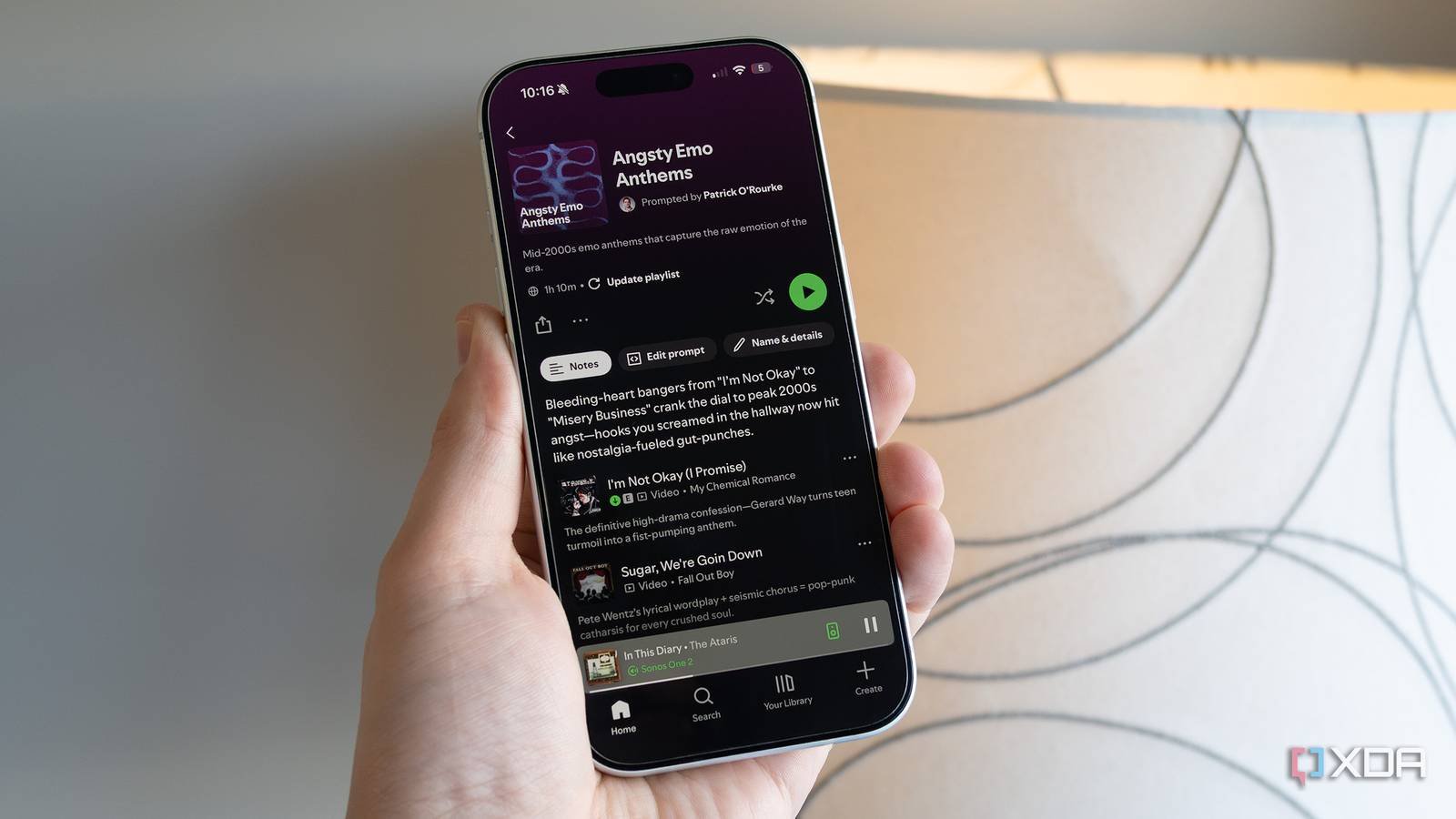
In testing, the feature handles complex requests surprisingly well. A prompt for "songs that sound like they were recorded in a garage in 1995" produced a mix of grunge, indie rock, and lo-fi tracks that all shared that specific aesthetic. Another request for "music for coding that won't distract me" generated a playlist of ambient electronic and instrumental tracks with consistent energy levels—exactly what you'd want for focused work.
The feature also includes a refinement system. After generating an initial playlist, you can provide additional feedback like "more upbeat" or "less electronic" and the AI will regenerate the list accordingly. This iterative approach feels more like working with a human music editor than interacting with an algorithm.
For Spotify, this represents a significant step in making its platform more accessible to casual listeners. Creating playlists has always been a time-consuming process that requires musical knowledge and patience. By automating the initial curation while maintaining user control, Spotify is lowering the barrier to creating personalized listening experiences.
The feature also highlights Spotify's advantage in the streaming wars. While Apple Music and YouTube Music have their own algorithmic playlists, Spotify's AI Playlist feels more conversational and intuitive. It's not just about recommending songs based on your listening history—it's about understanding the language of music and translating that into a coherent listening experience.

However, the feature isn't perfect. The AI sometimes struggles with very niche genres or requests that combine contradictory elements. A prompt for "happy songs about sadness" might produce a playlist that feels disjointed rather than thoughtfully curated. And like all AI features, it occasionally makes choices that feel slightly off—perhaps including a track that technically fits the description but doesn't quite match the intended mood.
The real test will be how this feature evolves as Spotify collects more user data and refines its models. The company has already indicated that the AI will learn from user interactions, potentially improving its understanding of musical nuance over time.
For now, the AI Playlist feature is available to Spotify Premium subscribers in the UK and Australia, with a wider rollout expected in the coming months. It's a compelling reason to consider Spotify's premium tier, especially for users who find playlist creation daunting or simply want to discover new music in a more interactive way.
The feature also raises interesting questions about the future of music curation. As AI becomes more sophisticated at understanding musical context, the role of human playlist curators may shift from creating playlists to training and refining AI systems. For listeners, this means more personalized, context-aware music recommendations—though it remains to be seen whether algorithmic curation can ever fully replace the human touch of a skilled DJ or music enthusiast.
What's clear is that Spotify's AI Playlist represents a meaningful evolution in how we interact with music streaming services. It's not just about playing songs—it's about understanding what we want to hear and delivering it in a way that feels personal and intentional. For a feature that's still in its early stages, that's a surprisingly sophisticated achievement.
Comments
Please log in or register to join the discussion