
Spotify is expanding its Prompted Playlist beta feature to Premium subscribers in the U.S. and Canada, moving beyond simple prompt-based generation to incorporate a user's complete listening history and real-time cultural data for dynamic, self-updating playlists.
Spotify's latest AI feature is moving out of its initial testing phase and into a much larger market. The company announced today that its Prompted Playlist beta, which first launched exclusively for Premium subscribers in New Zealand last month, is now rolling out to users in the United States and Canada. This expansion isn't just about geographic reach; it represents a significant step in how streaming services can leverage personal data and machine learning to create music experiences that feel both deeply personal and dynamically current.
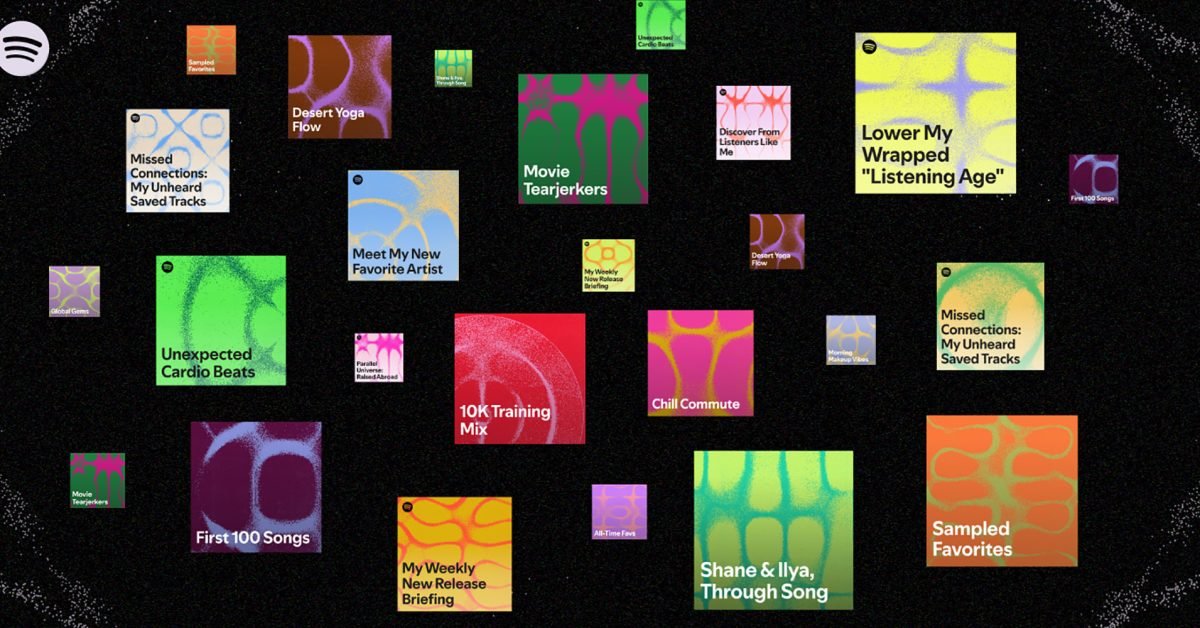
The core premise of Prompted Playlist is straightforward: you describe what you want to hear using natural language, and Spotify generates a playlist. However, the execution is more nuanced than previous AI playlist tools. Unlike Spotify's own AI Playlist feature launched in late 2024—which generates a static list based on a prompt—Prompted Playlist introduces two critical layers of context: your personal listening history and real-time world data.
This distinction is crucial. When you create a Prompted Playlist, Spotify analyzes your listening patterns "all the way back to day one," as the company states. This means the playlist isn't just based on your current top artists or recent plays; it considers the entire arc of your musical taste. If you went through a folk phase in 2015, a K-pop obsession in 2018, and now listen primarily to indie rock, the AI can weave those threads together. The result is a playlist that feels like it understands your evolving identity, not just your current mood.
The real-time component adds another dimension. Spotify's system pulls in current trends, charts, cultural moments, and even global events to keep the playlist fresh. This is where the feature moves from being a static generator to a living, breathing curation tool. A playlist created for "music for a rainy day" in January will likely sound different from the same prompt in July, not just because of seasonal trends, but because of what's culturally resonant at that moment.
How It Works: The Technical Underpinnings
When a user taps "Generate playlist," several processes occur simultaneously. First, the natural language prompt is parsed and understood. Spotify's system identifies key elements: mood, scenario, cultural references, genre preferences, and temporal constraints (like "30-minute 5K run").
Next, the system cross-references this with the user's listening history. This isn't a simple filter of "songs you've liked." The AI analyzes patterns: which artists you consistently return to, which genres you explore seasonally, which songs you skip, and which you replay. This creates a taste profile that's far more sophisticated than basic genre preferences.
The real-time data layer then adds contemporary context. If the prompt mentions "songs from this year's biggest films," the system accesses current box office data, streaming charts, and cultural conversations. If it references "trending globally right now," it looks at real-time social media trends, chart movements, and editorial curation from Spotify's own culture experts.
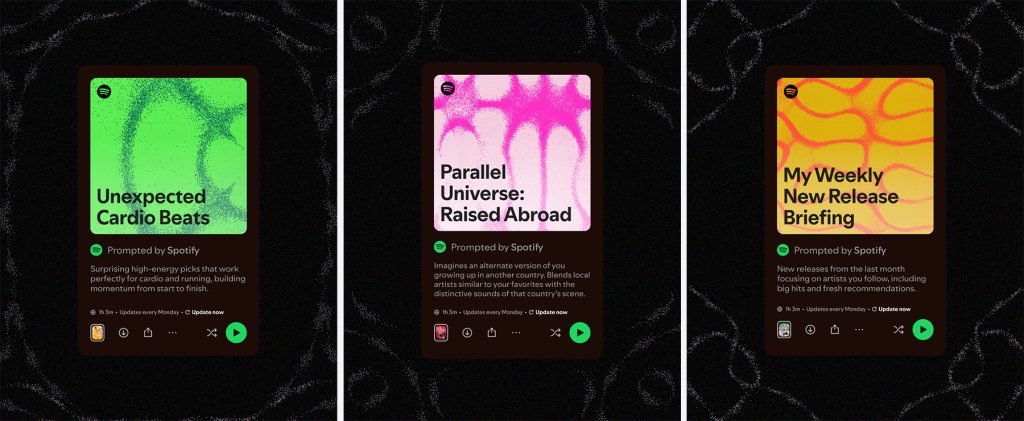
The final output includes something unique: each track comes with "descriptions and context that tell you the story behind the recommendation." This isn't just metadata; it's an attempt to make the AI's reasoning transparent. Instead of a black box that spits out songs, users get insight into why a particular track was chosen—whether it's a deep cut from a favorite artist, a song that matches a specific tempo for a workout, or a track that's currently resonating in a particular cultural moment.
The Evolution from AI Playlist
To understand Prompted Playlist's significance, it's important to contrast it with Spotify's existing AI Playlist feature. When AI Playlist launched in 2024, it was a notable step forward: users could type prompts like "songs for a dinner party with friends" and get a curated list. However, the result was static. Once generated, the playlist wouldn't change unless manually edited.
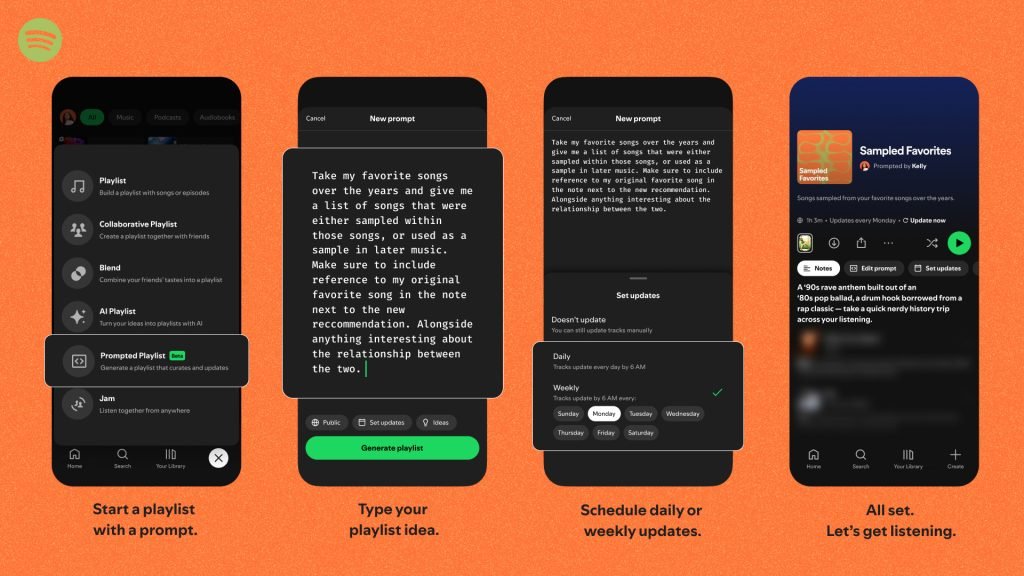
Prompted Playlist addresses this limitation directly. Users can set playlists to refresh daily or weekly, creating living collections that evolve alongside their listening habits and the cultural landscape. This transforms the feature from a one-time generator into an ongoing curation service.
The integration of complete listening history also sets it apart. While AI Playlist could make some inferences about taste, Prompted Playlist has access to a much richer dataset. This allows for more nuanced recommendations that can span decades and genres while still feeling coherent.
Practical Applications and User Control
The examples provided by Spotify demonstrate the feature's flexibility. A prompt like "Music from my top artists from the last five years, featuring deep cuts I haven't heard yet" requires the system to identify your core artists, filter by time period, and then dig into their catalogs for less-played tracks—all while ensuring you haven't already encountered them.
More complex prompts, such as "High-energy pop and hip-hop for a 30-minute 5K run that keeps a steady pace before easing into relaxing songs for a cool-down," require the AI to understand tempo, energy progression, and activity-specific needs. The system must find songs that match specific BPM ranges for the running portion, then transition smoothly to lower-energy tracks for cooling down.
User control remains central. After generation, users can edit the original prompt or start completely fresh. This iterative process—prompt, generate, refine—makes the feature feel collaborative rather than prescriptive. Spotify is also providing curated example prompts from its music editors and culture experts, displayed on the Home screen, to help users understand the feature's potential and get started.

Broader Implications for Music Streaming
Spotify's move with Prompted Playlist reflects a broader trend in streaming services: the shift from passive consumption to active, personalized curation. As libraries grow exponentially (Spotify now has over 100 million tracks), the challenge isn't finding music—it's finding the right music at the right time.
By combining personal history with real-time context, Spotify is attempting to solve the "paradox of choice" that plagues many users. The feature doesn't just recommend songs; it creates narratives around them. The contextual descriptions help users understand why a song was chosen, which can deepen their connection to the music and help them discover new artists with intention rather than accident.
For developers and industry observers, this represents an interesting case study in practical AI implementation. Unlike many AI features that feel like technology for technology's sake, Prompted Playlist has a clear user benefit: it reduces the friction between wanting music and finding it, while making the discovery process feel more personal and less algorithmic.
Availability and Future Development
The feature is currently available to Premium subscribers in the U.S. and Canada, with Spotify indicating they will continue monitoring user feedback before broader rollout. This cautious, iterative approach suggests the company is aware of the challenges in AI music curation—balancing personalization with variety, ensuring recommendations feel fresh without being jarring, and maintaining user trust in how personal data is used.
As the beta expands, key metrics to watch will include user engagement (how often people create and refresh playlists), satisfaction rates, and whether the feature drives increased listening time or discovery of new artists. The success of Prompted Playlist could influence how other streaming services approach AI-powered curation, potentially setting new standards for what users expect from their music platforms.
For now, U.S. and Canadian Premium subscribers can access the feature by opening Spotify, tapping Create, and selecting Prompted Playlist. The question of whether this represents the future of music discovery—or just another feature in an increasingly crowded AI landscape—will be answered by how many users actually create, customize, and keep coming back to their AI-generated playlists.
Comments
Please log in or register to join the discussion