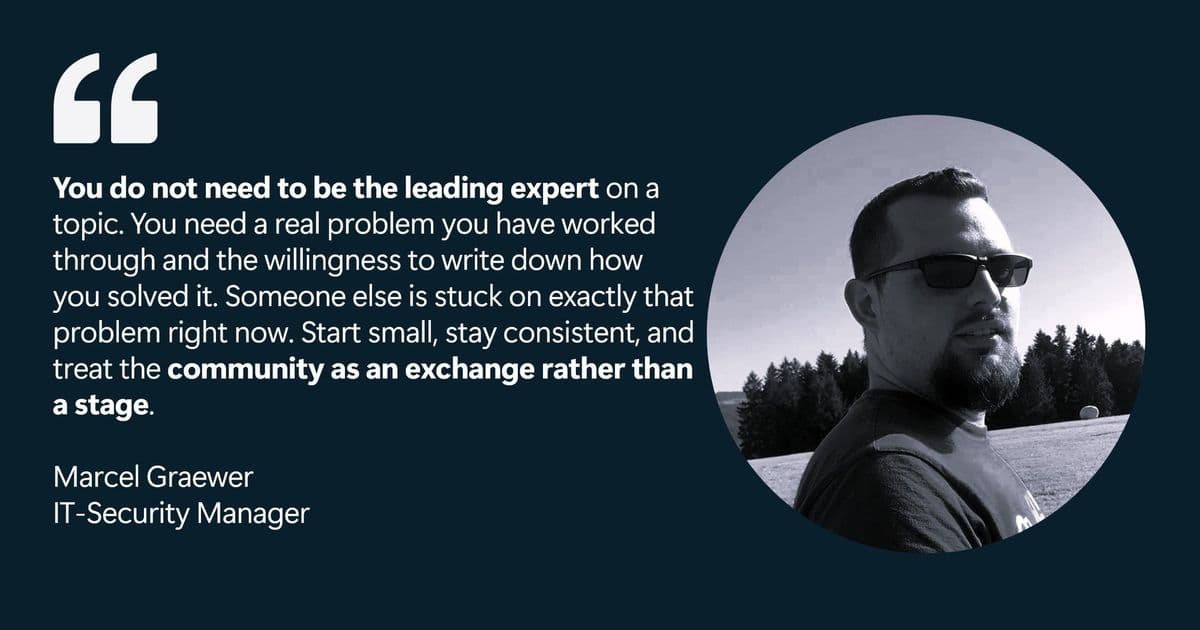
Marcel Graewer, a Microsoft Security Community leader and IT‑Security Manager at Festool Group, shares how his infrastructure background fuels detection engineering, why Sentinel’s cloud‑native SIEM matters, and how newcomers can add value to the Microsoft Security Community.
What changed – a practitioner‑driven community gains momentum
Microsoft’s security portfolio has accelerated faster than most organizations can absorb. New capabilities in Microsoft Sentinel, Microsoft Defender XDR, and the recently announced Microsoft Security Copilot appear every few weeks, turning the product suite into a moving target. For many engineers, the official documentation alone cannot keep pace with the daily operational reality. Marcel Graewer, a long‑time Microsoft customer and community leader, describes how the community has become the missing feedback loop that bridges rapid product evolution and real‑world implementation.
Provider comparison – Sentinel versus traditional SIEMs
| Feature | Microsoft Sentinel (cloud‑native) | Traditional on‑prem SIEM (e.g., Splunk, QRadar) |
|---|---|---|
| Deployment model | Fully managed SaaS; no capacity planning, no patching | Requires dedicated VMs or appliances; ongoing hardware sizing |
| Telemetry onboarding | Hundreds of built‑in connectors; auto‑schema mapping for Azure, M365, on‑prem, third‑party SaaS | Custom parsers and log forwarders; each new source often a separate project |
| SOAR integration | Playbooks run on the same data lake; native Azure Logic Apps integration | Separate orchestration layer; data duplication and latency risk |
| Cost model | Pay‑as‑you‑go per GB ingested; scaling is automatic | License‑based plus infrastructure OPEX; scaling can be costly |
| Operational overhead | Zero infrastructure maintenance; updates rolled out by Microsoft | Manual upgrades, patch cycles, and security hardening of the SIEM itself |
Marcel emphasizes that Sentinel’s single‑tenant data lake removes an entire class of integration friction. When the environment you protect already lives in Azure and Microsoft 365, a SIEM that lives there eliminates the need for VPN tunnels, proxy configurations, and custom ETL pipelines. The result is faster time‑to‑detect and a lower total cost of ownership.
Business impact – From apprenticeship to enterprise security
1. Faster detection engineering
Graewer’s career path—starting in Active Directory and VMware, then moving to Azure—illustrates why a deep infrastructure background improves detection logic. Knowing how a domain controller logs a failed Kerberos ticket or how an endpoint reports a suspicious process gives the analyst the context needed to write precise KQL queries in Sentinel. The community’s “real‑world tuning” posts let engineers see how peers have refined the same detections, shortening the learning curve.
2. Reduced operational burden
By offloading the SIEM’s infrastructure to Microsoft, security teams can reallocate staff from capacity planning to threat hunting. Marcel notes that the capacity‑free nature of Sentinel lets his team focus on refining data models and response playbooks rather than maintaining a separate logging cluster.
3. Talent pipeline and retention
Beyond the technology, Marcel’s work with German Fachinformatiker apprentices and the IHK exam board demonstrates a strategic advantage: companies that invest in early‑stage education create a pipeline of talent already familiar with Microsoft’s security stack. His participation in Girls’ Day and school cybersecurity classes also broadens the talent pool, addressing the chronic shortage of skilled defenders.
How to get involved – Practical steps for newcomers
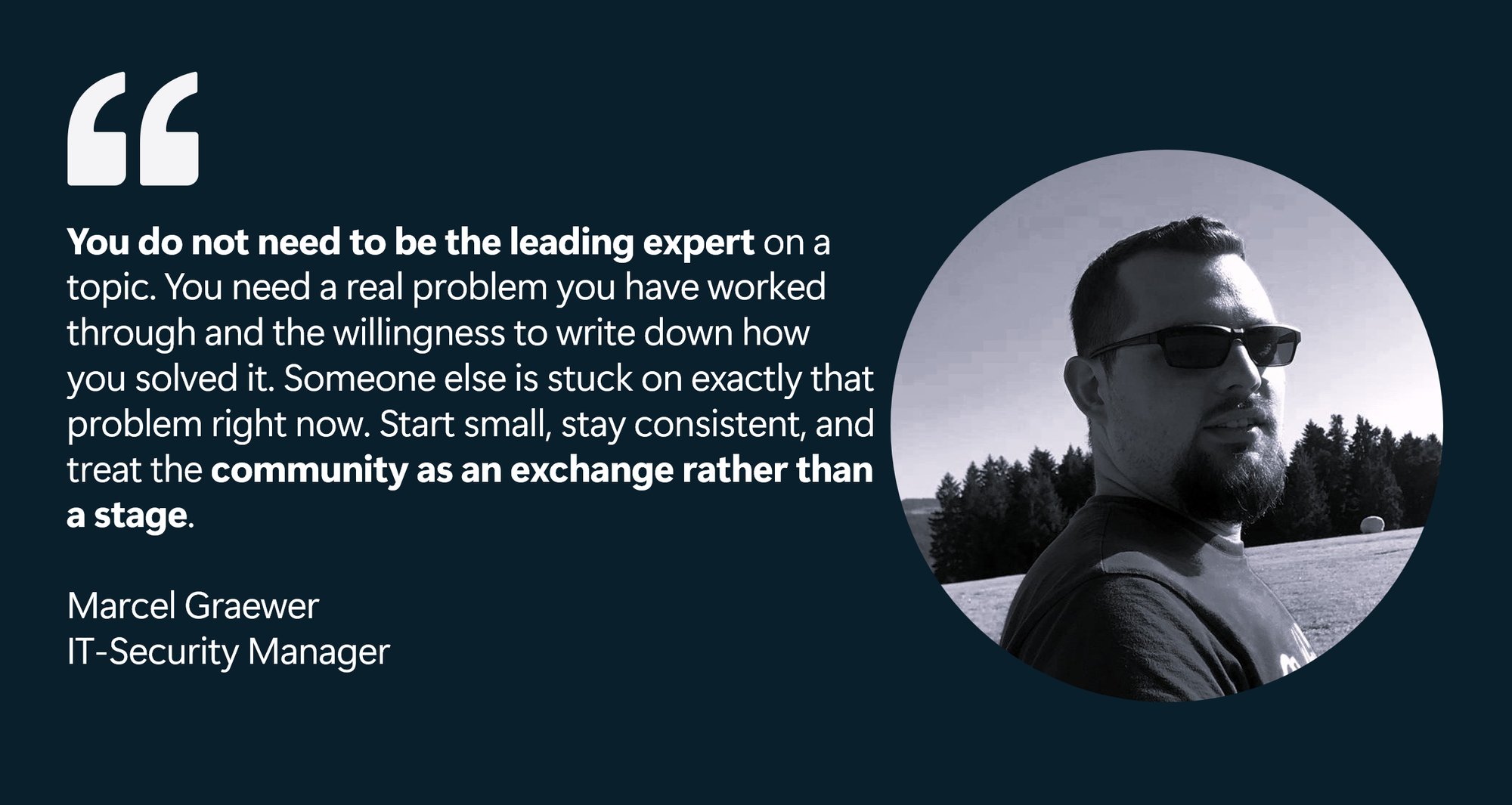
- Start with a concrete problem – Publish a short post describing a detection you built or a false positive you resolved. Marcel’s advice: “You don’t need to be the leading expert; you need a real problem you solved.”
- Leverage the Microsoft Tech Community forums – Search for existing threads, comment with additional context, and up‑vote useful solutions. The feedback loop works both ways.
- Contribute code snippets – Share KQL queries or Logic Apps templates on GitHub (e.g., Marcel’s repo bifrost0x). Tag the post with the relevant Sentinel connector for discoverability.
- Attend community events – Join the Microsoft Security Community LinkedIn Group and the Microsoft Entra Community to stay aware of upcoming webinars and product preview opportunities.
- Iterate and stay consistent – Regular, modest contributions build credibility faster than occasional long‑form articles.
Looking ahead – AI, Sentinel, and the next wave of security
Marcel’s recent book Die neue Realität der Cybersecurity (2025) tackles a pressing question: Where does AI genuinely strengthen security architecture and where is it just noise? In the context of Sentinel, built‑in AI features such as Fusion and Microsoft Security Copilot can surface multi‑stage attacks that would otherwise remain hidden. However, Graewer cautions that AI outputs must be validated against the underlying telemetry; otherwise, teams risk chasing phantom alerts.
For enterprises, the strategic takeaway is clear: combine a cloud‑native SIEM that eliminates infrastructure friction with a disciplined community‑driven practice of sharing detection logic. The result is a security operation that scales with the cloud, remains cost‑effective, and continuously improves through peer feedback.
Connect with Marcel
- Microsoft Tech Community:
@marcel_graewer - LinkedIn: Marcel Graewer
- GitHub: bifrost0x
- Blog: graewer.com | magra-sec.de
- Book: Die neue Realität der Cybersecurity (ISBN 978‑3695708833)
Join the Microsoft Security Community to receive early product access, participate in feedback surveys, and stay informed about upcoming events.
Comments
Please log in or register to join the discussion