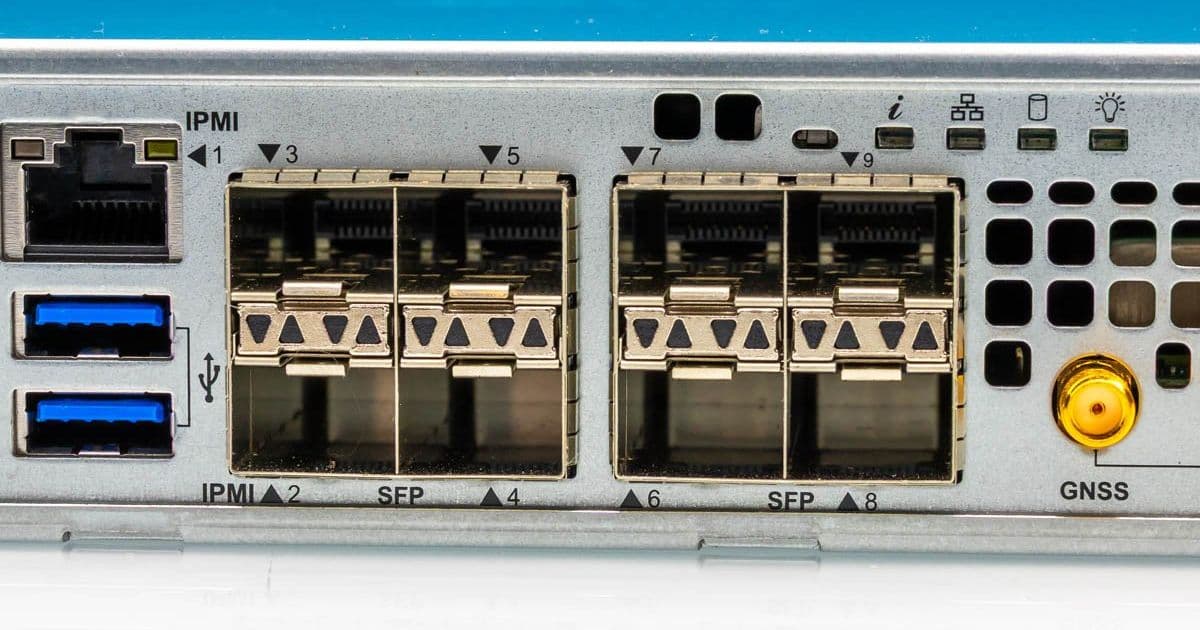
Supermicro's SYS-112D-40C-FN8P delivers Intel's Granite Rapids-D SoC in a compact 1U form factor with impressive front-access design and 8x 25GbE networking.
The Supermicro SYS-112D-40C-FN8P represents a significant milestone in server design, bringing Intel's Granite Rapids-D SoC to market in a purpose-built 1U chassis that prioritizes front-access I/O and networking. As the first Granite Rapids-D system we've reviewed, this server packs 40 cores of Intel's latest architecture alongside 8x 25GbE SFP28 ports, making it particularly well-suited for edge computing, retail deployments, and telecom applications where rear access is limited or impractical.
External Hardware Overview
The chassis design immediately stands out with its front-access configuration. At just 15.7" (399mm) deep, this 1U server can fit in the majority of standard racks while keeping all critical connections accessible from the front.
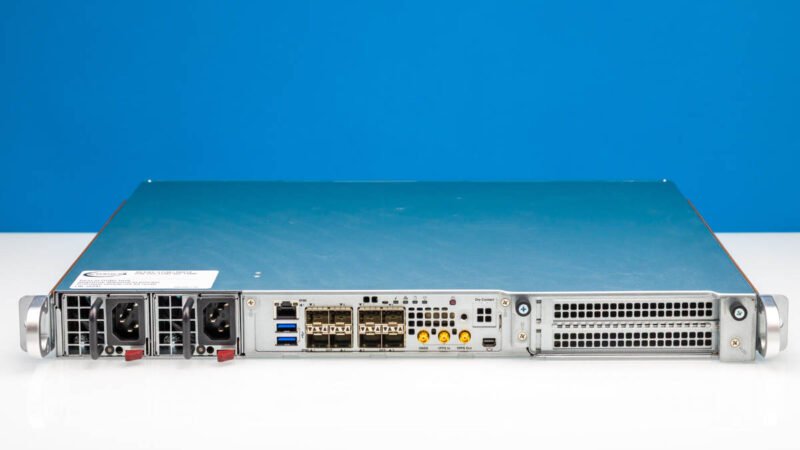
One notable design choice is the absence of externally accessible storage bays. This positions the SYS-112D-40C-FN8P as a network-centric compute platform rather than a storage-focused solution.
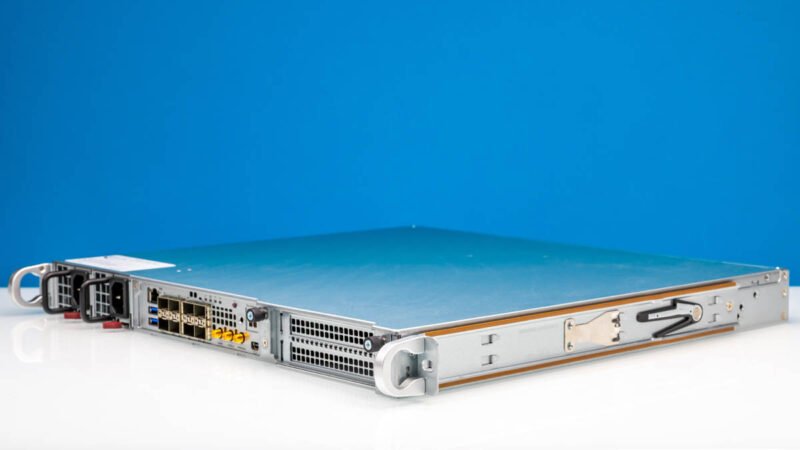
Front Panel Design
The front panel layout demonstrates thoughtful engineering for operational efficiency:
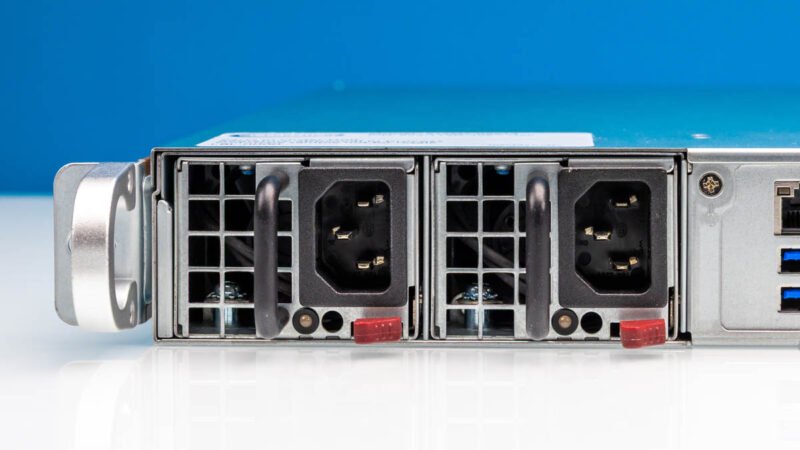
- Dual hot-swap power supplies provide redundancy while maintaining the front-access philosophy
- IPMI management port and two USB ports for remote management and direct access
- Eight SFP28 ports delivering 8x 25GbE connectivity
- GNSS timing SMA connectors with integrated clock support
- Mini DisplayPort output (replacing legacy VGA)
- Two PCIe Gen5 x16 slots supporting single-width or double-width accelerators
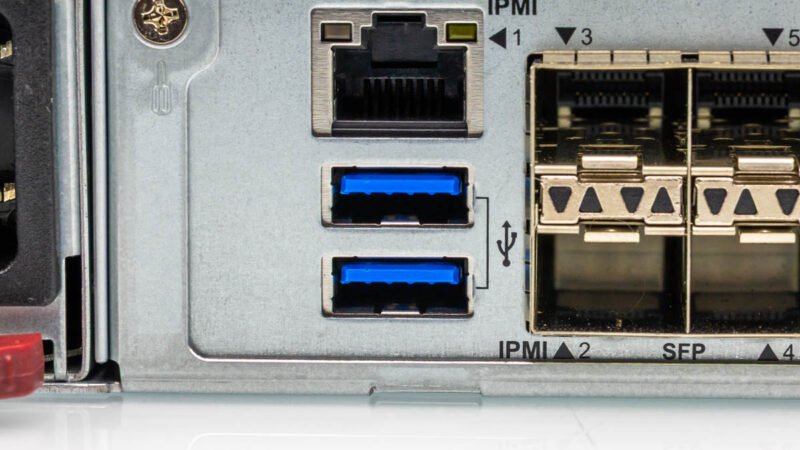
The networking capabilities are particularly impressive, with the Intel E825-C controller providing all eight 25GbE ports directly from the SoC. This integration reduces latency and power consumption compared to discrete networking solutions.
Architecture and SoC Integration
The Intel Xeon 6 SoC (Granite Rapids-D) represents a significant evolution in system-on-chip design for servers. The SoC architecture integrates multiple critical components directly onto the processor die, including:
- Integrated memory controller supporting DDR5
- On-die PCIe lanes for direct device connectivity
- Integrated networking via the Intel E825-C controller
- Security features including Intel SGX and TME
This integration approach reduces the motherboard footprint and can improve performance by minimizing latency between components.
GNSS Timing and Precision
One of the more unique features of this system is the inclusion of GNSS timing SMA connectors. These allow the server to synchronize with global navigation satellite systems for precise timekeeping, which is crucial for:
- Telecommunications infrastructure
- Financial trading systems
- Distributed computing environments
- Network time synchronization
The system supports integration with both GNSS receivers and internal OCXO (Oven Controlled Crystal Oscillator) clocks, providing multiple options for achieving sub-microsecond timing accuracy.
Performance Expectations
While we'll dive deep into benchmark results in the full review, the 40-core configuration of the Intel Xeon 6 SoC should deliver substantial performance improvements over previous generations, particularly in:
- Single-threaded performance with improved IPC
- Memory bandwidth thanks to DDR5 support
- Network throughput with integrated 25GbE
- Power efficiency through SoC integration
Use Case Analysis
The front-access design makes this system ideal for several deployment scenarios:
Telecom Deployments: The combination of GNSS timing, front-access I/O, and compact depth makes this perfect for cell tower installations and edge computing nodes.
Retail Environments: Front access eliminates the need to pull servers from racks in tight spaces, while the networking capabilities support POS systems, inventory management, and customer analytics.
Edge Computing: The compact form factor and integrated networking make this suitable for distributed computing applications where space and power are at a premium.
Network Functions Virtualization (NFV): The 25GbE ports and timing capabilities align well with NFV use cases in service provider environments.
Build Quality and Design Philosophy
Supermicro's attention to detail is evident throughout the design. The decision to move to Mini DisplayPort from VGA reflects an understanding of modern deployment needs. The front-access power supplies, while unconventional, make perfect sense for the target use cases.
The chassis ventilation design is optimized for the front-to-rear airflow pattern, with the rear panel dedicated entirely to cooling rather than I/O or power connections.
Looking Ahead
As we continue our testing with the SYS-112D-40C-FN8P, we'll be evaluating performance across various workloads, power consumption characteristics, and the effectiveness of the integrated networking solution. The introduction of the AgentSTH benchmark suite will provide new insights into real-world performance scenarios.
This server represents an interesting evolution in server design, prioritizing operational efficiency and specific use case requirements over traditional data center form factors. For organizations with front-access rack constraints or those deploying at the edge, the SYS-112D-40C-FN8P offers a compelling combination of performance, connectivity, and practical design considerations.
The integration of GNSS timing, high-speed networking, and compact dimensions in a single platform suggests Supermicro is targeting a specific niche of applications where traditional server designs fall short. Whether this specialization translates to market success will depend largely on how well the performance characteristics align with these use cases.
Comments
Please log in or register to join the discussion