
Switzerland's RISC-V International Association is revolutionizing semiconductor research by providing open-source alternatives to proprietary Instruction Set Architectures, enabling universities and companies to innovate freely in chip design.
Switzerland has positioned itself as a global hub for semiconductor innovation through the RISC-V International Association, often described as the "CERN of semiconductor research." This open-source movement is transforming how chips are designed and developed, particularly in academic settings where restrictions on proprietary Instruction Set Architectures (ISAs) have historically limited innovation.
The Challenge of Proprietary ISAs
The rapid advancement of artificial intelligence has created unprecedented demand for specialized semiconductors. Supercomputers and data centers require increasingly sophisticated chips, but the semiconductor industry faces a significant bottleneck: the dominance of proprietary ISAs controlled by major corporations.
Currently, the most common ISAs are owned by American company Intel and British firm ARM. These companies charge licensing fees and impose restrictions on how their architectures can be adapted for new chip designs. This creates substantial barriers for academic researchers and smaller companies looking to innovate in processor design.
The RISC-V Solution
Developed at the University of California, Berkeley in 2010, RISC-V emerged as an open-source alternative to proprietary ISAs. The technology was transferred to a non-profit foundation in 2015, which relocated from the United States to Zurich, Switzerland, in 2020 as the RISC-V International Association.
This move has proven strategically significant for Switzerland's technology sector. The Swiss Federal Institute of Technology ETH Zurich was a founding member of the association in 2015, recognizing the potential of open-source ISA to democratize semiconductor research.
"Academics are essentially blocked from designing or adapting processors on proprietary ISAs," explains Luca Benini, professor in the department of information technology and electrical engineering at ETH Zurich. "You need explicit permission from the ISA owner. We moved to open-source ISA to give us freedom to operate."
This freedom has enabled ETH researchers to develop approximately 75 chips over the past decade, focusing on specialized applications rather than competing directly with manufacturing giants in Taiwan, the United States, and China.
Switzerland's Niche Strategy
Rather than attempting to match the massive manufacturing capabilities of global semiconductor powerhouses, Switzerland has carved out a strategic niche in designing ultra-low-power semiconductors. This approach aligns perfectly with the growing emphasis on energy efficiency in the AI era.
ETH Zurich researchers have developed RISC-V processors specialized for machine learning and inference, as well as large language model training. "We have been able to demonstrate 100-fold efficiency gains, which is a once-in-a-generation improvement," Benini notes. This dramatic improvement in energy efficiency is crucial as AI systems and expanding data centers consume increasing amounts of electricity.
Industry Collaboration and Innovation
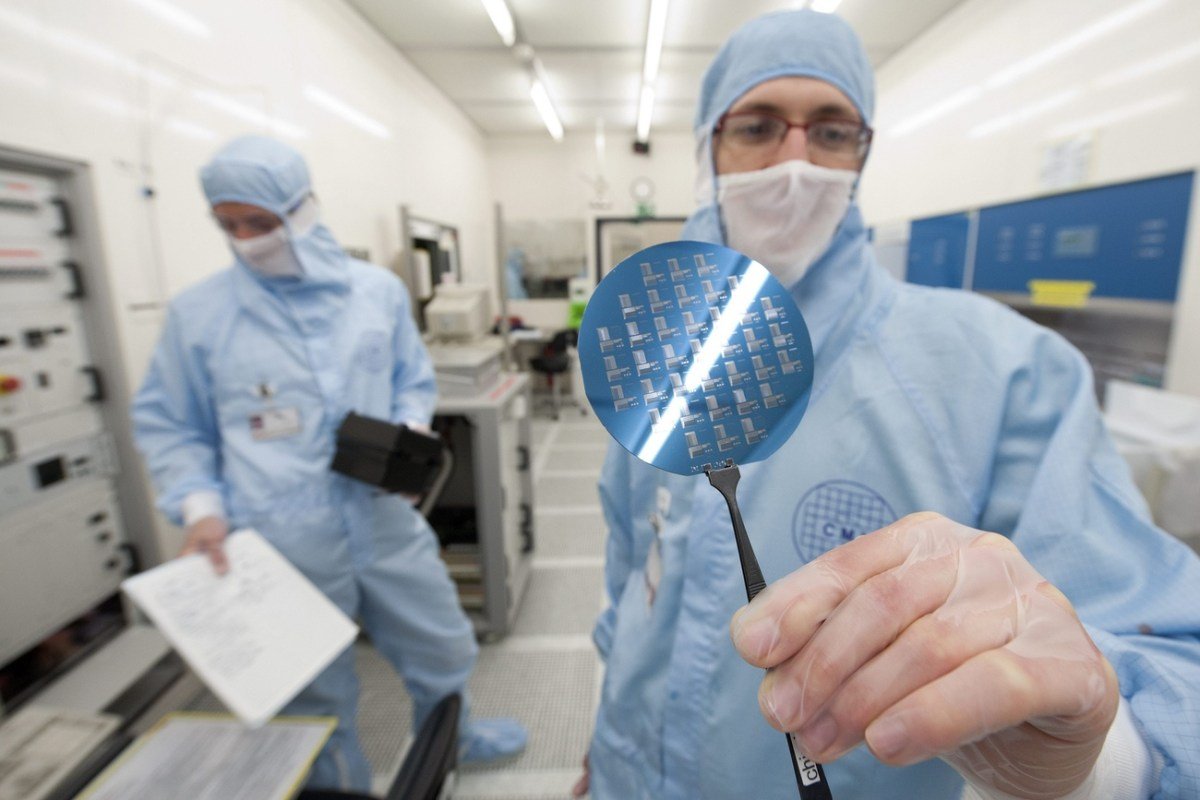
The Swiss Technology Innovation Center (CSEM) has also embraced the RISC-V ecosystem. Established in the early 1980s by the Swiss government, CSEM serves as a public-private innovation agency that bridges academic research and industry needs.
Initially, CSEM developed processors with its own ISA but found the task of managing and maintaining the entire ecosystem time-consuming. This requires dedicated teams to keep the architecture updated, bug-free, and supported for companies applying the technology in their businesses.
By adopting the open-source approach, CSEM has freed valuable resources for research and innovation. The organization has commercial partnerships with global brands, including a project to develop ultra-low-power chips for smartphones and tablets with United Semiconductor Japan (formerly Fujitsu).
A Global Ecosystem
RISC-V brings together more than 4,500 academic institutions and companies, including technology giants like Google, Huawei, Siemens, and Sony. This diverse ecosystem works collaboratively to maintain and strengthen the ISA by adding new applications and ratifying new extensions to the architecture.
"It is important for academic research because we can exchange ideas with other universities and companies worldwide," says Stéphane Emery, head of CSEM's system-on-a-chip group. "It's a very active ecosystem that is constantly evolving."
The Swiss Federal Institute of Technology Lausanne (EPFL) has also leveraged RISC-V for its research projects, including the X-HEEP open-source microcontroller. This technology enables researchers to build and test energy-efficient embedded systems for ultra-low-power edge computing, Internet of Things applications, and biomedical wearables.
The CERN Comparison
Benini draws a compelling parallel between RISC-V and CERN, the European Organization for Nuclear Research. "RISC-V plays a similar role as a research infrastructure for computing systems," he explains. "It's a very important asset that enables research in software and specialized hardware to reach the outside world in a concrete form."
This comparison underscores the transformative potential of the RISC-V movement. Just as CERN provides physicists with the tools to test their theories using particle accelerators, RISC-V provides computer scientists and engineers with the infrastructure to innovate in processor design without the constraints of proprietary systems.
The Future of Semiconductor Research
The RISC-V International Association's presence in Switzerland represents more than just a technological shift—it embodies a philosophical approach to innovation. By removing barriers to entry and fostering collaboration between academia and industry, Switzerland is creating an environment where semiconductor research can flourish.
As the semiconductor industry continues to evolve in response to AI demands and energy efficiency requirements, the open-source model championed by RISC-V may prove to be the key to unlocking the next generation of computing innovation. Switzerland's role as host to this "CERN of semiconductor research" positions the country at the forefront of this technological revolution, where the focus is not on manufacturing scale but on breakthrough innovations that could reshape the entire industry.
Comments
Please log in or register to join the discussion