Argentina's Debian-based Linux distribution launches its first server edition featuring custom ZFS installation capabilities unavailable in upstream Debian.
Argentina's Synex project has launched its first dedicated server edition, marking a significant evolution for the Debian-based Linux distribution. Synex Server 13 R1 introduces native OpenZFS installation support—a capability distinguishing it from upstream Debian and addressing a longstanding gap in enterprise-ready file system deployment.
Originally emerging last year with desktop-focused spins featuring MATE, KDE, IceWM, LXDE, Xfce, and GNOME, Synex has now pivoted to server infrastructure needs. The distribution's developers encountered substantial hurdles implementing ZFS support due to limitations in the standard Debian Installer, which struggled with ZFS partitioning complexities and advanced features like compression, deduplication, and snapshot management.
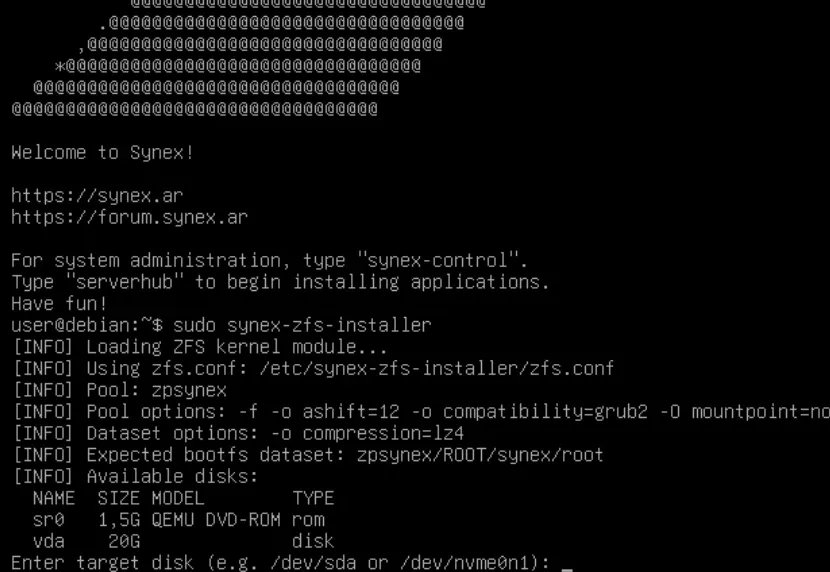
To overcome these obstacles, the team engineered synex-zfs-installer—a dedicated installation tool exclusively for OpenZFS deployments. This custom solution handles the entire ZFS configuration process during installation, including pool creation, dataset allocation, and bootloader configuration. For non-ZFS installations, Synex continues utilizing the traditional Debian Installer.
The OpenZFS integration provides tangible advantages for server environments: built-in data checksumming prevents silent corruption, snapshot capabilities enable efficient backups, and native compression optimizes storage utilization. These features prove particularly valuable for small-to-medium businesses requiring robust storage solutions without complex post-installation configuration.
Synex Server 13 R1 ships with Synex Control 1.0, a comprehensive administration suite streamlining server management. The web-based interface handles user administration, service configuration, and system monitoring—reducing dependency on command-line expertise for routine operations.
Performance considerations emerge when deploying ZFS: memory requirements increase significantly for optimal operation, and write performance varies based on pool configuration. However, Synex's approach minimizes these trade-offs by optimizing the installation for typical server workloads.
The distribution remains aligned with Debian 13's package base, ensuring compatibility with standard repositories while adding value through its specialized tooling. Enterprises evaluating Synex Server will find documentation and downloads available at the project's official portal: synex.ar.
Comments
Please log in or register to join the discussion