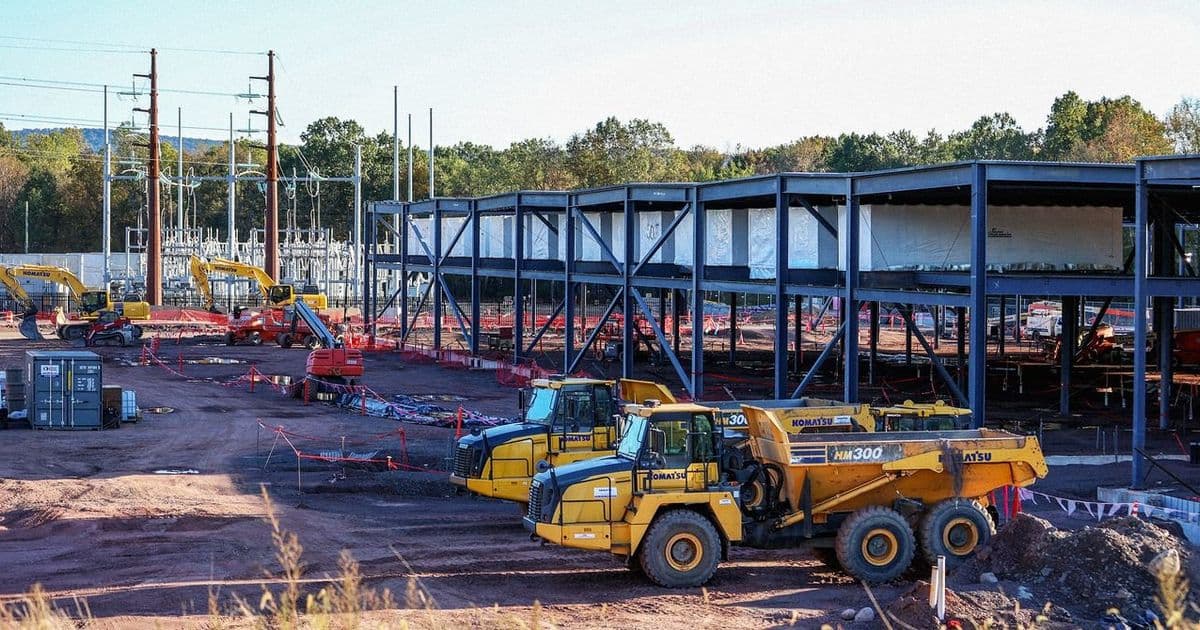
Rapid expansion of AI infrastructure faces workforce constraints as demand for electricians and other tradespeople outpaces available talent.
The artificial intelligence revolution is triggering an unprecedented construction surge for data centers across the United States, but a critical shortage of skilled tradespeople threatens to stall progress.
The AI industry's explosive growth has created insatiable demand for computing power, driving hyperscale data center development at breakneck speed. According to industry reports cited by Wired, Axios, and Chicago Tribune, this construction wave requires specialized workers—particularly electricians—at levels the current workforce can't satisfy.
Data centers require complex electrical systems to handle massive power loads, specialized cooling infrastructure, and redundant safety systems. These facilities consume up to 50 times more electricity per square foot than typical office buildings, necessitating highly skilled electricians capable of installing and maintaining high-voltage systems and intricate backup power solutions.
Three key factors exacerbate the labor shortage:
- Demographic shifts: Experienced tradespeople are retiring faster than new workers enter the field
- Training gaps: Apprenticeship programs haven't scaled to meet sudden demand spikes
- Geographic constraints: Projects often locate in areas without established labor pools
The scarcity manifests in tangible ways. Construction timelines are extending by 6-18 months for major developments, according to industry insiders. Labor costs have increased approximately 30% year-over-year as companies compete for limited talent. Some projects reportedly postpone groundbreaking while scrambling to secure work crews.
Industry responses include:
- Accelerated training: Companies funding vocational programs and apprenticeship initiatives
- Technology adoption: Prefabricated components reduce on-site labor requirements
- Workforce mobility: Incentives for skilled workers to relocate to project sites
- Immigration advocacy: Calls for specialized visas for critical trades
Without intervention, analysts warn that skilled labor constraints could become the primary bottleneck for AI infrastructure development. The situation highlights how physical construction requirements may ultimately limit the pace of technological advancement if workforce development doesn't accelerate alongside processing power demands.
As one project manager noted anonymously: 'We've got the financing, the land, and the technology. Now we just need enough hands to build what the AI needs.'
Comments
Please log in or register to join the discussion