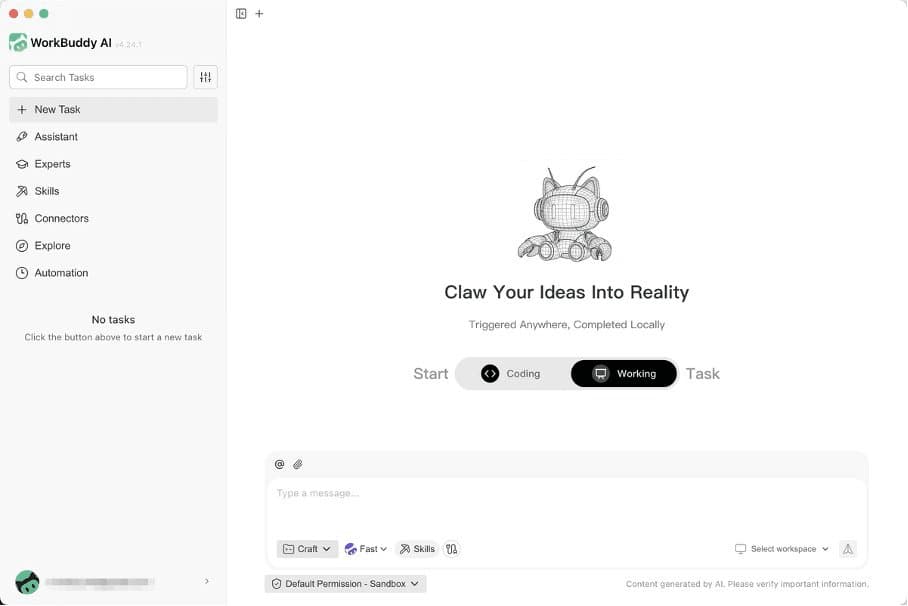
Tencent Cloud announced WorkBuddy, an AI‑native productivity agent aimed at global office users, alongside two ancillary services—Miora, a design‑focused studio, and TokenHub, a model‑as‑a‑service gateway. The launch promises zero‑setup task automation, but the technical details reveal a mix of familiar patterns and practical constraints.
Tencent rolls out WorkBuddy and expands its AI agent lineup
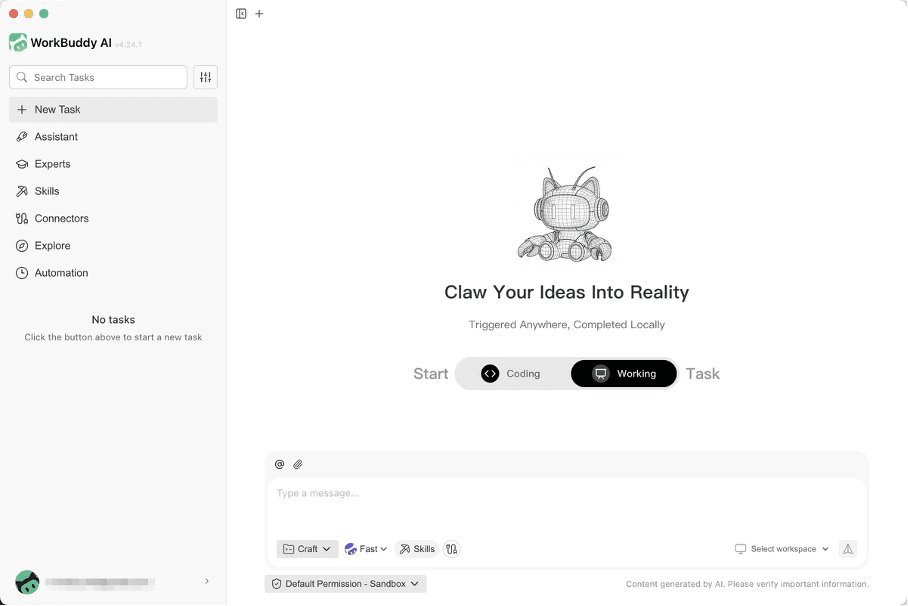
Tencent Cloud used a press release to introduce WorkBuddy, an AI‑driven “productivity agent” that claims to handle complex office tasks from a single natural‑language prompt. The announcement also bundled two supporting products: Miora, a design‑studio assistant, and TokenHub, a unified model‑access gateway. Below we separate the marketing language from the concrete contributions, and we point out the current limits that early adopters should be aware of.
What’s claimed
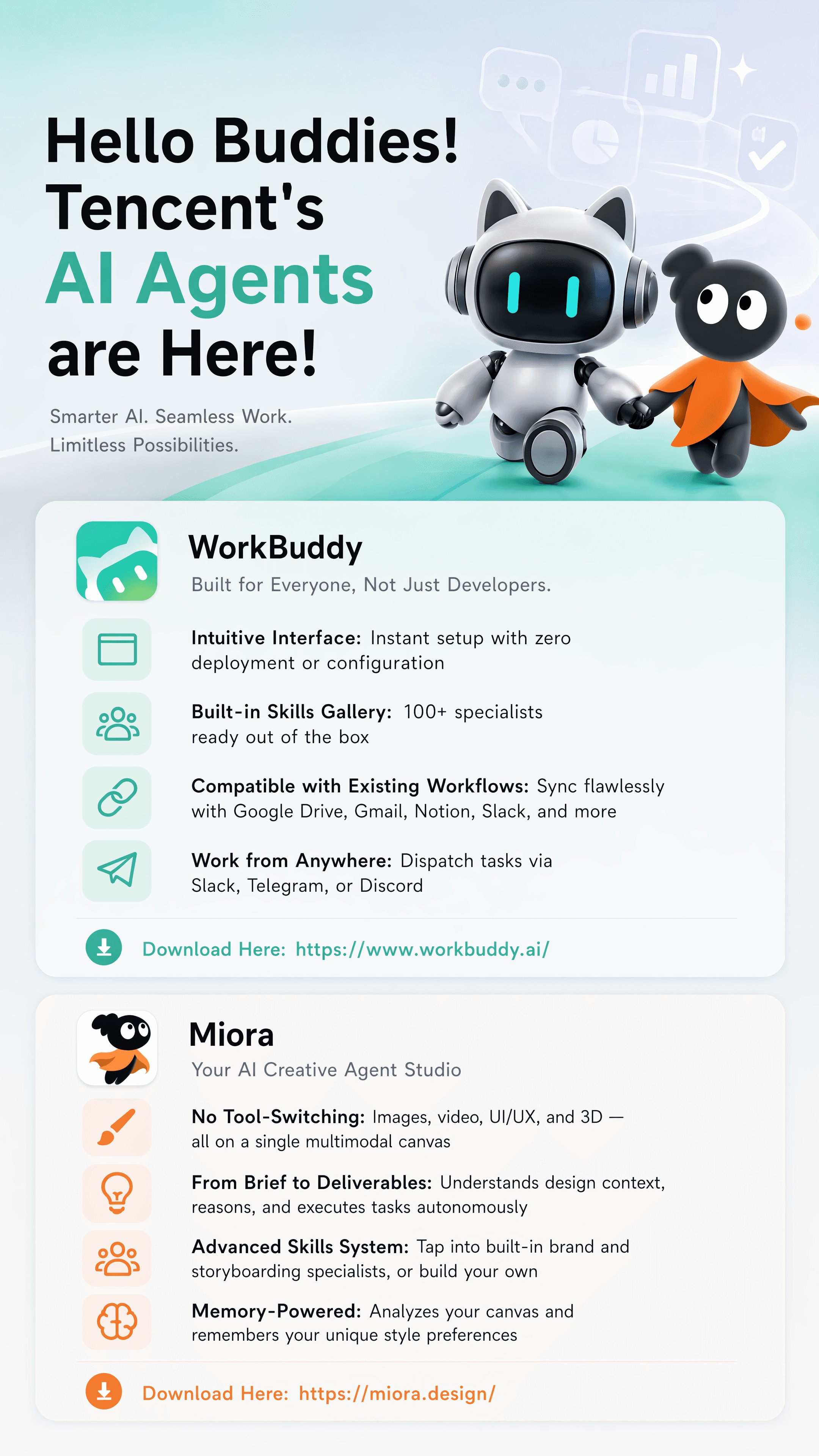
- Zero‑setup: Users can launch the app, type a request, and receive a finished deliverable (e.g., PPT, spreadsheet, code repo) without any prompt engineering or infrastructure provisioning.
- Agentic task execution: The system allegedly reads files, decomposes tasks, calls external tools, and writes results back to the user’s chat channel (Slack, Discord, WeChat, etc.).
- Built‑in skill library: Over 100 pre‑configured “expert roles” covering marketing, engineering, game dev, and finance, plus a “Skills Gallery” of security‑reviewed modules.
- Multi‑model flexibility: Users may plug in any LLM via API key, allowing cost/performance trade‑offs.
- Sandboxed security: Default execution occurs in an isolated environment; file system access requires explicit permission.
- Miora: Persistent‑memory design studio that can generate multi‑modal assets (graphics, video, 3D) from a textual brief.
- TokenHub: A MaaS platform that aggregates Tencent’s own Hy models and third‑party APIs behind a single gateway, with token‑level quota management.
What’s actually new
1. Integration layer (MCP) and connector ecosystem
WorkBuddy is built on Tencent’s MCP (Multi‑Channel Platform), which already provides adapters for GitHub, GitLab, Jira, Confluence, Google Drive, Gmail, Notion, and several chat services. The novelty lies in exposing these connectors through a unified agentic interface rather than a set of separate APIs. In practice, the agent sends a structured request to the connector, receives the raw data, and then passes it to the language model for processing. This pattern mirrors the “tool‑use” capabilities introduced in OpenAI’s function‑calling and Anthropic’s tool use APIs, but Tencent packages the plumbing as a ready‑to‑use SDK.
2. Expert Teams orchestration
The “Expert Teams” concept lets a lead agent delegate subtasks to role‑specific sub‑agents (e.g., a marketing copywriter and a data analyst) and then aggregate the results. Internally this is a simple task‑graph where each node runs in its own sandbox and communicates via a shared state store. The idea is not entirely new—Microsoft’s Copilot for Microsoft 365 has a similar “assistant + plugins” flow—but Tencent’s implementation is the first to expose a configurable number of parallel experts through a single UI.
3. Model‑agnostic backend
Allowing users to supply an arbitrary LLM API key is a pragmatic move that sidesteps the usual vendor lock‑in. The backend normalizes the request format to a common schema (prompt, function definitions, token limits) before forwarding it to the chosen model. This mirrors the approach taken by LangChain’s LLMRouter and the OpenAI‑compatible endpoints offered by many cloud providers.
4. Miora’s persistent memory
Miora stores a lightweight vector store of design decisions (color palettes, typography, layout rules) that persists across sessions. When a user asks for a new asset, the system retrieves relevant prior decisions to maintain visual consistency. The technique is comparable to “memory‑augmented generation” demonstrated in recent papers such as Long‑Term Memory for Text‑to‑Image Generation (2024). Tencent’s contribution is the integration of this memory with a multi‑modal generation pipeline that can output both raster and 3D assets.
5. TokenHub’s unified gateway
TokenHub aggregates access to Tencent’s Hy family (Hy‑1, Hy‑2) and external models (e.g., LLaMA‑3, Claude‑3) behind a single endpoint. It implements token‑level throttling, cost‑based routing, and automatic fallback to cheaper models when latency budgets are tight. The service resembles Azure’s OpenAI Service but adds a marketplace‑style token allocation dashboard that enterprises can use to enforce departmental quotas.
Limitations and practical concerns
| Aspect | Observation |
|---|---|
| Prompt reliability | While the UI hides prompt engineering, the underlying LLM still suffers from hallucinations and context‑window limits. Complex multi‑step tasks often require manual correction of intermediate outputs. |
| Tool latency | Each connector call adds network round‑trip time. In a typical workflow (read file → call LLM → write back), latency can exceed 10 seconds, which feels sluggish for interactive use. |
| Security model | Sandboxing isolates execution, but the agent still needs explicit permission to access local files or cloud storage. Mis‑configured permissions could expose sensitive data to the LLM provider. |
| Cost transparency | Because users can plug any model, cost predictability depends on the chosen endpoint. TokenHub’s token‑allocation UI helps, but enterprises must still monitor usage across multiple models. |
| Skill coverage | The pre‑built Skills Gallery covers common office scenarios, yet niche domains (e.g., regulatory compliance drafting) are absent. Extending the library requires custom function definitions and security review. |
| Miora asset fidelity | Generated 3D assets are suitable for mock‑ups but often need manual refinement before production‑grade use. The persistent memory helps style consistency but does not guarantee technical correctness of geometry. |
| Regional availability | The press release emphasizes a “global” rollout, but current documentation lists data‑center locations only in Mainland China, Singapore, and North America. Latency for European users may be higher. |
How it fits into the broader AI‑agent trend
WorkBuddy is essentially a packaged agent‑as‑a‑service that bundles three components that many developers already stitch together themselves:
- LLM with function calling
- Connector SDKs for external tools
- Orchestration layer for multi‑agent workflows By providing a hosted UI and a set of vetted skills, Tencent lowers the entry barrier for non‑technical office workers. The trade‑off is reduced flexibility compared with a custom LangChain or CrewAI implementation, and the same hallucination risks remain.
Getting started
- Download the client from the official site: workbuddy.ai
- Follow the quick‑start guide: https://www.workbuddy.ai/docs/workbuddy/Overview
- For developers, the connector SDK and API reference are on the Tencent Cloud Developer Portal (link pending).
- Miora and TokenHub have separate documentation pages linked from the same portal.
Bottom line
Tencent’s WorkBuddy, Miora, and TokenHub are a coherent bundle that moves the “AI‑assistant for office work” idea from a DIY prototype to a managed service. The engineering underneath is largely a repackaging of existing patterns—function‑calling LLMs, connector SDKs, and memory‑augmented generation—wrapped in a user‑friendly shell. Early adopters will appreciate the reduced setup time, but they should still budget for model costs, monitor security permissions, and be prepared to intervene when the agent’s output deviates from expectations.
Comments
Please log in or register to join the discussion