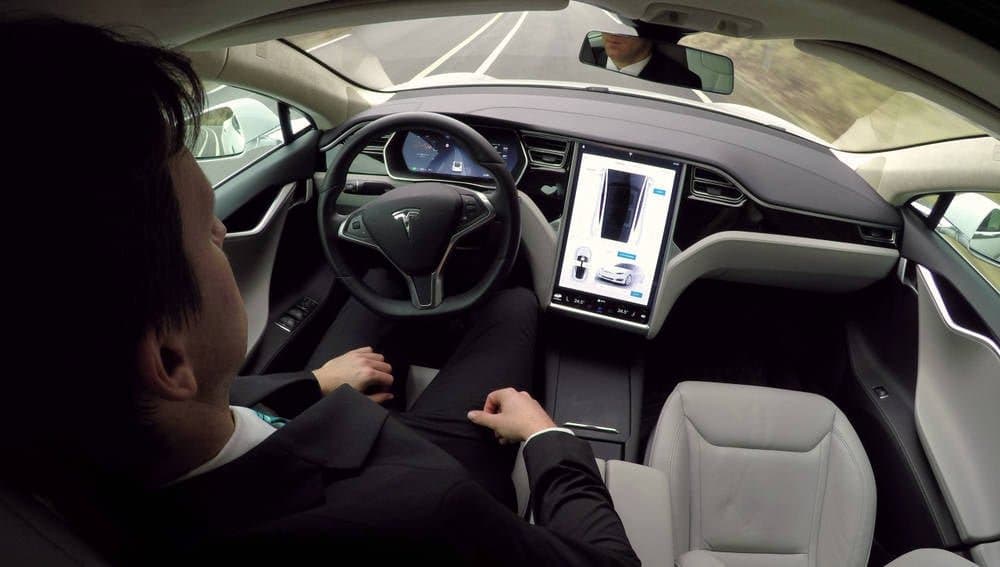
Tesla is transitioning its Full Self-Driving feature from an $8,000 one-time purchase to a $99 monthly subscription, with CEO Elon Musk confirming future price increases as the technology's capabilities improve. This move reflects a broader industry trend toward subscription-based services and raises questions about value, safety, and long-term customer commitment.
Tesla has officially confirmed a significant shift in how customers can access its Full Self-Driving (FSD) technology. Effective February 14, the company will discontinue its one-time $8,000 purchase option, moving exclusively to a monthly subscription model priced at $99 per month. This change was announced by CEO Elon Musk on his social media platform, X (formerly Twitter), on January 23, 2026, following an earlier statement from Tesla on January 14.
Musk indicated that this starting price is not static. He stated the $99 monthly fee "will rise as FSD's capabilities improve," though he provided no specific timeline or amount for future increases. This pricing strategy aligns with Tesla's history of adjusting FSD costs, which peaked at $15,000 in September 2022 before being reduced to the current $8,000 one-time fee in 2024.
The move to a subscription-only model is a strategic pivot for Tesla. For customers, the $99 monthly option presents a lower initial barrier to entry compared to the $8,000 upfront cost. However, it also introduces a recurring financial commitment. Over a period of roughly 6.7 years, the cumulative subscription cost would match the former one-time purchase price. This model could be attractive for users who wish to try the technology without a large initial investment or who plan to upgrade their vehicle within a few years. Conversely, long-term owners may find the ongoing expense less favorable.
Musk framed the value proposition around future, unsupervised capabilities. He wrote, "The massive value jump is when you can be on your phone or sleeping for the entire ride (unsupervised FSD)." This statement highlights the core of Tesla's FSD ambition: moving from a supervised driver-assist system to a fully autonomous one. Currently, FSD requires active driver supervision, meaning the driver must remain attentive and ready to take control at any moment.
The technology underpinning FSD relies primarily on a camera-based vision system, supplemented by AI and neural networks, to interpret the vehicle's surroundings and navigate. Tesla has notably moved away from using radar and lidar sensors, which are common in other autonomous vehicle development efforts. This camera-only approach is a key differentiator but has also been a point of contention. Investigations by regulatory bodies, including the California Department of Motor Vehicles (DMV), have scrutinized Tesla's marketing and the safety of its Autopilot and FSD systems. The DMV has previously urged Tesla to clarify its claims about the technology's capabilities.
Safety concerns have also led to legal challenges. Tesla has been the subject of multiple lawsuits related to accidents involving its driver-assist systems. Senators have expressed worry about the technology's reliability, with one report referring to it as "Fail Self Driving." These ongoing legal and regulatory pressures add complexity to Tesla's rollout and pricing of FSD.
The subscription model also has implications for Tesla's corporate structure, particularly regarding Elon Musk's compensation. A significant portion of his 2018 pay package, valued at billions, is tied to Tesla's market capitalization reaching specific milestones. If FSD achieves true unsupervised capability—a milestone that would likely trigger a massive increase in Tesla's perceived value—it could unlock a substantial payout for Musk. However, the timeline for achieving this level of autonomy remains uncertain. If the technology takes longer to mature than expected, it could delay or affect the realization of these financial incentives.
Tesla is not an outlier in the automotive industry's shift toward subscriptions. Other manufacturers have experimented with recurring fees for features, though not always successfully. BMW, for example, faced significant customer backlash over a plan to charge a monthly fee for heated seats in some markets, a move it later reversed. Tesla's approach, however, is more comprehensive, tying a core technological feature to a subscription model from the outset.
The shift to a subscription model for FSD reflects a broader trend in the automotive and tech industries toward "software-as-a-service" (SaaS) models. This allows companies to generate recurring revenue streams and update features continuously over the air. For Tesla, it means the price of FSD can be adjusted in real-time based on perceived value and development costs. For consumers, it changes the ownership model, transforming a vehicle feature from a purchased asset into a rented service.
The long-term viability of this model depends on Tesla's ability to deliver on its promises. The company must continuously improve FSD's capabilities to justify any future price increases and to maintain customer satisfaction. Furthermore, it must navigate the complex regulatory landscape governing autonomous vehicles, which varies significantly by region. As Tesla moves toward its goal of unsupervised driving, it will face increasing scrutiny from safety advocates, regulators, and the public.
In summary, Tesla's move to a $99 monthly FSD subscription is a significant business model change. It lowers the entry cost for customers but introduces long-term financial commitments. The promise of future price hikes tied to capability improvements places the onus on Tesla to deliver tangible technological advancements. The success of this strategy will depend on the company's ability to achieve true autonomous driving, address safety concerns, and justify the evolving value proposition to its customers.
Comments
Please log in or register to join the discussion