vivo has officially revealed the ultrawide camera specifications for its upcoming X300 Ultra flagship, featuring a 50MP Sony LYTIA-818 sensor with 1/1.28-inch size and CIPA 6.0 stabilization, marking a significant upgrade over previous generations.
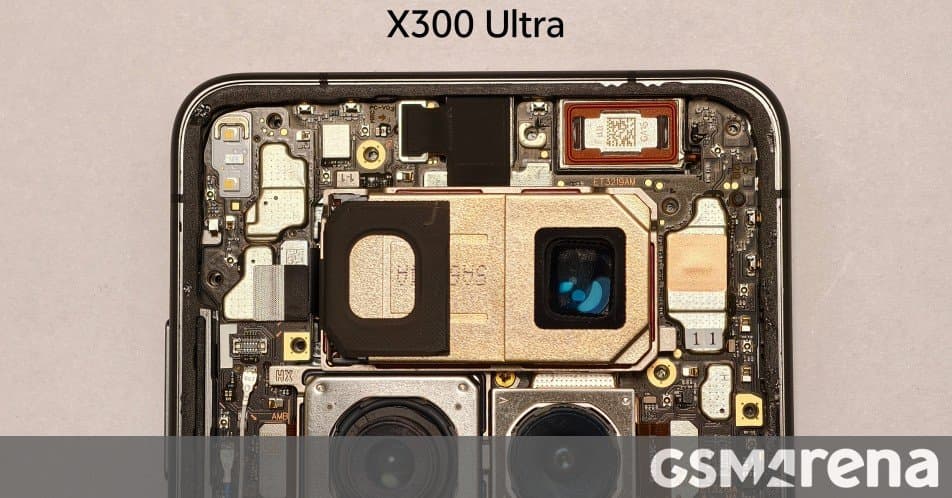
vivo has been gradually unveiling details about its upcoming X300 Ultra flagship, and the latest revelation focuses on the phone's ultrawide camera system. The company's Product Manager, Han Boxiao, shared an image showing the internal layout of the rear camera system, confirming that the X300 Ultra will feature a 50MP ultrawide camera equipped with the Sony LYTIA-818 sensor.
The Sony LYTIA-818 sensor is notable for its large 1/1.28-inch sensor size, which is significantly bigger than what's typically found in ultrawide cameras. This larger sensor size should translate to better light-gathering capabilities, potentially improving both photo and video quality, especially in challenging lighting conditions.
One of the most interesting aspects of the ultrawide camera is its video stabilization capabilities. According to Boxiao, the ultrawide unit is rated for CIPA 6.0 stabilization, representing an upgrade over last year's CIPA 5.0 standard. The CIPA (Camera & Imaging Products Association) stabilization rating is a standardized measure of a camera's ability to compensate for hand shake and movement during video recording. This improvement should result in smoother, more stable video footage when using the ultrawide camera.
The enhanced stabilization is expected to have a positive impact on low-light performance as well. Better stabilization allows for longer exposure times without introducing motion blur, which can help capture more light in dim conditions. This could make the X300 Ultra's ultrawide camera particularly useful for night photography and video recording.
In addition to the confirmed ultrawide camera details, the image shared by Boxiao reveals a fourth sensor hidden behind an emoji. While no specific details were provided about this sensor, Boxiao mentioned that it would enhance the phone's color capabilities. This has led to speculation that the hidden unit could be the rumored 5MP multispectral camera, which would help with color accuracy and white balance in various lighting conditions.
The gradual reveal of the X300 Ultra's camera specifications suggests that vivo is taking a methodical approach to building anticipation for the device. By sharing information about each camera component separately, the company is able to highlight the specific capabilities and innovations of each sensor.
Beyond the camera system, the vivo X300 Ultra is expected to be a high-end flagship device. Rumors suggest it will be powered by Qualcomm's Snapdragon 8 Elite Gen 5 SoC, which would provide top-tier performance for demanding applications and games. The phone is also rumored to pack a large 7,000mAh battery, which would be one of the biggest batteries in a flagship smartphone, potentially offering exceptional battery life.
The X300 Ultra is expected to launch in China later this month, with a potential global debut around the same time. This launch timeline would position the device as a competitor to other flagship smartphones released in early 2026.
As vivo continues to reveal more details about the X300 Ultra, it's becoming clear that the company is focusing heavily on camera innovation for this device. The combination of a high-resolution main camera, a powerful periscope telephoto unit, and now this advanced ultrawide camera with enhanced stabilization suggests that vivo is positioning the X300 Ultra as a photography-focused flagship.
The use of the Sony LYTIA-818 sensor in the ultrawide camera is particularly noteworthy, as this sensor is typically found in higher-end devices. By incorporating such a capable sensor into the ultrawide camera, vivo is demonstrating its commitment to providing a comprehensive and high-quality camera experience across all shooting scenarios.
As we await the official launch and complete specifications of the vivo X300 Ultra, these camera revelations have certainly generated interest among smartphone photography enthusiasts. The combination of high resolution, large sensor size, and advanced stabilization in the ultrawide camera could make it a standout feature in the competitive flagship smartphone market.
Comments
Please log in or register to join the discussion