
Vivo is pitching the X Fold 6 as a foldable for split-screen work, local-file AI, and external-monitor use, with leaks pointing to a 3 nm MediaTek chip and Zeiss cameras.

Vivo has a clear target for the X Fold 6: the part of Samsung's foldable pitch that says a phone can replace a light-duty PC. The company has teased foldable software, a desktop-style external monitor mode, a large battery, and a MediaTek chip that it says can handle heavier AI work.
Samsung and Honor shaped much of the 2025 foldable fight in Europe with the Galaxy Z Fold 7 and Magic V5. Vivo still has a murky global plan for the X Fold 6, but its China teasers suggest a more serious productivity push than the X Fold 5 offered.
New features
Vivo keeps the broad book-style format instead of moving toward the shorter, wider shape that Apple may use for its first foldable iPhone. That choice gives Vivo more inner-screen space for multitasking, which seems central to OriginOS 6 Fold.
The company says OriginOS 6 Fold adds a stronger windowing system for foldables. Vivo calls one part Atomic Workbench, a multitasking view that can show four app windows at the same time. Users can resize windows, place smaller windows around a main app, and switch between work areas with fewer taps.
{{IMAGE:2}}
Vivo also confirmed a Dimensity 9500 Super Edition chip from MediaTek. The company says it tuned the chip for foldable layouts and AI workloads. Vivo claims the NPU raises performance by 111% and cuts power use by 56%, though it has not named the comparison chip behind those figures.
That missing baseline matters for buyers who compare year-to-year gains. A 111% NPU gain against an older Dimensity part would say less about the X Fold 6 than the same gain against the standard Dimensity 9500. Vivo needs launch-day benchmarks to turn that claim into useful buyer guidance.
{{IMAGE:3}}
The AI file manager may have a clearer day-to-day use. Vivo says users can ask a chatbot about files stored on the device. A foldable gives that feature more room to work because you can keep a document, a file pane, and a chat window open at once.
Comparison
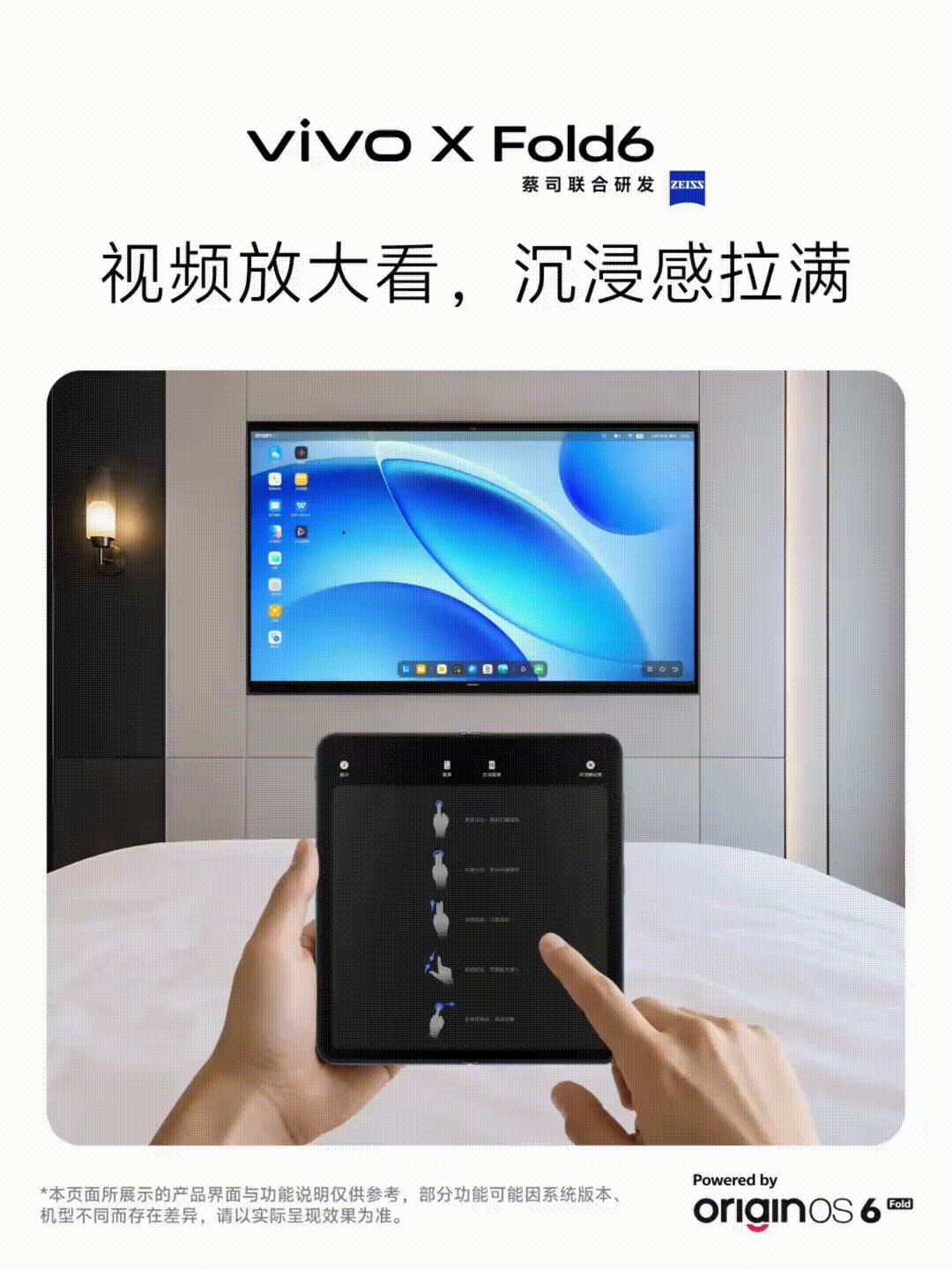
Samsung still owns the best-known version of this idea through Samsung DeX. Vivo appears to answer with a desktop mode that uses an external display, window management, desktop icons, and the foldable itself as a touchpad or mouse stand-in.
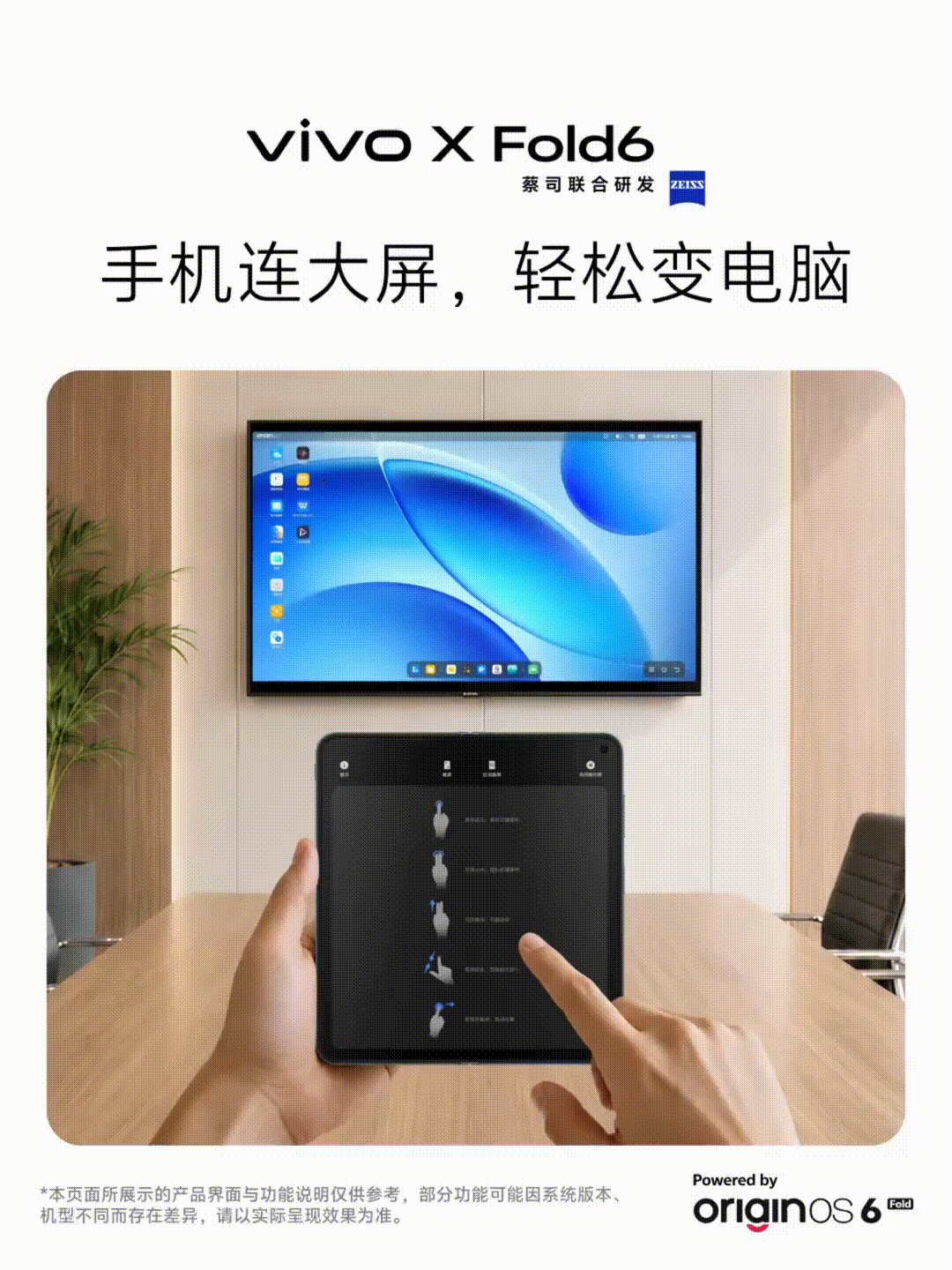
That feature could matter more than another benchmark lead. Foldable phones already have enough power for email, browser work, files, chat, and document edits. The harder problem sits in software: window sizing, app scaling, cursor support, keyboard shortcuts, file access, and handoff between the inner display and a monitor.
Vivo's teaser clips show a Windows-like layout, but launch software will decide whether the X Fold 6 can replace a laptop for travel. DeX works because Samsung has refined monitor output for years. Vivo needs app polish across Chinese apps and global apps if it wants the feature to travel beyond China.
Battery capacity gives Vivo one clear hardware advantage on paper. Digital Chat Station says the X Fold 6 uses a 7,500 mAh battery, much larger than Samsung's current Fold-class batteries. Foldables drain power fast under multitasking, high brightness, camera use, and external display output, so that figure fits Vivo's PC-replacement pitch.
The leaker also points to a 6.59-inch cover screen, a 50 MP main camera based on a 1/1.28-inch sensor, and a 64 MP periscope telephoto camera. The Zeiss branding gives Vivo a camera story that Samsung buyers will recognize, though sensor size and image processing will matter more than the badge.
Buyer fit
The X Fold 6 makes the most sense for users who want one device for messages, documents, calls, file work, and monitor output. A foldable with four app windows can help if you spend your day moving between chat, spreadsheets, cloud storage, and notes.
Gamers and camera-first buyers should wait for thermal tests, sustained GPU runs, shutter lag checks, and night-photo samples. MediaTek's next high-end silicon may bring strong peak numbers, but foldable chassis limits can cut sustained performance during long sessions.
Global buyers should treat the X Fold 6 as a wait-and-see device. Vivo has not clarified its release plan outside China. OriginOS features can also vary by region, and AI file tools may depend on language support, cloud services, and app access.
The X Fold 6 could become one of Samsung's most direct productivity rivals if Vivo ships the same desktop mode, AI file manager, and multitasking tools outside China. The hardware leaks already look aggressive. Vivo now has to prove that its software can make a foldable feel useful on a desk, not just impressive in a teaser.
Comments
Please log in or register to join the discussion